Soybean Plant Population Calculator
Estimate soybean plants per acre from row spacing, counted plants, measured row length, emergence, seed drop, target stand, replant threshold, and total acres.
Count live emerged soybean plants in one measured row length, then repeat in several representative areas. Enter one average count here to convert the sample into plants per acre.
Population Results
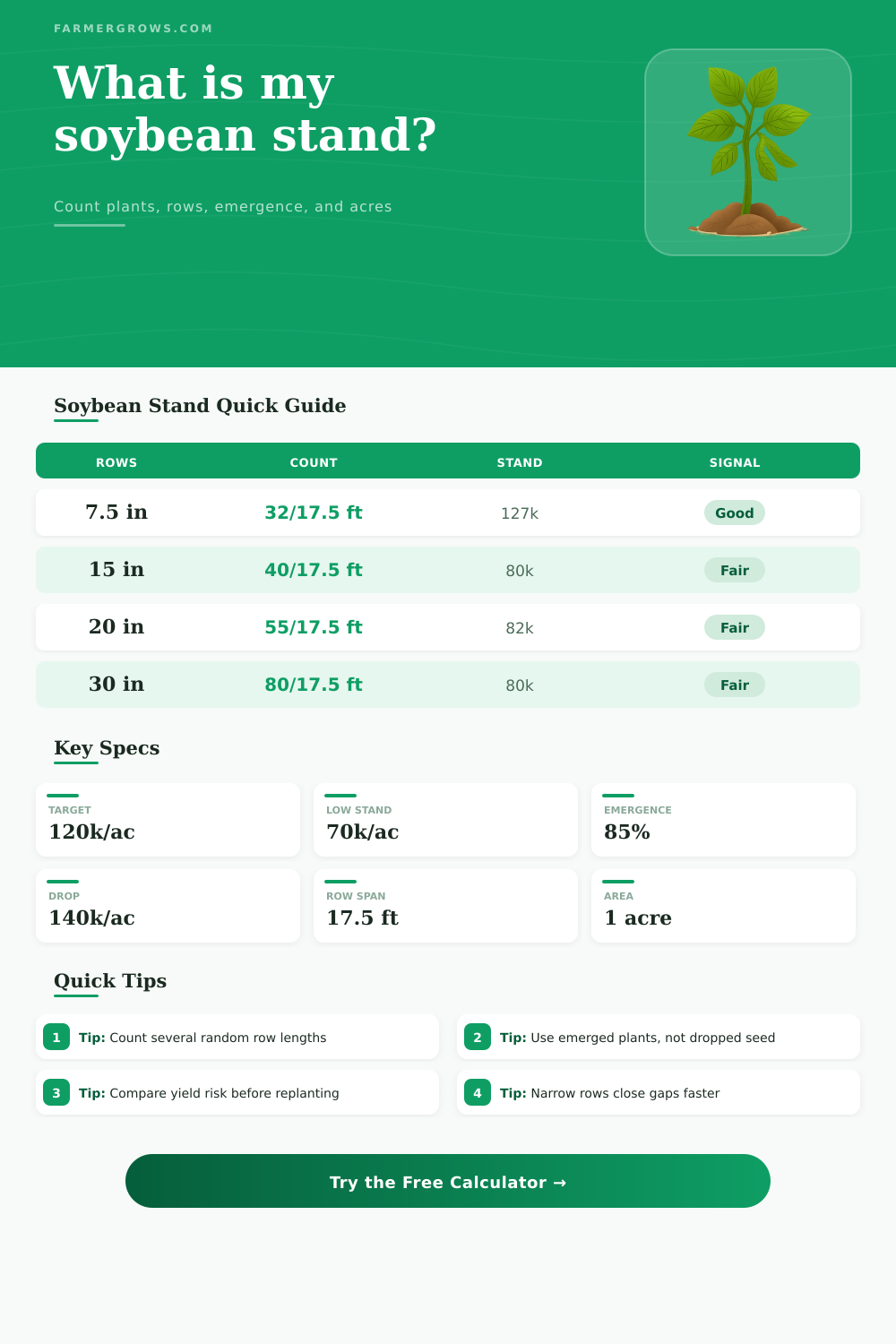
Table 1: Plants counted in 17.5 ft of row and approximate plants per acre by row spacing.
| Row Spacing | 30 Plants | 45 Plants | 60 Plants | 80 Plants |
|---|---|---|---|---|
| 7.5 in | 119,500/ac | 179,200/ac | 239,000/ac | 318,600/ac |
| 10 in | 89,600/ac | 134,400/ac | 179,300/ac | 239,000/ac |
| 15 in | 59,700/ac | 89,600/ac | 119,500/ac | 159,300/ac |
| 20 in | 44,800/ac | 67,200/ac | 89,600/ac | 119,500/ac |
| 30 in | 29,900/ac | 44,800/ac | 59,700/ac | 79,700/ac |
Table 2: Seed drop needed to reach final stands at common field emergence levels.
| Target Stand | 80% Emergence | 85% Emergence | 90% Emergence | 95% Emergence |
|---|---|---|---|---|
| 90,000/ac | 112,500 | 105,900 | 100,000 | 94,700 |
| 110,000/ac | 137,500 | 129,400 | 122,200 | 115,800 |
| 120,000/ac | 150,000 | 141,200 | 133,300 | 126,300 |
| 140,000/ac | 175,000 | 164,700 | 155,600 | 147,400 |
| 160,000/ac | 200,000 | 188,200 | 177,800 | 168,400 |
Table 3: Stand interpretation for replant decisions, assuming plants are healthy and reasonably even.
| Final Stand | Canopy Outlook | Typical Signal | Best Next Check |
|---|---|---|---|
| Below 50,000/ac | Large gaps likely | Replant review | Map skips |
| 50,000-70,000/ac | Thin canopy | Watch threshold | Count more sites |
| 70,000-90,000/ac | Fair if even | Compare date | Check uniformity |
| 90,000-125,000/ac | Usually solid | Keep stand | Scout vigor |
| 125,000+/ac | Fast closure | Full stand | Watch lodging |
Table 4: Whole-field scale examples using plants per acre and planted acres.
| Acres | 80,000/ac | 100,000/ac | 120,000/ac | 140,000/ac |
|---|---|---|---|---|
| 1 acre | 80,000 | 100,000 | 120,000 | 140,000 |
| 10 acres | 800,000 | 1,000,000 | 1,200,000 | 1,400,000 |
| 40 acres | 3,200,000 | 4,000,000 | 4,800,000 | 5,600,000 |
| 80 acres | 6,400,000 | 8,000,000 | 9,600,000 | 11,200,000 |
| 160 acres | 12,800,000 | 16,000,000 | 19,200,000 | 22,400,000 |
When evaluating soybean stands at emergence, it is possible to find that some field may contain even stands at emergence, meaning that there is fewer soybean plants emerging in each row than expected. These thin soybean stands can contain both visible gap between soybean plants as well as gaps that are not visually apparent between soybean plants. The decision as to whether or not to replant those stands is based upon the knowledge of the actual stand of soybean plants in those fields, as well as how that stand may impact the remainder of the growing season for those soybean fields.
The starting number of soybean plants can be determined by counting the number of soybean plants within a measured length of row. That count can be converted to the number of plants per acre, which will allow the soybean stand to be compared to the target soybean plant count for that field. Factors like row spacing and row length is incorporated into that calculation, as each will impact how many acre are to be covered by those newly-emerging soybean plants.
How to Count Soybean Plants and Decide to Replant
The calculator that is provided can perform such calculations, avoiding any potential error that may occur with performing the calculations manually. Factors like emergence percentage can factor into the decision of whether to replant or not. The emergence percentage is often not the same than the percentage indicated on the soybean seed tag for that batch of soybean plants.
Factors like soil crusting, soil too cool to permit germination of the soybean seeds, or uneven planting depths can impact the emergence percentage of a field of soybean plants. By adjusting this percentage in the calculator, soybean farmers can determine how many soybean seeds had to be planted for the soybean stand to emerge at the rate that was actualy seen after the application of rain to the field. The drop rate of soybean seeds is that number of soybean seeds that the soybean planter dropped into the soil.
The drop rate is a higher number than the soybean stand because some percentage of those soybean seeds did not emerge from the ground. The calculator can determine this drop rate to compare with the count of soybean plants emerging from each field. If the stand count is less than the drop rate would indicate, either a mechanical or environmental issue has occurred within the field.
Recognizing these potential causes of reduced soybean emergence allows for those farmers to make a decision as to what replanting effort should of been performed prior to the next soybean planting season. Replant thresholds differ from field to field and from farm to farm. Fields that are planted later in the spring (for example, in late May) may be able to support stand-thinness that is not permit for fields that are planted in early spring (for example, in April).
Furthermore, the soybean stands that emerge may also differ from field to field even if the soybean counts are the same; for instance, a field with stands of soybean plants of seventy thousand plants may be able to support the thinness that a stand of eighty thousand soybean plants cannot. Thus, while the calculator can aid in determining if replanting is warranted, a soybean farmer must also consider the planting arrangement of soybean plants within each field, as well as the time that remains in the calendar year for those soybean plants to grow. Similar to the calculator, the tables contain the same information but in a different format.
One table allows for a soybean farmer to determine, based off the count of soybean plants measured during emergence, the number of plants that will emerge per acre. The other table permits the farmer to determine how many soybean seeds the soybean planter should drop to achieve the target soybean stands after forstanding losses. These tables allow farmers to consider various scenario within the planting fields.
These tables show that the relationship between the drop rate of soybean seeds and the soybean stand emerging from the ground is not a fixed relationship; the relationship changes with factors like emergence percentage and row width. Uniformity is a factor that cannot be accounted for with the data provided to the soybean farmer. Two fields could have the same count of soybean plants emerging from the ground, yet have different potential yield of soybean seed from each of those fields.
Fields with even stand of soybean plants will fill the area between rows of soybean plants more earlier than fields with areas of bare ground between rows of soybean plants. The stand of soybean plants that emerges in each field can be inspected to determine if any soybean stands are thin and lack soybean plants in those fields; this inspection provides information that the calculator could not have provided to the soybean farmer. In addition to the information that can be gathered through counting the soybean plants that emerge from each field, weather conditions in the fields after counting of the soybean stands will impact the soybean stands.
Soybean stands that appear to be marginal based upon the soybean emergence rate may improve with additional moisture and mild temperatures emerging from the weather. Conversely, soybean stands may worsen in cases of crusting of the soil, or damage of the soybean plants’ growing points by soybean farm insects. Thus, while the calculator can determine the soybean stand relationship at the time of counting of the plants, soybean farmers must continue to visually inspect the soybean fields after emergence.
Many soybean farmers may tend to assume that the soybean stand will grow to emerge with enough soybean plants to reach the target soybean stand indicated on the soybean seed tag, even if the weather during the planting season of the soybean fields was poor. By tracking both soybean emergence rates and soybean drop rates, soybean farmers can monitor the soybean fields for any potential issue during the spring planting season. The final decision for soybean farmers is to determine whether or not the soybean stand that emerged from the fields justifies the cost and risk of replanting.
Costs to replant include additional seed costs and fuel costs to replant those fields. Furthermore, replanting of the fields will reset the planting calendar for those fields. Additionally, if the soybean emergence issue continues, there is the risk of a second emergence failure for those soybean stands.
Maintaining a thin stand of soybean plants, provided they are even in their soybean stands, allows for the soybean farmer to avoid the risks of replanting; the soybean plants will emerge at the same time as the soybean stand were initially planted, and will not need to be replanted. Thus, the calculator provides information regarding the distance between the current soybean stand and both threshold and target soybean stands for soybean farmers to make decisions about replanting.