
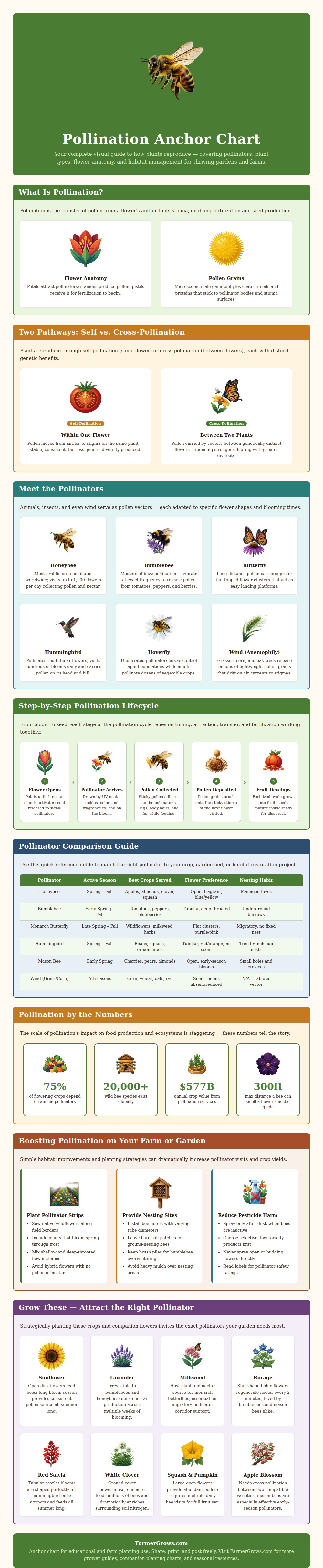
This is mechanics on a tiny scale, called pollination. From the male parts of the flower pollen travels to the female parts, starting fertilization. Since plants can’t get around and mate for themselfs, someone else needs to take its genetic material in exchange for a visit. There are basically two ways they do this: self-pollination or cross-pollination. While surefire, self-pollination means all the offspring will be exactly alike, susceptible to disease in crops. By mixing the genetics through cross-pollination, it results in stronger offspring with better resistance.
If you just planted one type of fruit tree, for example, you’d never see that. Your garden design shouldn’t be one-size-fits-all; not all visitors is created equal. There are bumblebees who do what’s called buzz pollination (shaking out pollen from things like peppers and tomatoes with vibrations of their in-flight muscles), and there are honeybees who work on open ones such as apples and clover. Butterflies want a flat pad to land on; hummingbirds require something with deep-red tubes. Plant just bee-attracting flowers and half the workforce gets unemployed.
Why Pollinators Are Important for Your Garden
Bumblebees use a technique called sonication on heirloom tomatoes, which result in better fruit. It’s all very simple stuff, the lifecycle steps, but easily disrupted. A flower opens, releases its nectar and scent, waits for a visitor, gets fertilized, and now becomes fruit. Typically the weak link is the visiting part of the cycle. If your flower isn’t displaying visible (to insects) UV patterns, they considers it just decorative foliage.
A key moment in the cycle is when a smart grower decides on pesticide timing. Daylight spraying will kill off your workforce. Wait till dusk and the bees are safely home. No extra effort, big protection of your yield. Quantity is less important then quality. The chart says you don’t want acres of random flowers, but something that’s a little bit different.
For instance, apple blossoms need to be cross-pollinated, so you can’t have just one tree. Milkweed benefits monarchs, which are pollinators themselfs. Sunflowers offer plenty of pollen throughout the entire summer. Borage will replenish its nectar supply every few minutes when it gets hot, keeping the workers humming.
Consider nesting behaviors, too: Thick mulches aren’t desired by ground-nesting bee; mason bees seek out tiny openings in straw or wood. A bee hotel or leaving a brush pile is cheap (or free) and much-needed real estate. This is the kind of structure that makes your garden an ecosystem rather than just a display. It provide support for things that make it all work.
Crops is worth hundreds of billions each year globally in pollination services. But to you it’s easier math: healthy seeds, full fruits. Get into your head that a bee visiting a squash blossom does reproductive surgery on your dinner, and all the rest falls into place. No longer do you see pests to be managed but rather partners to be supported. Your harvest rely on those little things; planting for pollinators is just good farming.