🌺 Begonia Watering Calculator
Find out exactly how much water your begonias need — avoid root rot and keep blooms thriving
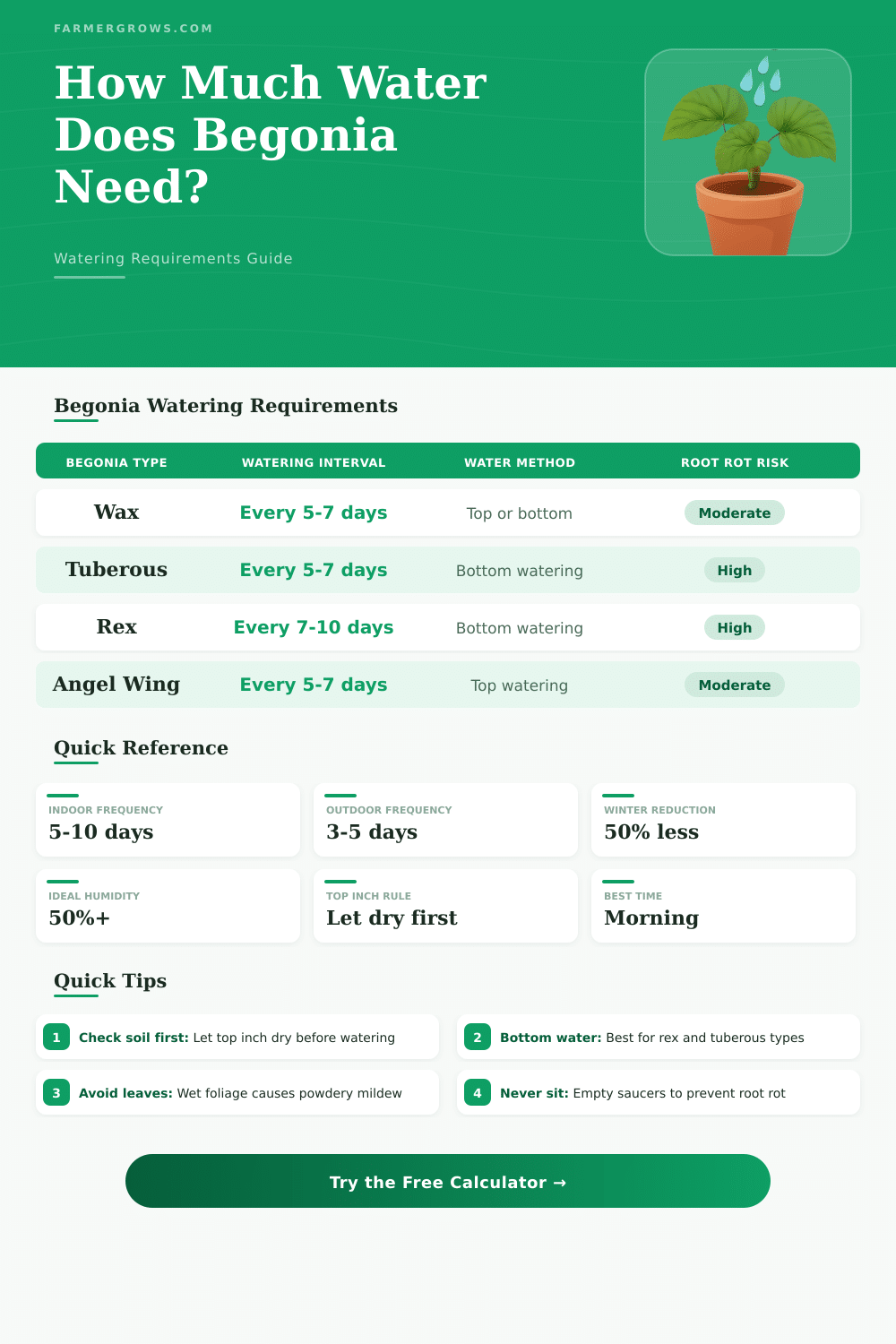
| Begonia Type | Watering Interval | Water Method | Key Notes |
|---|---|---|---|
| Wax (Semperflorens) | Every 5–7 days | Top or bottom | Let top inch dry; tolerates some neglect |
| Tuberous | Every 5–7 days | Bottom watering | Avoid wetting leaves; powdery mildew risk |
| Rex | Every 7–10 days | Bottom watering | Humidity more important than soil moisture |
| Angel Wing (Cane) | Every 5–7 days | Top watering | Needs well-draining soil; moderate water |
| Rieger (Elatior) | Every 5–7 days | Top or bottom | Moderate water; avoid soggy soil |
| Rhizomatous | Every 7–10 days | Bottom watering | Stores water in rhizomes; drought tolerant |
| Season | Water Adjustment | Frequency Change | Notes |
|---|---|---|---|
| Spring | Baseline | Normal schedule | Active growth resumes; increase gradually |
| Summer | +20–30% more | More frequent | Higher evaporation; check soil often |
| Fall | -20% less | Less frequent | Growth slows; reduce gradually |
| Winter | -50% less | Half frequency | Dormant or slow growth; avoid overwatering |
| Begonia Type | Ideal Humidity | Low Humidity Signs | How to Increase |
|---|---|---|---|
| Rex | 60–70% | Crispy leaf edges, curling | Pebble tray, humidifier, grouping |
| Angel Wing | 50–60% | Brown tips, leaf drop | Misting area (not leaves), humidifier |
| Tuberous | 50–60% | Bud drop, dry edges | Pebble tray; avoid direct misting |
| Wax | 40–50% | Slow growth, pale leaves | Grouping plants, pebble tray |
| Symptom | Over Watering | Under Watering | Action |
|---|---|---|---|
| Leaves | Yellowing, mushy, dropping | Wilting, crispy brown edges | Check soil moisture 1 inch deep |
| Stems | Soft, blackening at base | Thin, leggy growth | Inspect for stem rot; adjust schedule |
| Roots | Brown, mushy, foul smell | Dry, brittle, pulling from soil | Repot if root rot; bottom water if dry |
| Flowers | Bud drop, moldy blooms | No blooms, small flowers | Water at base; never wet flowers |
Watering Begonia plants right is truly one of the most difficult parts of keeping them alive. The problem is that these plants do not like extremes, too much Water causes rot, too little and they wilt. What makes them a bit demanding is their preference for soil that stays always moist so they usually need more Water than a typical houseplant on the window shelf.
Begonia plants in pots are especially thirsty during their growing seasons. Spring and summer widely requires Water one time per week, but when the heat rises, you likely will have to Water more often. The best gap usually is every two to four days, when the temperatures climb.
How to Water Begonia Plants
Naturally, if they suffer from heat and dryness, they need even more frequent Water than in colder times.
Here what I would advise before watering: touch the upper one to two inches of soil every few days. It feels dry to touch? Then Water.
It still moist? Wait. While watering, go until Water spills from the drain holes in teh bottom, that ensures that the whole root system soaks up.
Begonia plants in bright places thirst especially a lot. Those that sit in direct sun or grow without enough root space, need extra attention and more frequent Water.
For a Begonia in a normal 5-inch jar that does not receive direct sunshine. From my experience, such a plant needs around half a cup of Water almost every week or so, occasionally stretching too nine days depending on your setting. The soil should feel moist, but never muddy or fully dry.
Here the key spot: Begonia plants absolutely hate to stand in sitting Water. Their roots rot easily. After watering, check after an hour or so, to make sure that Water does not build up in the saucer.
Drain any excess right away. Jars with real drain holes are required. Room temperature distilled Water works best, if you can use it.
Watering in winter in the morning is the best time. For royal Begonia plants especially, Water only the ground and avoid the leaves entirely. Even so, misting the leaves twice per week, or keeping higher humidity around, helps to prevent leaf drop in those species.
Because Begonia plants come from tropical and subtropical areas, they benefit when the air is more wet. Tuberous Begonia plants especially like that humidity in the air, and if you live in a dry place, you probably will have to find ways to raise thehumidity level.
Bottom watering is a real game changer that is worth trying. Instead of pouring from up, lay the jar in a bit of cold Water and leave it to soak from below. Air flow is also important, even little potted Begonia plants in tight corners need frequent Water, but good air flow stops fungal diseases from spreading.
Keep mulch from natural materials on the soil surface to hold the moisture. Keep those plants away from direct sun, because leaves burn and fast drying becomes a problem. The right balance seems to be watering one time when the soil is between half and three quarters dry.