
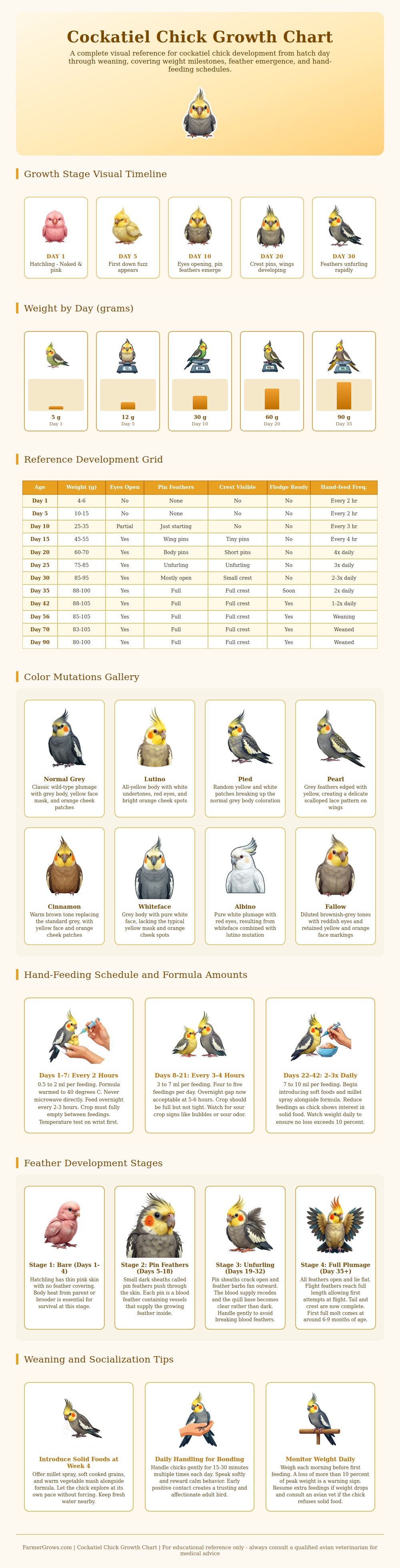
A baby cockatiel is not much of anything when it hatches, so you start out taking very good care of a little nothing. Within days or even hours, it’s growing fast. In a few weeks, your bird will be up and about. It will test its wings and learn how to balance upright and more. It’s all change-change-change-and you need to keep eye on it.
If the bird lags, there is usually small signs of trouble early on. Early detection makes a difference for long term health of the chick. As you can see on the visual timeline (chart above), the transformation is quick. It goes from no down, to pin feathers, and then to a complete coat of feathers.
Raising a Baby Cockatiel
First time keepers get twitchy that first few days. A naked chick cannot regulates its body temp. At each feeding, make sure it’s warm and hydrated. As soon as it gets yellow fuzz, it has a bit of insulating protection. It’s still tender though. When the eyes are fully open and the crest starts to pin, the bird is up and about.
Now the primary danger is not temperature regulation but rather proper feeding and care. Growth of chicks have a pattern to it. You will notice that they gain the most weight between days 10 and 20. Their pin feathers also starts to grow on those days. Those use up some energy as well.
Weigh your chick at the same time each morning. This shows you whether your chick is gaining weight every day or if it has stopped gaining as much weight. If there is no weight gain for multiple days, chances are high that you need to either feed less often, or maybe the formula strength isn’t right. Sounds like a little thing….it’s really important to development though.
There are definite indicators that feather development is progressing. Small spikes called dark pin feathers appear at first. Then these spike-feathers crack and show their real colors. As these feathers unfold the blood supply inside the quill starts to recede. This is a critical period for breaking feathers in a bird. They must be handled gently.
After about day 35, all of its plumage is well developed. Soon thereafter, flight will occur clumsily. That transition is easy enough to see on the chart. From there, it’s time to reduce brooder temperature and provide perches.
When feathers come in, your hand-feeding routine changes. Early on, (first week), they empty their crop fast. Feed every couple of hours day and night. Week three and things slow down; you may be able to sleep a bit more but always do a crop check post-meal. At about week four, it’s time to introduce them to solid foods.
Offer some millet or warmed mash. Some will take to it right away. Others are insulted by something different on their bill! Be patient. Continue with formula until they show interest in solids.
Chicks’ feathers start to open up slowly and color mutations shows through over time. An orange patch on their cheeks (and a yellow face mask) is characteristic of a normal gray chick. The lutinos are still bright yellow, but with red eyes. The pieds sport random patches of yellow/orange and white that is most apparent after they fill in their body feathers. Growth rate and feed schedule don’t differ based off color; it just affects how it looks at the end. Knowing what color pattern you have means you can have realistic expectations of how the bird is going to turn out when it’s weaned.
Chicks are weaned by behavior, not calendar date. Observe it eating from food dishes. It may be less enthusiastic about being fed via syringe. Drop one feeding and check its weight in the morning. If it’s lost over ten percent, add another feeding back in. Handle the bird every day during this time to keep it tame and to help you notice if something doesn’t seem right.
The socialization window is brief. Gentle regular contact now will pay off for years. A steady eye is better then a dramatic hand. Few problems announce themselves in dramatic fashion. First, it is usually something you notice in how they eat and then in their weight. Weigh the bird daily and do so at the same time every day; have that chart close by and you’ll detect subtle changes before they become large. It’s quiet work, but consistency makes for a confident juvenile, not a fragile hatchling.
Before long, the bird is ready to step beyond the brooder, hand-tame and willing to explore what life has to offer.