Bell Peppers Per Plant Calculator
Estimate how many bell peppers each plant should produce, then scale the count into total fruit, fresh weight, picking rounds, seedling reserve, and harvest density.
Bell pepper yield changes with fruit size, harvest color, root volume, heat, pollination, and how long the plant keeps setting flowers. Use the presets as starting points, then tune the inputs to match your garden or protected crop.
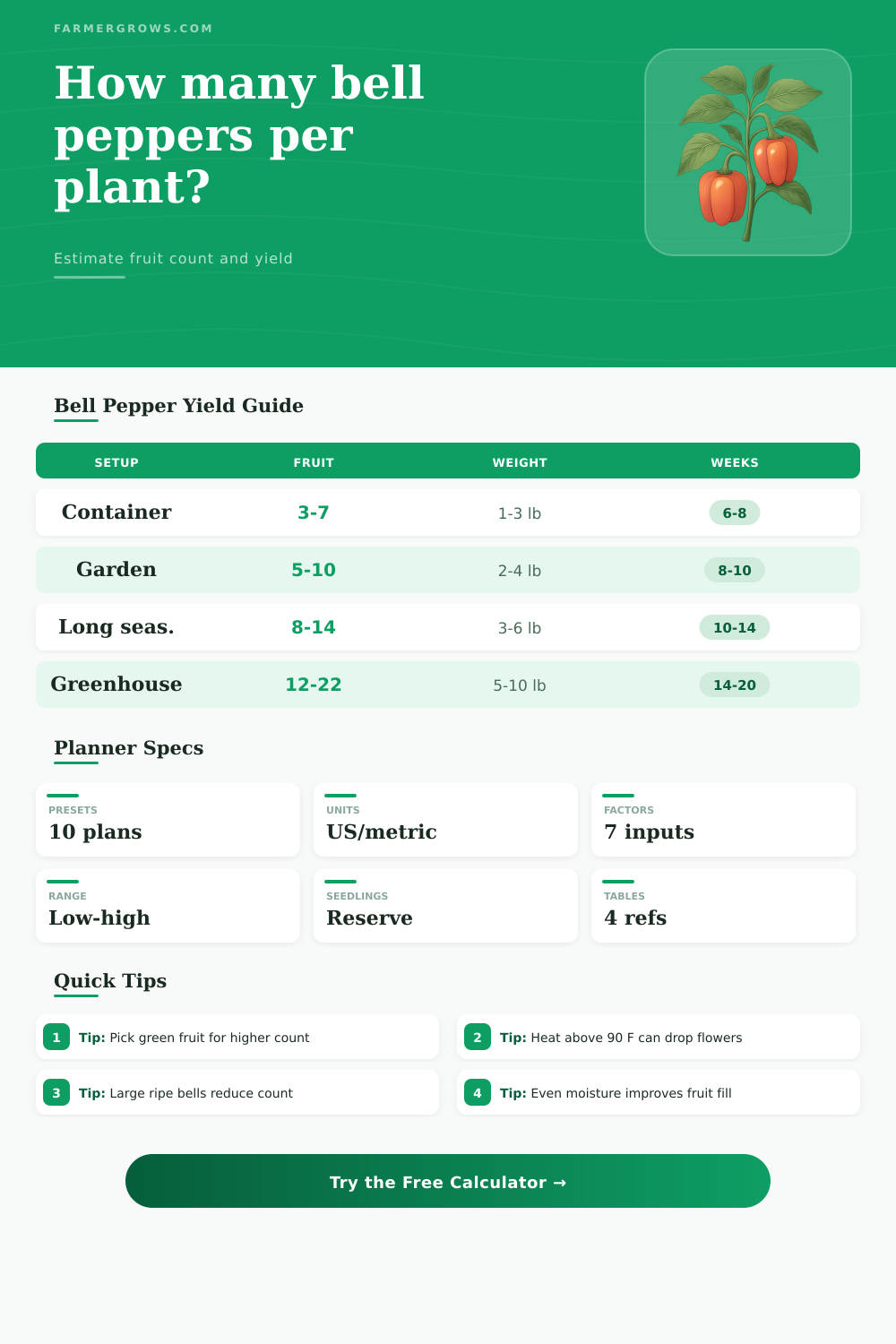
Picking green bells often can push a healthy plant toward 7 to 12 fruit because plants restart sets sooner.
Red, yellow, and orange bells stay on the plant longer, so count is often lower but each fruit can be heavier.
Patio plants commonly land near 3 to 7 bells unless pot volume, water, and fertility are very steady.
Pruned and supported greenhouse plants can produce longer windows with higher total weight per plant.
Bell pepper yield snapshot
Adjust the inputs and calculate to see fruit count, harvest weight, and seedling needs.
| Crop style | Typical fruit per plant | Average fruit weight | Fresh weight per plant |
|---|---|---|---|
| Patio container bell | 3 to 7 bells | 3.5 to 5 oz | 0.8 to 2.2 lb |
| Standard garden bell | 5 to 10 bells | 4.5 to 6 oz | 1.5 to 3.8 lb |
| Long-season garden bell | 8 to 14 bells | 4.5 to 6.5 oz | 2.5 to 5.7 lb |
| Mini or lunchbox bell | 18 to 35 bells | 0.8 to 1.5 oz | 1.0 to 3.3 lb |
| Greenhouse pruned bell | 12 to 22 bells | 5 to 7.5 oz | 3.8 to 10.3 lb |
| Factor | Lower yield signal | Higher yield signal | Calculator effect |
|---|---|---|---|
| Harvest stage | Waiting for full color slows new sets | Picking green fruit keeps plants moving | Changes count and fruit weight |
| Temperature | Hot dry pollen or cool nights reduce set | Warm steady weather supports flowers | Changes flower-set factor |
| Root volume | Small pots dry fast and limit fill | Raised beds or large bags buffer stress | Changes count and weight |
| Watering | Dry-wet swings cause flower loss and defects | Even moisture improves fruit fill | Changes count, weight, and risk |
| Support | Broken branches lower later harvest | Cages or stakes hold fruiting stems | Changes harvest window and loss |
| Spacing plan | Area per plant | Plants per 100 sq ft | Best use |
|---|---|---|---|
| 18 in x 24 in | 3.0 sq ft | 33 plants | Intensive raised beds with good airflow |
| 18 in x 30 in | 3.75 sq ft | 26 plants | Common garden row spacing |
| 24 in x 30 in | 5.0 sq ft | 20 plants | Large plants or humid sites |
| 24 in x 36 in | 6.0 sq ft | 16 plants | Wide rows, cages, or large bells |
| Scenario | Likely result | Adjustment to try | Why it matters |
|---|---|---|---|
| Many flowers but few fruit | Low fruit set | Check heat, humidity, and pollen movement | Flowers can abort before fruit sizing begins |
| Lots of small bells | High count, low weight | Thin damaged fruit and keep water even | Fruit fill depends on steady root activity |
| First flush only | Short harvest window | Pick earlier and add balanced feeding | Plants need new flowers after the first crop |
| Sunscald or soft spots | Higher cull loss | Keep canopy healthy and harvest promptly | Cull percentage changes usable harvest |
Bell peppers swing sharply with weather. Treat the low-to-high range as the harvest plan, especially when scheduling freezing, stuffing, or market harvests.
Green bells usually give more fruit per plant. Fully colored bells often give lower counts because fruit stays on the plant longer.
If pots dry out or feeding is light, use the container preset and keep the cull loss realistic. Small root volume can cut both count and fruit size.
Replace the default fruit weight with a real sample weight, then adjust harvest weeks based on how many new flowers the plants are setting.
When you plant bell peppers with great hope, what do you picture? Chances are you think: rows of full branches loaded down with shiny green squares. More likely, it’s a haphazard and less-dramatic story. There is a handful of early fruit, then weeks of nothing as the plant makes leaf, and then a flurry seemingly from nowhere.
You have to stop guessing how many fruits will grow and start learning to manage conditions that drive them, because there is nothing random about growing peppers. And you’ll see: Your specific garden’s conditions has real-world implications for yield. You can enter them, and the calculator will do math for you (above).
How to Get More Bell Peppers
Because nothing in nature is one-size-fits-all, results aren’t just one number. Rather, there is a range of what-to-expect numbers, depending on growing-season heat, when you pick things, and how big their root system are. That’s why it matters; that’s the only way a tomato that grows in a container versus in soil can behave similarly. Even if it’s the same variety.
The device factors in those differences… Of timing, spacing, pot size, and makes a difference. The harvest color matters: Most people don’t realize just how large an impact it has on overall volume. For example, if you harvested peppers when they’re still green, the plant will continue to produce more flowers because it believes it hasn’t done its reproductive duty yet. Leaving peppers on the vine until they change colors (to yellow or red) takes a lot longer, resulting in fewer total fruits per season, in exchange for higher sugar content and larger fruit size.
The calculator factors in this tradeoff. Choose a full-color harvest profile, and expect fewer fruits, but heavier ones. This reflects what happens biologically: Energy are limited.
And then there’s the issue of root space, which also puts a ceiling on yield: Compare a bell pepper growing in an open soil environment or a raised bed versus one confined in a five gallon bucket. Nutrients and water is more limited in the bucket than in either other situation. Nutrients and water are limited compared to either situation. Those small pots will dry out rapidly in high heat, leading to flower drop in the afternoon hours. Drought stress for even a moment can abort developing fruit you may never recieve coming.
You can use this information to plan your growing setup. This help you know what those roots can realistically support and adjust your expectations to match. The weather also figures into it, especially at either extreme: While bell peppers likes their weather on the warm side, they don’t fare well if nights remain cool (or days get too hot, topping out around ninety). Pollen becomes sterile from heat stress and the flower fall off without having set fruit.
To account for this, you can tell the tool how much of a hot spell recovery period you have, lowering your expected yield as it reflects likely losses. Better to expect a modest harvest than to find yourself over-anticipating and then disappointed by no bumper crop at all.
It lasted until there was no more space. Or did you? Until it’s too late, people forget spacing. Plants that is close together fight for air and light, leading to reduced photosynthesis and a welcoming invitation to disease. And adequate spacing means that each plant get what it needs to grow stems strong enough to hold the weight of fruit without collapsing. It’s not just about leaving space, but about making sure all plants gets the resources they need to do their best work.
That’s clear from the table on the page: How many plants fit into a given area if you space them different? Proper spacing leads to healthy plant. Keep a seedling reserve, which is something most first-time gardeners overlook. If not all of the seeds germinate, or if they don’t make it through early pest infestation and transplant shock, having a cushion allows you to reach your goal number of plants when the dust settles. A little bit of logistics can go a long way to avoid empty spots in your row later.
The bottom line: Growing bell peppers is as much about setting expectations as it is about fertilization and watering. This math will take you from the hope of a great crop to the engineering of one. Know not only how many seeds to start with for a buffer, but also if your set-up can handle the load. No more guesswork; there’s a plan here. This makes a difference when growing leaves versus eating peppers.