Kale Growth Time Calculator
Estimate kale harvest timing for baby leaf, bunching, or mature leaves from kale type, planting method, soil temperature, USDA zone, sun hours, transplant age, row spacing, fertility, and water stress.
Choose a real kale type or common garden situation, then tune the field conditions. The calculator estimates the harvest window from planting day, plus a likely calendar date.
Reliable garden kale with moderate speed. It often reaches bunching size before heavy mature leaves fill the plant.
Also called dinosaur kale. It tends to need a longer window for thick, strap-like mature leaves.
Tender leaves size quickly for baby harvest and salad mixes, especially with close spacing and steady moisture.
Vigorous curled plants handle cool weather well, though short winter days can stretch the harvest date.
Long-season kale grows more slowly toward full size and benefits from wider spacing and stronger fertility.
Kale Harvest Timing Estimate
Your kale timing estimate will appear here.
| Kale type | Baby leaf | Bunching leaves | Mature leaves | Timing note |
|---|---|---|---|---|
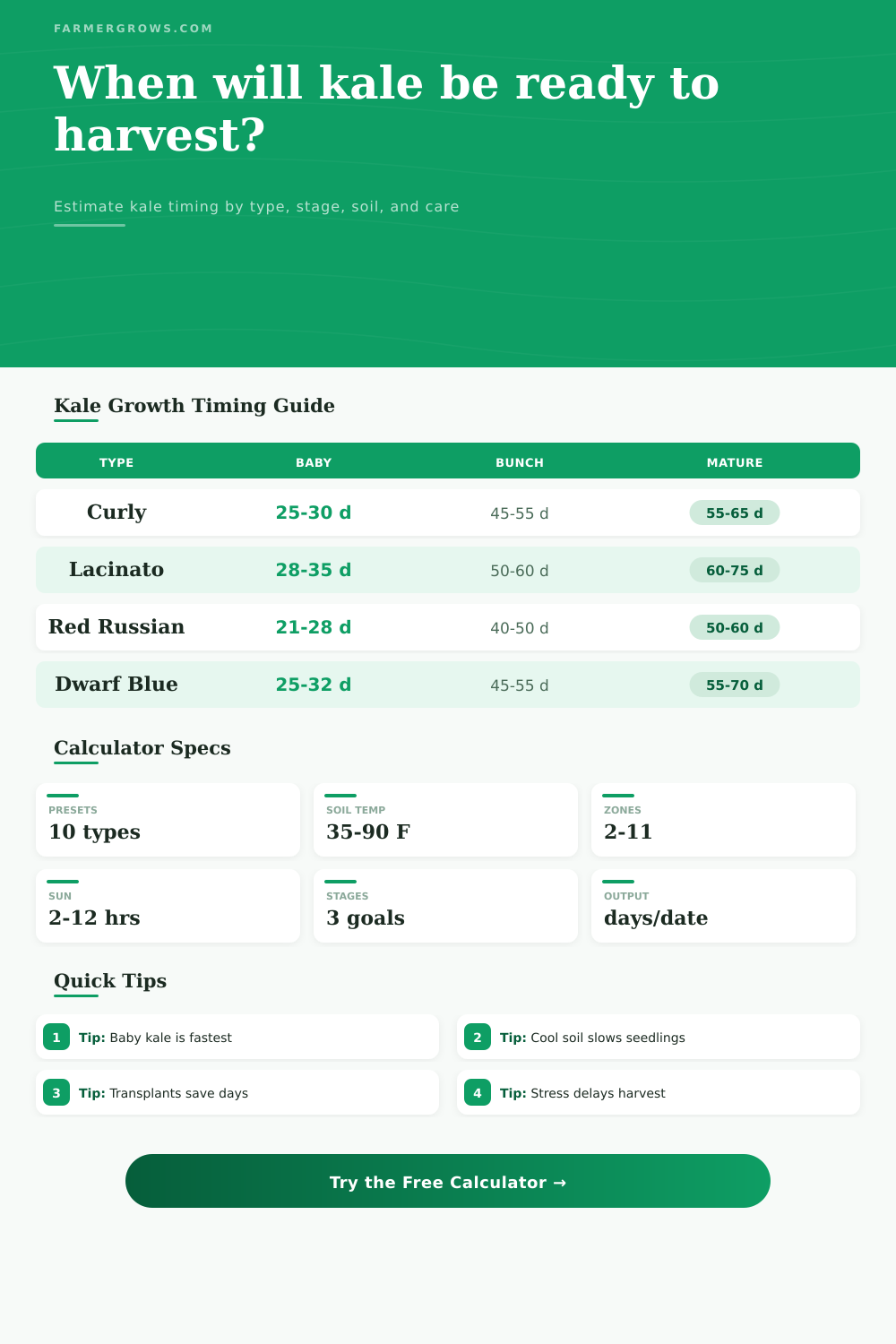
| Curly green kale | 25 to 30 days | 45 to 55 days | 55 to 65 days | Balanced garden pace for spring or fall. |
| Lacinato or dinosaur | 28 to 35 days | 50 to 60 days | 60 to 75 days | Often slower to fill thick mature leaves. |
| Red Russian | 21 to 28 days | 40 to 50 days | 50 to 60 days | Very useful for tender baby greens. |
| Siberian kale | 22 to 30 days | 42 to 52 days | 55 to 65 days | Handles cool-season planting well. |
| Walking Stick kale | 35 to 45 days | 65 to 80 days | 90 to 120 days | Long-season habit; mature target takes patience. |
| Soil temperature | Expected effect | Seedling behavior | Calculator adjustment |
|---|---|---|---|
| 35 to 44°F | Very slow | Possible germination, weak pace | Adds about 10 to 14 days |
| 45 to 54°F | Slow but workable | Emergence stretches out | Adds about 5 to 8 days |
| 55 to 70°F | Best range | Steady cool-season leaf growth | Near baseline timing |
| 71 to 80°F | Fast start, heat risk | Growth may slow if nights stay warm | Adds 1 to 5 days |
| Above 80°F | Heat stress likely | Tough leaves and stalled growth possible | Adds about 8 to 14 days |
| Harvest goal | Usual leaf size | Suggested spacing | First harvest cue |
|---|---|---|---|
| Baby leaf | 3 to 5 inches | 2 to 4 inches | Cut when leaves are tender and regrowable. |
| Bunching leaves | 6 to 10 inches | 8 to 14 inches | Pick the lowest outer leaves first. |
| Mature leaves | 10 to 18 inches | 12 to 24 inches | Harvest before leaves turn coarse or heat-stressed. |
| Overwintered leaves | Varies by plant | 12 to 24 inches | New spring flush depends on day length and cold damage. |
| USDA zone pattern | Fastest season | Common delay | Timing advice |
|---|---|---|---|
| Zones 2 to 4 | Late spring to summer | Cold soil and short season | Use transplants to gain 2 to 3 weeks. |
| Zones 5 to 7 | Spring and fall | Hot midsummer stretch | Plant for cool harvest windows. |
| Zones 8 to 9 | Fall through spring | Warm spring soil | Shade and irrigation help late crops. |
| Zones 10 to 11 | Coolest months | Heat and day length stress | Favor baby leaf or partial shade. |
Baby leaf timing: Close spacing can make the first cut faster, but it should not be used to judge mature kale timing. Switch the harvest goal when the crop is for bunches or full leaves.
Stress timing: Kale may survive cold, dry, or hot spells, but survival is not the same as growth. When leaves stall, add several days before expecting harvest size.
Use this estimate as a garden planning guide. Actual kale timing changes with cultivar seed lot, pest pressure, hardening-off quality, soil texture, and local weather.
First you sow seeds in the bed, then you water the bed, and then what? That’s where most people fall down on their garden plans: They wait.
And while kale is dependable, it won’t work miracles; it’s just a plant, one with certain needs (temperature, light, nitrogen) that can affects your crop yield. If you don’t factor those elements into your plan, odds are your yield will be a question mark.
How to Grow Kale Successfully
By balancing these factors, which change depending on the varieties (with their individual characteristics), the calculator above predicts when you should of expect a harvest. It transforms fretting into scheduling by helping you decide whether to give those sorry-looking seedling an extra week or just pull them out.
First decision: What will you be eating? Bunching, baby leaf, or mature? It’s not just the size that matters; each of these are a different crop with a different timeline. For example, in three weeks, baby-size kale (like Red Russian) is ready. Curly kale grow more slowly. And lacinato requires a bit longer before it develops that typical thickness.
Want salad greens now? Pick a fast variety and go baby. Want robust cooking leaves later? Plan for longer. The reference tables breaks this down, type-by-type. But the secret here is to pick one goal and stick with it. Trying to mix goals in the same row spell chaos.
The growth rate depends on how warm the soil is. Cool soil (good for getting things going early) can also slows things down once they emerge from the ground. Expect a longer wait if spring soil is in the mid-forties. The sweet spot for growing at a steady pace is when the soil’s up in the sixties; heat up around eighty will stress the plant, slowing growth and making its leaves tough and leathery.
That’s one reason why many folks find their fall crops tastier then their spring crop. As the plants mature, the weather cools down, easing some stress and keeping the leaves nice and tender. Knowing whether you’re planting into cooling or warming soil is more important than the calendar date, since it depends on what zone you are in.
Pushing the plant towards what you want it to be (and the goal here is size) requires two things: sunlight and fertility. Yes, kale can take some shade, but no, you won’t get good speed in the dark; full sun is the ticket. A minimum would be six hours of direct. Anything less, and the plant will spend more time searching out light than making leaves.
And how do you make leaves? You use nitrogen as the fuel. Keep fertility up and steady, and the plant will stay on its growth curve. Stress slows growth, and thus adds days or weeks to your wait. Too little soil fertility (or poor soil), too much drought, those are stressors that cause slowdowns, and the tool takes them into account. A stressed plant doesn’t simply look stunted; it also take longer to reach harvest size.
Transplants can save time… If they’re up-to-speed when set out. Setting out a too-young seedling wastes your headstart. Setting out an overgrown one will cause shock and pause growth. A typical best age for a start is four to six weeks. The calculator takes into account how long the plant was in the tray, no need to count that time again. What matters is time spent in the ground.
And it depends on spacing: With crowded plants they will produce baby leaves faster, since there’s competition for light and things grow upward fast. If you want to grow full-sized leaves, however, then that crowding isn’t good. Then what happens is that they slow down their maturity as they fight each other for space and nutrients. So it’s a size-vs.-speed tradeoff: One or the other, but not both.
So in the end, this is all about how to manage our expectations with reality, such as kale timing. The calendar gives you the frame; the plant shows you the truth. Examine the foliage. Feel the soil. Adapt to the weather. And then pick what the plant is ready to deliver; not what the calendar dictates it “should” be.
Patience is the last ingredient, and the only one that no calculator can deliver.