
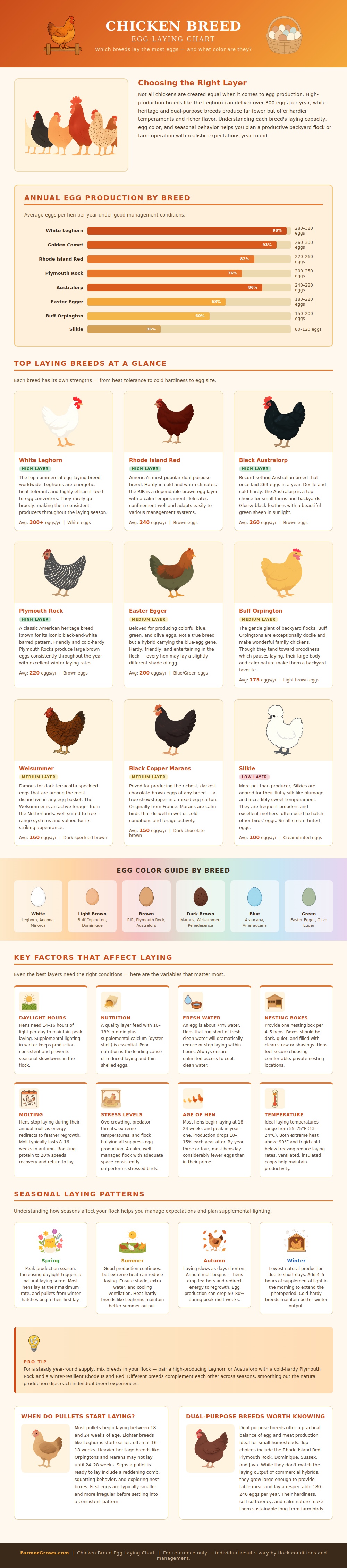
Due to the different purposes and climates that the various breed of chickens have been developed for, there is a variety in the number of eggs that each breed of chicken can produce each year. When choosing the breeds of chicken that will reside within you’re chicken flock, you should consider the number of egg that each breed will produce. Some breeds of chickens will produce a great number of eggs each year due to the breed being a high-output layer breed.
High-output layer breeds can produce a great many eggs because they can efficiently convert the feed that you provide to them to the eggs that they lay. However, high-output layer breeds require more feed to sustain there high levels of egg production, and have poor cold weather tolerance. Other breeds of chickens produce fewer eggs each year because they are dual purpose breeds.
How to Keep Your Chickens Laying All Year
In addition to producing eggs, these breeds also produce meat. However, dual-purpose breeds have better cold weather tolerance. The genetics of the chickens determine the color of the eggs that these breeds lay, but the color of the eggs doesnt change the nutrition of the eggs or its flavor.
Breeds of chickens that lay white eggs are typically Mediterranean breeds, while breeds that lay brown eggs is typically heavier-bodied breeds. Additionally, some breeds of chickens lay blue or green eggs due to a genetic trait that causes those breeds to deposit pigment on the outside of their shells. Those who consume your egg will likely note the color of the eggs that the chickens in your flock produce.
However, the color of the eggs doesnt change the value of the nutrition that is contained within their shells. In order to ensure that your flock of chickens reaches it’s maximum egg production, you must manage the flock carefuly. One of the primary factor that will affect egg production is the light in which the chickens are kept.
The hens within the flock require approximately fourteen hour of daylight each day in order to maintain their reproductive systems. During the winter months, when there is less natural daylight, you can provide artificial light in the morning to ensure that the chickens are exposed to natural dusk each day. Another of the primary factor to egg production is the diet of the chickens.
The layer ration that is provided to the laying hens should contain enough protein to meet there requirements. Additionally, oyster shell should be provided to each hen to provide the chickens with the calcium that is required to produce strong egg. The third of the primary factors to egg production is the availability of water for the flock.
Should any of the hens within the flock not have access to water, their egg production will cease. The egg production of your flock will also be affected by seasonal changes. During the spring months, the number of eggs that the flock produces will typically increase.
This is due to the increase in daylight that occurs each spring. During the summer months, the increase in the temperature within your region may have a negative effect on the egg production of your flock. During the summer, the flock should be provided with shade and ventilation within their pen, as well as access to additional water.
During the autumn months, many breed of chickens will undergo a molt. During a molt, the chickens shed their old feathers and grow new feathers. During this period of shedding and growing of new feathers, egg production will cease for the flock for a period of six to ten weeks.
Finally, egg production may decrease during the winter months. You can manage the fluctuations in egg production by keeping different types of breeds of chickens within the flock. For instance, high-output layer breeds will produce most of the eggs that the flock lays during the summer months when daylight is the most intense.
During the winter months, however, when daylight is the least of the year, the inclusion of dual-purpose breeds within the flock will ensure that the flock will continue to produce a sufficient number of eggs for the flock. Thus, by managing the flock to include different breeds of chickens, the number of eggs that is collected will be steady throughout each year. While egg production varies with each flock of chickens, egg production exists within a range, and that range can be managed through the care that is provided to the flock in terms of light, feed, water, and the breed of chicken that is kept in the flock.
You should of considered the breed types to avoid alot of trouble.