Amaryllis Bulb Bloom Time Calculator
Plan indoor amaryllis forcing from bulb size, start date, room temperature, dormancy, potting depth, stalk emergence, bloom window, and the rebloom rest period after flowers fade.
This calculator is for potted Hippeastrum amaryllis bulbs grown indoors. It estimates a practical bloom range, not a guarantee, because bulb origin, root condition, stored energy, room temperature, and light all move the date.
Your Amaryllis Bloom Forecast
Estimated dates update when you calculate.
| Bulb circumference | Typical stalk timing | Typical bloom timing | Planning note |
|---|---|---|---|
| 22-24 cm small bulb | 2 to 4 weeks | 7 to 10 weeks | May produce one stalk and needs steady warmth. |
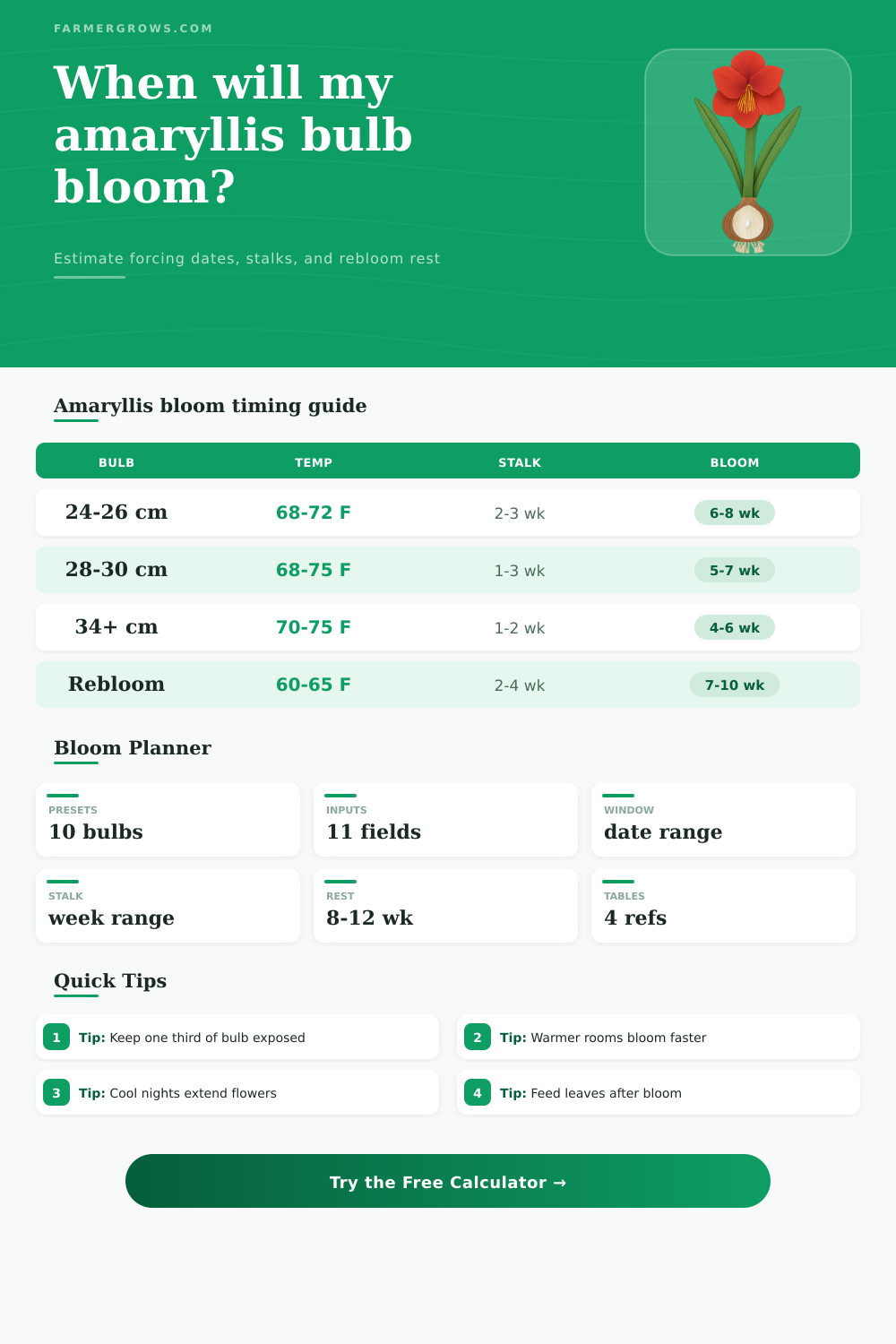
| 24-26 cm medium bulb | 2 to 3 weeks | 6 to 8 weeks | Good general gift-bulb timing. |
| 28-30 cm large bulb | 1 to 3 weeks | 5 to 7 weeks | Often the best balance of speed and bloom count. |
| 32-34 cm jumbo bulb | 1 to 2 weeks | 4 to 6 weeks | More stored energy and more chance of a second stalk. |
| 34+ cm mammoth bulb | 1 to 2 weeks | 4 to 6 weeks | Support heavy stalks before flowers open. |
| Room temperature | Effect on forcing | Bloom quality | Best use |
|---|---|---|---|
| 58-62 F | Adds about 1 to 2 weeks | Sturdy stalks, long display | Hold a bulb back once buds show. |
| 63-67 F | Slightly slower than average | Good color and stem strength | Windowsill bloom control. |
| 68-72 F | Average indoor forcing speed | Reliable growth | Most holiday planning. |
| 73-78 F | Speeds growth by several days | Can stretch if light is weak | Catch up a late bulb. |
| Above 78 F | Fast but riskier | Shorter flower life | Use only briefly, then cool down. |
| Stage | Suggested timing | Care focus | Bloom impact |
|---|---|---|---|
| After flowers fade | Remove spent blooms | Keep leaves growing in bright light | Rebuilds bulb reserves. |
| Leaf-building season | 4 to 6+ months | Water and feed like a houseplant | Improves next bloom odds. |
| Dry rest | 8 to 12 weeks | Cool, dark, mostly dry storage | Helps schedule rebloom. |
| Wake-up watering | 5 to 8 weeks before target | Fresh mix, one thorough watering | Starts new stalk growth. |
| Bud display | Move cooler after color | Bright light, rotate pot | Extends flower window. |
| Desired bloom period | Start large new bulbs | Start small or cool-room bulbs | Notes |
|---|---|---|---|
| Thanksgiving week | Early to mid October | Late September to early October | Use warm bright conditions early. |
| Christmas week | Early November | Mid to late October | Cool buds if they arrive too soon. |
| New Year week | Mid November | Early November | Good timing for standard dry bulbs. |
| Valentine week | Late December to early January | Mid December | Useful for saved bulbs after fall rest. |
| Early spring | January to February | December to January | Expect brighter light to improve stalk strength. |
Forcing tip: If buds appear early, move the pot to a brighter, cooler room around 60 to 65 F. This slows opening without chilling the bulb hard.
Rebloom tip: After bloom, keep the leaves, water lightly, and feed during active growth. The next stalk is paid for by months of healthy leaves.
To make your amaryllis bloom on Christmas morning, or whatever date you want, you need to buy a bulb and understand what makes it grow: temperature, light, and stored energy. Think of bulb like a biological clock that you can set to wake up and bloom on command. Working backwards from your desired bloom date is the way to go rather than guessing when to start. Here’s a calculator to help.
The biggest single variable we has some control over is temperature. Metabolic activity gets going when it’s warm, speeding the flower stalk out of ground and up to light. A bulb kept at, say, seventy degrees in a room will grow rapidy and vigorously. A cooler temperature (in the low sixties) slows the pace, but also typically yields a tougher stem that lasts longer once cut. Those are two competing factors, and the speed/longevity chart shows how they play out. It’s up to each individual what is more important: faster or longer-lasting.
How to Make Your Amaryllis Bloom on Time
That’s when bulb size comes into play, which is almost as important than temperature: How much oomph does it have? The bigger the bulb, the greater its reserves of stored-up energy. A big jumbo bulb, more than thirty-four centimeters across, says, “Push me around, make me do whatever you want (blooms all over).” Little ones don’t have so many slack minutes in them; their energy stores goes into producing just one stalk, and perhaps no blooms at all if things aren’t up to snuff. No wonder two friends who plant the same variety at the same time ends up with different results. One had a bigger bulb that allowed for a second bloom, while the other played it safe.
Instead of basing your starting time based off the weather, do it by looking at calendar. On average, it will take six to eight weeks indoors for most typical bulbs to go from potted to fully open. Want flowers around Valentine’s Day? Pot up in early January. Around Easter? Start in February.
The tool accounts for differences in each bulb: How far along was its journey toward dormancy? Where did it come from? Some Southern Hemisphere bulbs may want to jump right back into action after just having finished blooming in their native climate. Bulbs kept cool and dry while dormant needs more time to wake up. It bridges the gap between the plant’s biology and your own calendar.
Another not-so-obvious way to keep a plant healthy is to use a shallow pot, leaving at least the top third of the bulb poking out of ground. That’s because too much moisture around the scalp-like layers can cause crown rot. And having some part of the bulb showing lets you check if and when you spot appearance of that green nose, time to get regular with watering. Until then, dry off roots most of the time, forcing the bulbs to seek water deeper down. This will result in a strong root system for hold up those hefty stalks later.
When the blooms have gone, the job doesn’t end, it really starts! If you want a repeat performance next season, the leaves (which serve as solar panels) must do their part in recharging the bulb for next year. Promote good health by keeping the leaves well fed, lightly, throughout the growing season so they stores enough power to force again. Before forcing, let bulbs have a proper rest period of eight or even twelve weeks which gives the plant time to reset its inner rhythm.
You should of allowed it more time too. That way, what might have been a hope becomes an assurance: It’s not “maybe” but planned; it happens on schedule, with time, size, and heat adjustments in mind. The goal is always that specific moment when the first flower unfurls exactly when you want it to.