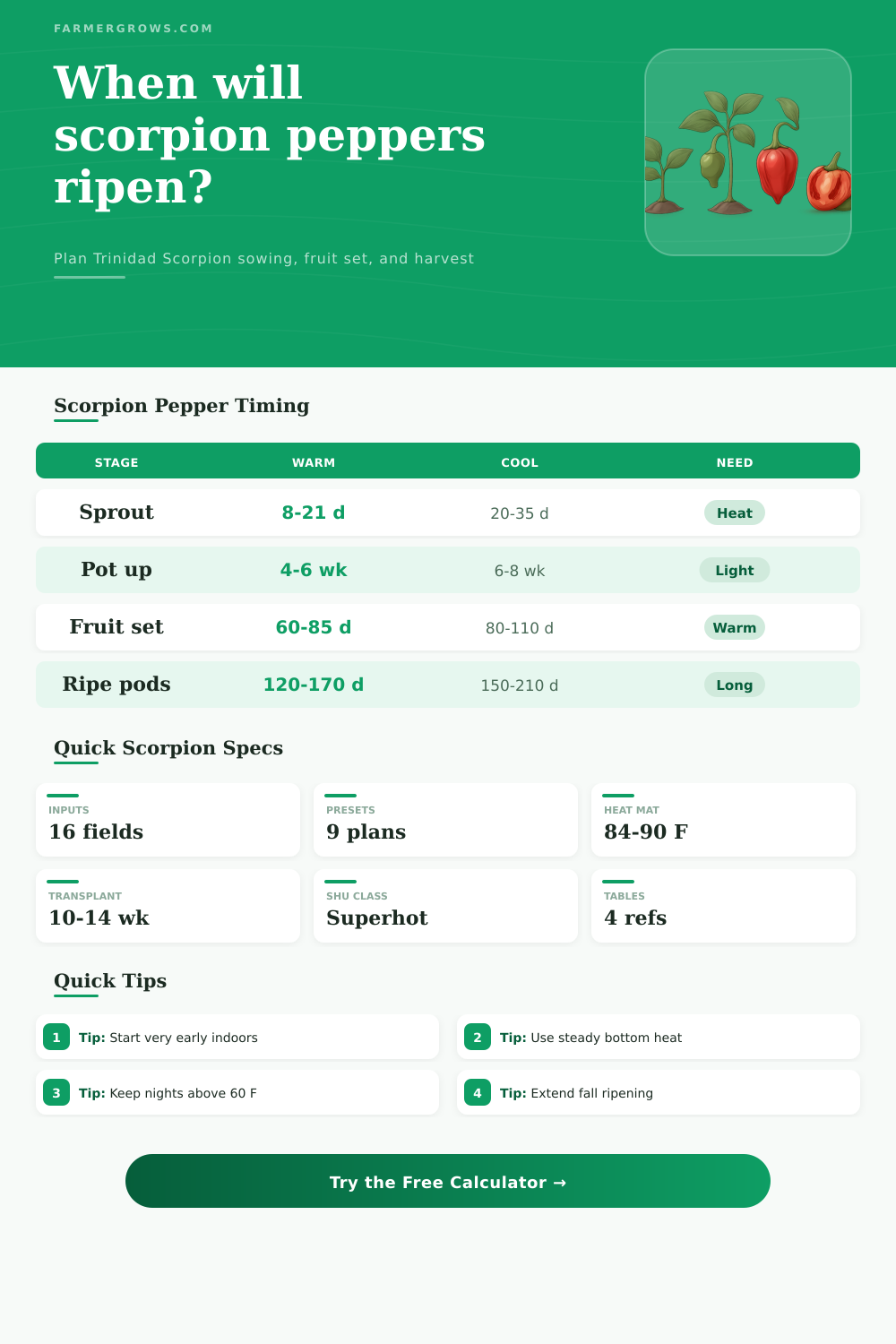
Scorpion Pepper Growth Time Calculator
Plan Trinidad Scorpion and Moruga-type superhot peppers from heated germination through transplant age, first fruit set, ripe color, greenhouse or container extension, and final harvest before frost.
This calculator is tuned for Trinidad Scorpion peppers, including Moruga, Butch T, yellow, chocolate, and CARDI-type selections. It is not a generic hot pepper calendar: Scorpions often need warmer starts, older transplants, heavy late-season light, and a longer color finish than habaneros, while still differing from ghost and reaper timing.
📋Scorpion Pepper Presets
🌶What Makes Scorpions Different
Many pods form the pointed tail and blocky shoulders that separate true Scorpion types from ghost-style pods.
Moruga and Butch T selections sit in a different planning class than habanero, Scotch bonnet, or cayenne peppers.
Strong plants usually need an early indoor sowing, heat mat, bright light, and a slow hardening period.
Pods can reach full green size well before red, yellow, orange, or chocolate color develops usable heat and aroma.
🌱Growth Time Inputs
Scorpion Pepper Timing Results
Enter your dates and conditions to estimate Scorpion germination, transplant, fruit set, and ripe harvest windows.
📅Timeline Snapshot
🔥Superhot Cultivar, SHU, And Ripening Grid
| Cultivar | Typical SHU class | Transplant to ripe | Ripening color behavior |
|---|---|---|---|
| Trinidad Moruga Scorpion Red | 1,200,000-2,000,000+ SHU | 125-175 days | Slow green-to-red finish; needs long heat and steady moisture. |
| Trinidad Scorpion Butch T | 900,000-1,400,000+ SHU | 120-165 days | Red pods often wrinkle and tail before final color is complete. |
| CARDI Trinidad Scorpion | 800,000-1,200,000+ SHU | 115-155 days | Reliable red type; slightly better for market rows in warm climates. |
| Yellow Trinidad Scorpion | 800,000-1,200,000 SHU | 115-160 days | Yellow color can finish earlier than chocolate in bright greenhouse heat. |
| Chocolate Scorpion | 900,000-1,500,000+ SHU | 130-185 days | Dark mahogany pods need extra late-season color time before sauce use. |
| Orange Scorpion | 700,000-1,100,000 SHU | 115-155 days | Orange-ripe pods can look finished early; track days after full size. |
| Purple blush Scorpion type | 600,000-1,000,000+ SHU | 120-165 days | Purple blush is not ripe color by itself; wait for final red or orange base. |
📚Scorpion Growth Stage Reference
| Stage | Typical timing | Scorpion-specific risk | Planning action |
|---|---|---|---|
| Heated germination | 8-28 days, sometimes longer | Cool media causes slow, uneven emergence. | Use bottom heat, moist media, and a vented dome once seedlings appear. |
| Seedling pot-up | 3-6 weeks after sprout | Root binding or weak light slows the later transplant. | Move to a larger cell or pot before roots circle heavily. |
| Transplant | 10-14 weeks after sprout | Planting into cold nights stalls Scorpion roots. | Wait for frost-safe soil and nights near 60 F when possible. |
| First flower and set | 60-100 days after transplant | Blossom drop rises with cool nights, low light, or excess nitrogen. | Keep plants warm, supported, evenly watered, and not overfed. |
| Full green pod | 90-135 days after transplant | Green full-size pods are not fully ripe for seed or sauce. | Protect foliage so the plant can hold pods through color change. |
| Ripe color harvest | 115-185 days after transplant | Red, yellow, orange, or chocolate finish may run into frost. | Use greenhouse cover, containers, or plant lifting to extend ripening. |
🏡Setup And Season Extension Table
| Growing setup | Timing effect | Best use | Watch point |
|---|---|---|---|
| Open field row | Baseline timing | Warm climates with long frost-free seasons. | Mulch and wind protection help early root warmth. |
| Raised bed with mulch | About 4 days faster | Garden plantings where soil warms earlier. | Keep moisture even when fruit load increases. |
| Outdoor container | Can be 4-12 days slower if small | Patio growers who can move plants under cover. | Use 7-10 gallons or more for serious ripe pod yield. |
| Low tunnel or row cover | Adds 2-3 useful weeks | Short-season spring starts and autumn ripening. | Vent on hot days to prevent flower drop. |
| High tunnel | About 10 days faster | Reliable fruit set in marginal summers. | Pollination and airflow matter in humid heat. |
| Greenhouse or hoophouse | About 15 days faster | Moruga, chocolate, and seed-saving crops. | Manage mites, calcium stress, and heat spikes. |
| Overwintered plant | Skips seedling delay | Keeping elite Scorpion genetics for early crops. | Prune, refresh potting mix, and reintroduce light gradually. |
📊Scorpion Vs Other Hot Pepper Timing
| Pepper group | Typical start need | Common ripe window | Why it differs |
|---|---|---|---|
| Habanero | 8-10 weeks before transplant | 90-130 days after transplant | Hot C. chinense type, but usually less extreme and often earlier than Scorpion. |
| Ghost pepper | 10-14 weeks before transplant | 110-165 days after transplant | Long Bhut-style pods ripen slowly but have different pod shape and set pattern. |
| Trinidad Scorpion | 10-14 weeks before transplant | 115-185 days after transplant | Superhot, heavy-wrinkled pods with tail shape and a long color finish. |
| Carolina Reaper | 10-14+ weeks before transplant | 125-190 days after transplant | Often later and more variable than Scorpion in marginal light or cool nights. |
| Jalapeno or serrano | 6-8 weeks before transplant | 60-95 days after transplant | C. annuum peppers can be direct marketed green and do not need superhot ripening time. |
💡Scorpion Growing Tips
Heat mat tip: Measure media temperature, not room temperature. Trinidad Scorpion seed commonly performs best when the root zone stays near 84-90 F until emergence.
Ripening tip: For red, yellow, orange, and chocolate Scorpions, count from full-size green pods and protect the plant through color change instead of harvesting too early.
The trinidad scorpion pepper is no ordinary pepper plant; in addition to regular garden chores, it has particular requirement that aren’t found in most varieties. You can grows one like a jalapeño or its relatives. However, it needs more attention and follows a very precise order of events to reward you, starting long before spring. It is a hot pepper on the hottest of lists, but it is not an early pepper. It’s about temperature…and time.
Many growers fail here… Thinking that just like any other pepper (hot peppers), Scorpion seeds can be grown at room temp. But they are not. They take some warmth to get going. Bottom heat is key; I recommend constant eighty four to ninety degree bottom heat to help your seed break dormancy quickly. Without this kind of heat, the seed will likely rot or stop growing if you try using room temperature. The wasted time should of been made up for later, so create the right conditions.
Growing Trinidad Scorpion Peppers: Time and Heat
The seedlings will stay indoors for 10, 14 weeks, starting when the green shoots emerge and continuing until you can plant them outside. So: three more months of attention indoors (during what’s probably still chilly outdoor weather), during which time you’ll need to go figure backward from your last frost date, or whatever it is where you live. Nobody wants to set out a transplant with legs like a beanpole in cold soil; that shocks the root system, halts progress, and sets you back weeks. What the thing needs is not so much warm air but warm soil when it touches the earth.
Scorpion growers know that they stand to lose a lot if harvest is early; it’s not just about the color shift, but also a beginning to the flavor development process. Many home gardeners will pick their peppers when they first turn yellow or red, but those pods requires additional time to reach full ripeness. With an unripe pod, you’re losing out on rich aroma and top levels of capsaicin, especially if frost hits during the transition phase. Losing this last stage of maturation before the end of the growing season is realy the heartbreak.
Can you stretch out the season of ripeness? That depends on your growing situation: Plants in containers (like a pepper on the patio) can comes inside once nights dip below sixty; plants in the open ground cannot. Greenhouse and high tunnel gardens is also crucial to extending the season… Getting their pods up to full size before winter sets in. Often it’s less expensive to erect a basic hoop house than purchase seed that never reached its potential.
Gardening feels very much like a relay race whose legs are out of sync. First it’s slow and needs heat, then it’s steady and needs light, and finally it’s delicate and sensitive to cool weather. Rushing one leg means compromising the next (and the end product). By planning according to the seasons, you transform guesswork into a timetable, and the difference in results is huge: No more wondering why the peppers aren’t bigger; now you know exactly when to bring them indoors for the finish line.
Give ’em time and warmth; they’ll grow.