
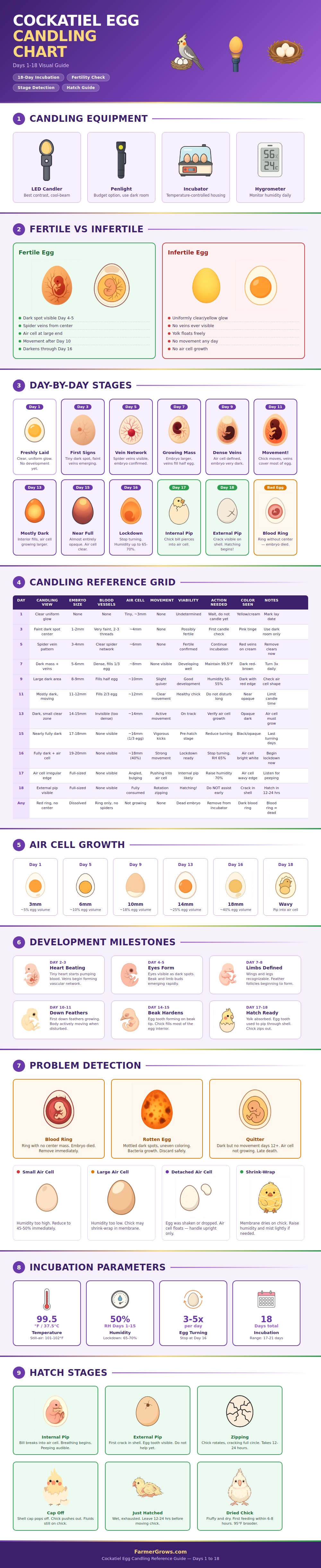
Candling is a method that is used to inspect the interiors of a cockatiel egg. Candling is also a method that is used to determine whether or not the cockatiels egg is fertile. A person must use candling to look through the shell of the cockatiel’s egg.
A person can use a high-intensity LED light to candle the egg, but a person could also use a penlight if the person is in a dark room. A person can use candling to locate the embryo inside of the egg. When first viewed, the embryo will appear as a small speck of light.
How to Candle Cockatiel Eggs
After some time, the embryo will appear as a more larger mass of light. However, if a person performs candling to early, a person will only observe a yellow glow within the egg. While a yellow glow within the egg isnt indicative of any problems with the egg, such a glow can lead to anxiety of the eggs potential infertility.
If the egg is fertile, veins will develops within the egg. These veins are responsable for transporting the nutrients from the yolk to the embryo. The presence of veins within the egg indicate that the egg is fertile.
If there are no vein within the incubated egg after some period of time, the egg is determined to be infertile. Infertile eggs should be removed from the incubator to prevent their potential for rotting, which can lead to the contamination of the other eggs within the incubator. Within the egg is an air cell.
This air cell can be used to indicate the humidity within the incubator. If the air cell within the egg is too small, the humidity within the incubator is likely too high. If the air cell within the egg is too large, the humidity within the incubator is likely too low.
Monitoring the air cell within the egg allow a person to ensure that the embryo within the egg is healthy. Additionally, should a person be able to see the air cell, its the spot in which the chick will take its first breath. At the middle of the incubation period, the embryo within the egg will become large enough to block the majority of the light from the candling light.
It is possible that the embryo will move within the egg when candling the egg. However, a person should not perform candling to frequent with the eggs in the incubator. If someone removes the eggs from the incubator, the temperature of the eggs will drop.
Should the temperature of the eggs drop, this could be harmful to the embryo within the egg. It is possible that when candling the eggs, a person may spot a dark ring of blood within the egg. This dark ring indicates that the embryo within the egg has died.
Any eggs that contain this blood ring should be immediately removed from the incubator. If the embryo within the egg has passed on, the body may leak bacteria. These bacteria may kill the other embryos still within the incubator.
The final stage of incubation is called lockdown. During lockdown, the eggs should not be turned. Additionally, the humidity within the incubator should be increased during this period.
The reason for increasing the humidity is to allow the membrane of the egg to remain soft so that the chick is able to break the shell of the egg. Eventually, the chick will perform an internal pip to breathe the air within the air cell. Following the performance of the internal pip, the chick will perform an external pip in which it makes a crack in the shell of the egg.
During this external pip, a person should not attempt to assist the chick in breaking the shell. The effort required for the chick to break its shell will help to strengthening the chicks lungs and muscles. Through monitoring the veins and the air cell within the egg, a person can determine the progress of that egg throughout the incubation period.