
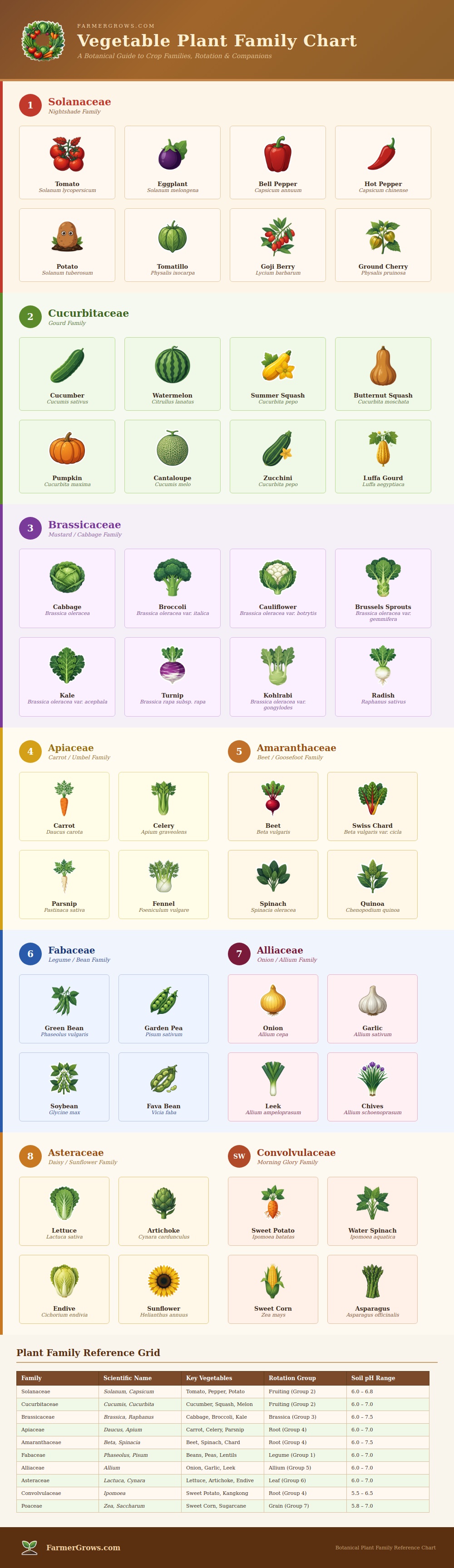
The tomatoes is sickly this year. They’re growing on ground that held potatoes last summer. And no, that’s not just bad luck. Knowing which veggies comes from similar families, and thus have common habits (reshapes your gardening plans), ensuring the crop will grow happy.
Plants like to be rotated: Related types (such as those shown on the chart above) tend to act alike and should of not been grown again in the same place. Why? Certain diseases overwinter in soil, so you won’t get a good crop if you plant the same things in the same spot again.
Why Plant Different Crops in Different Places
Tomatoes, eggplant, peppers and even potatoes belongs to the same botanical family, the Solanaceae; their roots wants well-fed, calcium-rich soil. Rotating the family into a new location let the soil regain its balance by starving out disease-causing organism.
Leafy brassicas such as kale, cabbage, broccoli and Brussels sprouts, all of which are headed relatives (or cousins) of one another, is heavy feeders, meaning they deplete soil of it’s nitrogen fast. Growing them after legumes makes sense; beans and peas fixes nitrogen in the soil for later use.
But you should know that each family prefer slightly different pH levels; so that is why there is a “reference grid” reminder above. If you’ve transplanted crops into beds where acid-lovers grew recently, it can explains why your crop is stunted. In this case, you’re not just up against biology but chemistry.
Lettuce, arugula, and other leafy greens are cool-season crop; they bolt fast when it gets hot (time your sowings accordingly). Because of their shallow roots, they don’t fare well competing for space with deeper taproot if planted too close together. For leafy greens like lettuce and arugula, vertical compatibility is more important than spacing.
As the infographic points out, you can plant them underneath taller crops, because root veggies like carrots and parsnips will happily grow down there as long as light level aren’t too low.
Beans, peas…legumes fixes nitrogen in the soil by housing bacteria that transform this gas into available fertilizer. The legume-filled bed will be ready to support greedy feeder later on in the crop rotation. It’s one of the rare crops you sow to create fertility, not deplete it.
Speaking of which…alliums (garlic, onions, leeks) is in a class of their own. They’re more of a repellent than a high-yielding crop; their strong smell throws off many pests who would otherwise munch other crops growing near them. They are great interplants for this reason and also great border crops.
There’s no need to devote space just to onions, either. Throw some in with your carrots or tomatoes, and see fewer carrot flies, aphids and others. You won’t mess up the overall design much but get the benefits.
Many gardeners is surprised to learn that sweet potatoes aren’t related at all to other tubers (which makes sense (they’re shaped more like potatoes!)). Sweet potatoes and potatoes has just one thing in common: they grow underground and also happen to be shaped roughly the same. To avoid contamination from any fungal issues (which may appear the same on the surface but are treated very differently), it’s best to keep things apart.
So if you want to avoid this confusion, don’t plant relatives in succession year after year. And use my family chart to create a three- or four-year rotation plan. Begin by planting legumes; these will add nitrogen, and then follow with heavy feeders like cucurbits or brassicas. Next, plant something that needs little food like alliums, or rotate to another crop. Follow with cover crops or allow to rest.
It doesn’t take a lot of time up front (just a few minutes in early spring) but saves loads of hours of troubleshotting throughout the season. Knowing who’s related to whom helps the garden stop feeling like a guessing game, and start running as a system you can control. It makes for a gardening based off intention, not hope, because there’s science behind what you decide to do.