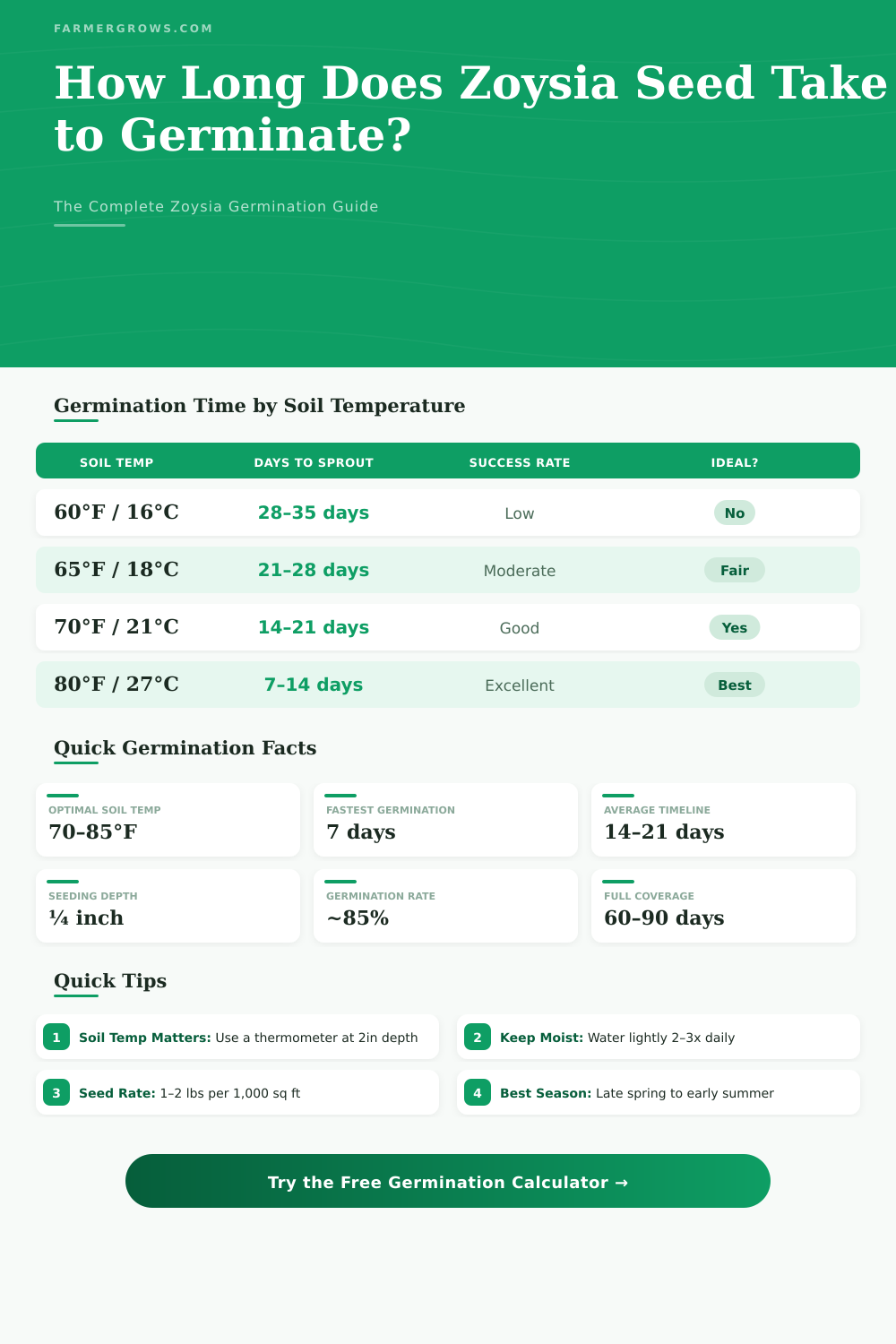
🌱 Zoysia Seed Germination Time Calculator
Estimate how long your zoysia seeds will take to germinate based on soil temperature, moisture, and seeding conditions
📏 Seeding Conditions
📊 Your Germination Estimate
🌡️ Germination Rates by Soil Temperature
📅 Germination Timeline by Condition
| Condition | Min Days | Max Days | Notes |
|---|---|---|---|
| Ideal (80°F+, moist, full sun) | 7 | 14 | Best possible outcome |
| Good (70–79°F, regular water) | 14 | 21 | Typical summer seeding |
| Fair (65–69°F, partial water) | 21 | 30 | Slower, patchy results |
| Poor (below 65°F or dry) | 30 | 45+ | Not recommended |
| Shaded area (any temp) | +5 | +14 | Add days to above ranges |
| Too-deep planting (>1/2 in) | +7 | +21 | May fail to emerge |
🌿 Zoysia Variety Germination Comparison
| Variety | Min Soil Temp | Avg. Germination | Full Coverage |
|---|---|---|---|
| Zoysia japonica | 65°F / 18°C | 14–21 days | 60–90 days |
| Zoysia matrella | 68°F / 20°C | 14–28 days | 75–100 days |
| Zoysia tenuifolia | 70°F / 21°C | 18–30 days | 90–120 days |
| Zenith Zoysia | 65°F / 18°C | 10–18 days | 60–80 days |
| Emerald Zoysia | 68°F / 20°C | 14–25 days | 70–100 days |
| Meyer Z-52 | 65°F / 18°C | 14–21 days | 60–90 days |
💧 Soil Moisture Impact on Germination
| Moisture Level | Watering Frequency | Time Adjustment | Expected Outcome |
|---|---|---|---|
| Excellent | 2–3x daily (light) | –2 to –3 days | Fast, uniform germination |
| Good | 1–2x daily | Baseline | Normal germination |
| Fair | Every 2–3 days | +5 to +10 days | Slower, patchy |
| Poor | Rarely / irregular | +10 to +20 days | Very poor germination |
Each morning, you stare at that empty patch of ground as if it owes you something. It’s hot, it’s dry, and nothing ever rise above the surface. In a way, zoysiagrass germination are the patience test for all homeowners. After seeding, the wait seems extremely long different than Bermuda or fescue turf. You’re hoping for a luxurius carpet…but instead, it’s silent. And that’s okay. That is what it sounds like when roots grows underground, preparing to shoot upward later.
Use the calculator above to determine when yours should emerge (it run the numbers for you using your soil conditions: temperature, moisture). Then you’ll know if you waited too long or if those seed just need more time.
How to Grow Zoysiagrass Successfully
So what’s the one single most important thing? It is not what you put into the soil, but two-inch-deep soil temperature itself. Because zoysiagrass is essentially a warm season grass, it go dormant in cool weather, hibernating. So if the soil has not warmed up above sixty-five degrees Fahrenheit, then those seeds effectively goes to bed. In fact, they may lie there for weeks (even months) before waking up, exposing themself to birds and mold in the process.
That is why you need to check your soil thermometer, and not just the weather app. Remember: warm air does not necessarily equal warm earth, particularly following a cold front or in shady areas. To get the metabolic switch flipped within seed coat, you want that steady heat.
Most people screw up with moisture management. They care too much. They see that the surface of the soil is dry, so they water heavily and gets the whole area soaking wet. This forms a mud crust over the seeds which literally holds the little shoots in place.) The seeds needs frequent spritzing with a very light spray. It should be enough to damp down top half inch but not soak, like a fine mist, so the surface feels cool to your finger. Visualize a sponge, not a puddle.
Watering less will mean dried seed. Too much, and emerging roots simply rot before they has a chance to get started. It’s an art form; it takes some days of watching to figure out what “too much” mean for you.
In those first few weeks, planting depth matter more than you’d think. Zoysiagrass seeds is tiny and have no stored energy to dig themselves free from thick layers of sod. To increase your chances, don’t bury them too deeply (as in deeper than a 1/4-inch). They might just literally starve before they reaches the light of day. One of the most frequent explanations people cite when their zoysiagrass seed “fails” is that it was planted too deep. The seed didn’t die. It just ran out of juice and surrendered to darkness below. Light raking on top and keeping them shallow will give them the best chance of emerging without burning all their tiny little lives away.
The basic rules apply but vary based off variety choice. For instance, in ideal conditions some varieties like Emerald or Meyer may emerge a little sooner, whereas another type of grass take more time to form full ground cover. That’s shown on the page as a reference table. It details which is fastest and slowest across various kind of grass. It also shows how it all come down to genetics (no arguing with biology). Avoid frustration by selecting a variety best suited for your climate zone.
The toughest aspect of this equation are patience. Once zoysia sprouts, its growth pattern, reaching out by both rhizomes and stolons… Means that those earliest green shoots is only the tip of the iceberg. What follows is the real work: filling in the gaps in seed-to-seed fashion, sideways. Expect two to three months‘ time from sowing to full cover. You should of waited for it; don’t reseed prematurely (thinking you’ve missed something); wait, water correctly, and those holes will fill in on their own.
The trick is to get the timing down so that the anxiety transform into anticipation. Knowing exactly how much time to expect (depending on where you live) means you don’t wait passively but plan actively. You learn to trust the process. Nothing is as valuable as trusting what you are doing with your lawn. That is why it lasts.