
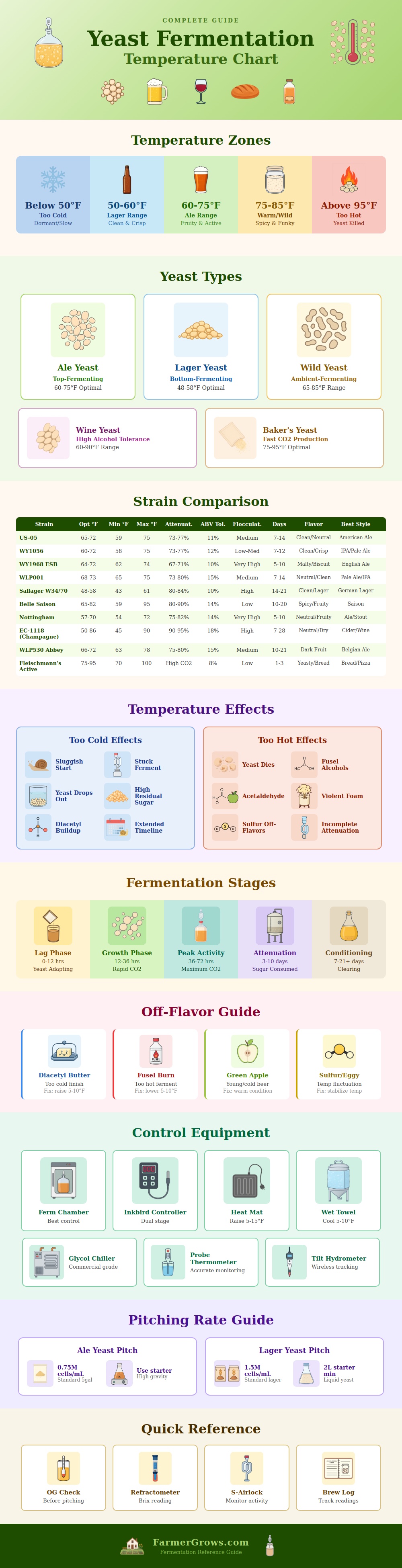
Yeast are a living organism that requires the proper temperature to perform its function corectly. The temperature of the liquid is a critical factor in determining the fermentation of the liquid and the flavor of the resulting product. Maintaining the temperature of the liquid too low will prevent the yeast from perform its functions properly and may lead to a stuck fermentation process.
Maintaining the temperature of the liquid too high will stress the yeast, leading to the production of fusel alcohols that impart undesirable flavor to the liquid. The yeast strain require different temperatures to perform there functions properly. For instance, the yeast used to brew ales require a higher temperature then the yeast used to brew lagers.
Keep Yeast at the Right Temperature
Because lagers require cooler temperatures, brewing them may require a dedicated refrigerator at the home. Ales require warmer environment for the yeast to perform properly. Hence, brewing ales at room temperature are an option for the home brewer.
Additionally, different strains of yeast will produce different flavors based on the temperature to which they are expose. Maintaining the proper temperature of the liquid is a challenging task for most home brewers. The brewing area in the home may have area with significantly different temperatures.
A dry heat source can raise the temperature of the fermenting liquids, and areas exposed to sunlight can reach temperatures that are detrimental to the yeast. To combat this, brewers can use fermentation chamber or heat mats to control the temperature of the fermenting liquids. In instances where a brewer would like to lower the temperature of the fermenting liquids, using a wet towel over the container can allow the liquids to cool by evaporation.
Maintaining a consistent temperature ensure the yeast does not produce undesirable flavors during the brewing process. Another essential ingredient for brewing beer are the pitching rate for the yeast. The pitching rate is the amount of yeast that you add to the liquid.
Adding too little yeast to the liquid will force the yeast to work harder to create the proper amount of yeast population. Under-pitched yeast will produce sulfur along with an odor of rotten egg. Lager yeast require a higher pitching rate than most other types of yeast strains, so creating a starter culture for the yeast may be necessary for brewing lagers.
The life cycle of the yeast can be divided into several stage. Yeast go through a lag phase followed by an explosive growth phase. During the explosive growth phase, the yeast produces its heat.
As a result, the temperature of the liquid may increase above the target temperature. Monitoring the fermentation chambers temperature during this phase ensure that the temperature does not rise to a level that stress the yeast. The last stage of brewing beer is attenuation and conditioning.
During attenuation and conditioning, the yeast absorb compounds like diacetyl that can impart an undesirable flavor to the final product. Rapidly lowering the brewing temperature to a final temperature too quick may trap this bad flavor in the beer. Slowly and consistent lowering the temperature of the fermenting liquids will allow the yeast to effectively clean the liquid of these undesirable compounds.
By monitoring the thermometer for the liquid and respecting the temperature requirements for the strain of yeast being use for brewing, the yeast will produce the desired results to the brewing process.