
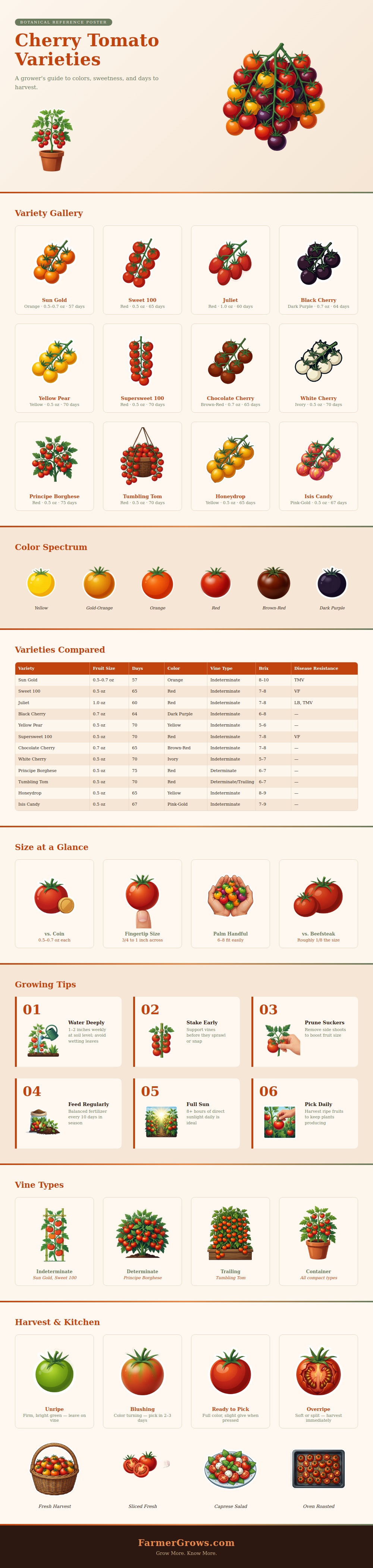
The tomato seed packet says “cherry,” so it will be easy, right? No! Depending on which cherry tomato variety you grow the flavor and timing can vary a lot. There is also a difference in how much effort it takes to grow them from planting until they is ready to eat.
First, consider its maturity timeline. Some kinds mature fast and begins bearing fruit in less than a couple of months. Other varieties take their time and won’t bear fruit for many days or even weeks. The former help you beat both the heat of mid-summer and the attack of late-season pests by getting something growing now. The latter tend toward more unusual colors (creamy ivory, for example, or deep purple), or just more complex flavors. They reward waiting with a complexity that mere sugar never do.
Tips for Growing Cherry Tomatoes
You’ll also have more work to do depending off the plant’s growth habit. Many gardeners thinks of all tomatoes as being similar (most think “tomato” is just one word). There are two kinds: determinate and indeterminate ones, which couldn’t be more unlike each other. With indeterminates, you get continuous fruit right up until frost sets in; but you’ll need to keep them pruned and staked all season long. With determinates, you gets some set amount of height, set your crop of fruit, and call it done. That’s great if you’re canning or freezing lots of tomatoes; not so good if you don’t want giant plant to care for, in which case a determinate kind is what you’re looking for.
Make sure to match your plant to your space. An indeterminate vine in a small pot probably won’t succeed and a compact determinate kind stuck out in a big field won’t live up to its potential to concentrate production.
Whatever variety you have, how it’s treated (or neglected) will affect its health. To minimize blossom end rot and split fruit, provide regular watering, but not on the foliage which can invite fungal disease. Deep soaking less frequently is better than light spraying because it promotes good root development, helping plant cope with heat. Regular, but not lavish, feeding is best. Nitrogen-rich fertilizers promote lots of leafy growth but few fruits; after flowering starts, use a Phosphorus-rich or even balanced fertilizer instead.
How do you treat the fruit on the vine? The ripeness of tomatoes when they are picked determines not only their sweetness but also their texture. If picked too soon (when just starting to turn color) they will continue to ripen inside but retain their sugars. Tomatoes that are picked still rock-hard tend toward being mealy and dull. To get good-tasting tomatoes, it’s about finding the right balance between flavor and appearance in the garden.
If you like deeper-flavored tomatoes later in season or you want the snap of an early tomato, know what each variety has to offer and you’ll be successful. You should of grow the ones that meet your needs.