Cucumber Seeds Per Hole Calculator
Estimate cucumber seeds per hole, station, hill, or tray cell using germination, soil emergence, target plants, spacing, thinning, and backup seed planning.
Cucumber packets often say to sow several seeds and thin later, but the best number depends on seed age, soil temperature, target plants per station, and whether you are direct seeding or starting trays. This calculator uses live emergence probability to choose a practical seed count and estimate total seed needs.
Cucumber Seeding Plan
Enter your cucumber planting details to calculate seed count and thinning needs.
| Planting situation | Typical seeds | Final plants | Spacing guide | Best use |
|---|---|---|---|---|
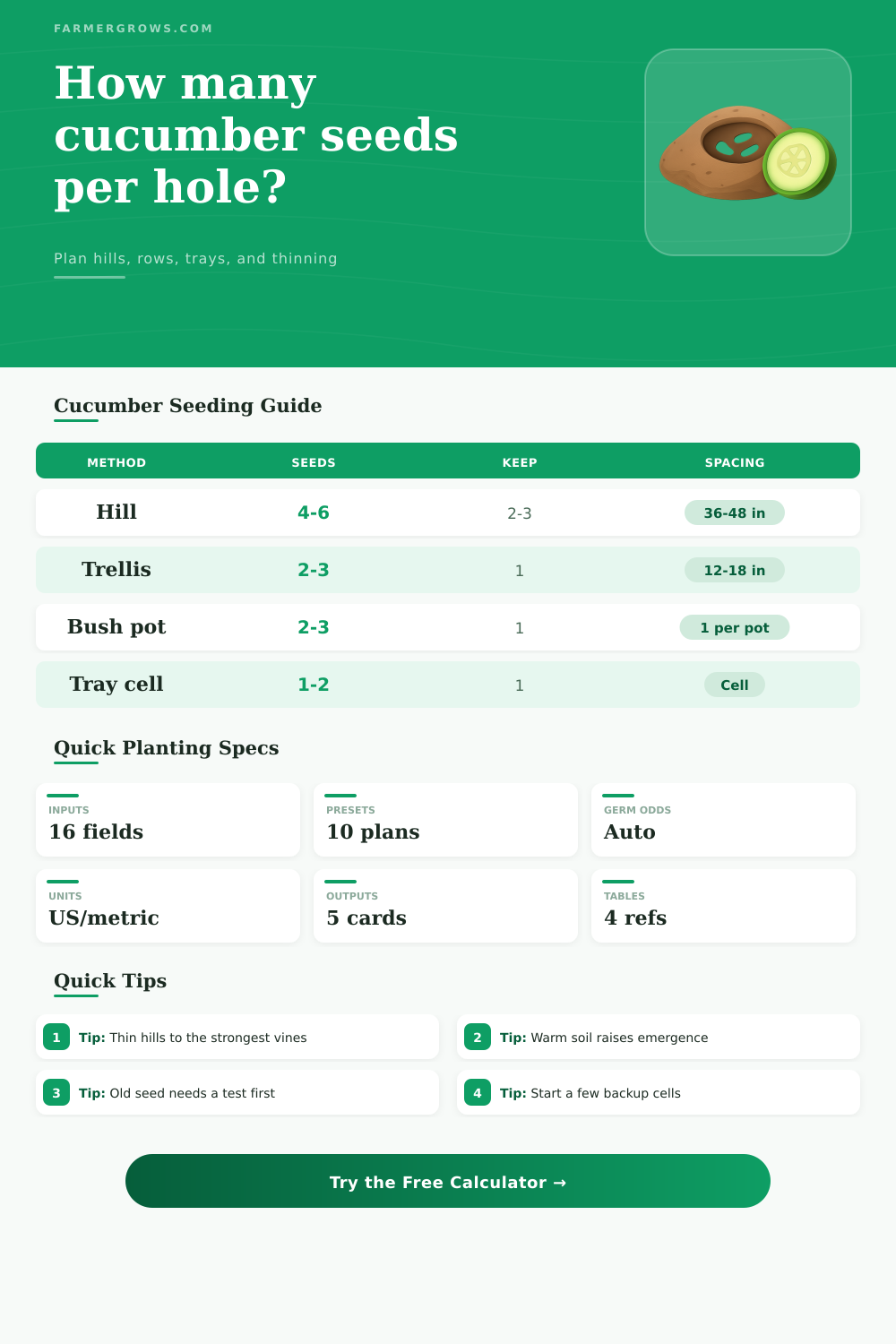
| Traditional cucumber hill | 4 to 6 seeds | 2 to 3 plants | 36 to 48 in | Outdoor mounds and pickling blocks |
| Trellised slicing row | 2 to 3 seeds | 1 plant | 12 to 18 in | Vertical raised beds and fences |
| Bush cucumber container | 2 to 3 seeds | 1 plant | One plant per pot | Patio pots, grow bags, and tubs |
| Nursery plug cell | 1 to 2 seeds | 1 plant | One plant per cell | Indoor starts with backup cells |
| Older seed packet | 3 to 6 seeds | 1 to 3 plants | Method dependent | Use after a germination test |
| Live emergence per seed | 1 seed, keep 1 | 2 seeds, keep 1 | 3 seeds, keep 2 | 5 seeds, keep 3 |
|---|---|---|---|---|
| 95% | 95.0% | 99.8% | 99.3% | 99.9%+ |
| 85% | 85.0% | 97.8% | 93.9% | 97.4% |
| 75% | 75.0% | 93.8% | 84.4% | 89.6% |
| 65% | 65.0% | 87.8% | 71.8% | 76.5% |
| 55% | 55.0% | 79.8% | 57.5% | 59.3% |
| Layout | Planting size | Station spacing | Stations | Seed note |
|---|---|---|---|---|
| Single trellis row | 12 ft row | 12 in | 12 | About 24 to 36 seeds if direct sown |
| Backyard hills | 24 ft row | 36 in | 8 | About 32 to 48 seeds before thinning |
| Pickling block | 20 by 12 ft bed | 48 in | 18 | Useful when keeping 2 plants per hill |
| Patio containers | 6 pots | Manual | 6 | Sow backups or start spare cells |
| Greenhouse plugs | 72-cell tray | Cell count | 72 | One seed per cell plus backup row |
| Seedling result | Best action | Timing | Why it matters |
|---|---|---|---|
| Hill has 4 or more seedlings | Keep strongest 2 or 3 | Two true leaves | Leaves room for roots and vines |
| Station has two plants but target is one | Snip the weaker stem | True leaves | Protects the stronger root system |
| Blank station in a row | Re-sow right away | At emergence check | Reduces uneven harvest timing |
| Tray cell has two seedlings | Cut one at soil line | Before transplant | Cucumbers dislike root disturbance |
Warmth changes the answer. Cucumber seeds perform best in warm soil. If your bed is cool, raise the emergence factor only after using row cover, black mulch, or a later sowing date.
Do not keep every seedling. The extra seeds are insurance, not the final spacing. Thin to the strongest cucumber plants so vines get enough air, water, and light.
They will come back: Scatter cucumber seeds in the hills and still get to harvest a crop? Yes, though it’s harder when time comes for thinning (you have to do it carefuly), and wasting seed packets isn’t good either. Germination ain’t 100 percent; most gardeners who know better plants multiple seeds per hole, but how many “extras” constitute good insurance without leaving you with too many crowded seedlings? That math apply if you’re maximizing output in a long row of trellised cucumbers or a snug raised bed.
That’s where the calculator (above) comes into play. It does the probability math for you. Don’t guess at how much lower a chilly soil temp might be then optimal, as that can reduce your planting success rate. You plug in how many percent of your seeds need to emerge (the “emergence rate“), and what percent of that you want to be successful, your desired “reliability.” Then it’ll tell you how many seed to use per station to reach your target. No more worrying over blank spots… But no urge to waste, either.
How to Count Cucumber Seeds
Enter your choices: How big is each bed? What kind of spacing would you prefer? Single plants with a trellis for slicer cucumbers, or hills for pickles? That matters, too, the requirements of a sprawling vine in a hill differ from those of a container plant.
To get this number correct, first, we need to know why it matters. The germination rates listed on seed packs is based off ideal laboratory conditions like steady warmth and a moistened paper towel. In reality, your garden soil never provides such conditions. Pests, cool nights, or crusty clay may cause fewer seeds to emerge than the percentage printed on the pack. So the calculator prompts you to enter an emergence factor in addition to the seed tag germination rate, forcing you to acknowledge what’s actualy happening in your garden. Want to plant in heavy soil that crusts? Lower that emergence factor. Got black plastic mulch warming up the ground ahead of time? Keep it high.
Remember, if you don’t, you might overseed too much because you are afraid of the weather. It can be hard to pull out those little plants and feel like it is such a waste, but we all have things we hate to do, and thinning is one of them. It’s better not to let each of your seedlings grow into full-scale plants: You’ll end up with a disappointing yield. Cucumbers, by the way, are strong growers with extensive root systems. Plants that are crowded (meaning you have four where you should of had two) will fight for water and nutrients, leading to smaller fruit and earlier death of the vines.
The chart on the page above shows proper spacing recommendations in a clear way. With hills, you may begin with several seeds, perhaps four to six, but thin to two or three promising-looking plant. When growing in rows under a trellis, one plant per station would typically be best; that said, sow two or three and give yourself a backup in case something goes wrong. (Avoid overcrowding.)
The other layer that demands some thought is old seed (packets). Did you store your cucumber seeds in the warm garage for three years? The seeds may not even be viable. To test this, take one or two out, place them on a wet paper towel, and check back periodically to see how many germinate to find your approximate germination rate. Plug it in as such, into the reliability setting, versus trusting what the label says about being 95 percent or whatever. That’s optimistic. And that makes the math honest.
That’s math. It means you aren’t sowing too few seeds and hoping they all come up. How much seed do you really want? That depends on when you’re sowing and how unpredictable and slow growth can be from cool soil compared with warm. You’ll want a bit of a safety net with a bit of extra seed for early sowings. You can use less seed with later ones as the summer heats up and the soil warms. Change the reliability target and the calculator adjusts accordingly. Higher=more seed per hole so you have some margin of error, one or more will emerge, right? Lower means fewer seeds is saved, but there is also a risk of gaps. The tradeoff is between being efficient and being certain.
And so, all that to say: Taking these factors into consideration when planning your cucumber plot turns sowing from hopeful scatter into conscious strategy. From then on, it’s not guesswork, you know exactly what to expect in every hole three weeks down the road. The vines are strong. Everything is checked. Healthy roots? Everything is checked. Lots of fruit… No afternoon spent weeding out extra seedlings? Check. It’s the same goal no matter how you plant, but when you get the seed count correct, the rest of the growing season just falls into place.