
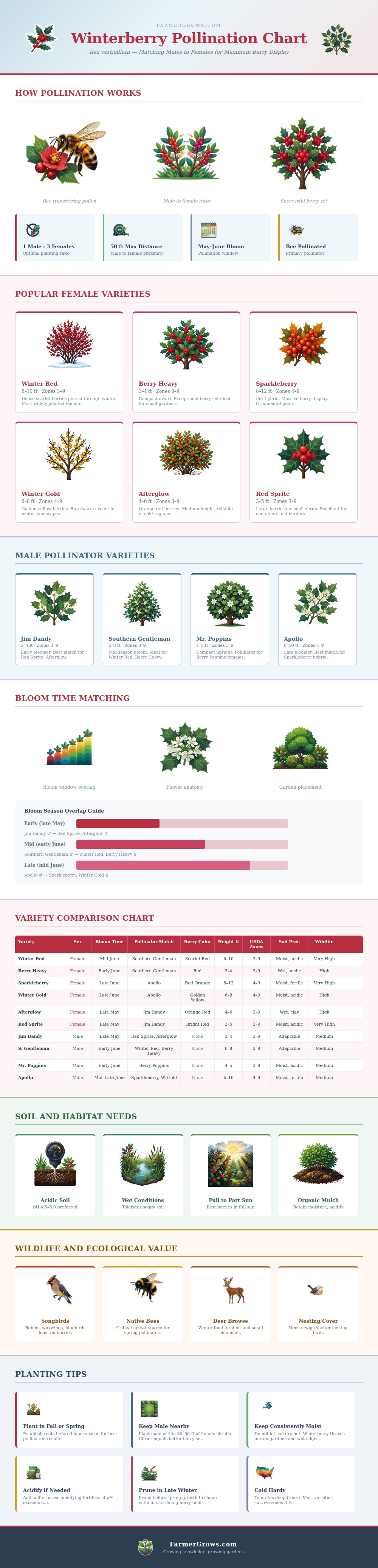
In fall you plant winterberry hollies because you expect them to bear their berries all through winter. You dream of the picture: white snow against red fruit, an image of visual interest outside your window. And then February comes, and there’s nothing left but bare branches. There is not one berry on the shrub. It is a disaster! Or not.
Usually it’s simply a case of bad math. Winterberry holly, like many plants, has separate male and female plant. Each individual plant is strictly either male or female. You want the females because they bear those beloved fruits. The males only provide pollen. If you plant a row of females and don’t have a compatible male nearby, you will have a leafy garden with no berries.
How to Get Winterberry Holly Berries
The remedy are explained in the chart, up top, which shows how to fix such a mismatch. The main point is that proximity matters. These shrubs relies primarily on bees as their pollinators, which must move between the male and female blossoms (while each is blooming) before it’s too late. That opportunity is smallish; usually late May to mid-June here, where I garden; yours may differ. Pollination will fail if the male blooms out of sync with the female, or if he’s located too far away.
To match up, the chart advise keeping the male within about fifty feet of the females. It is even better to keep them closer. In most landscapes, a 1:3 ratio of males to females work nicely, meaning plenty of pollen gets distributed… But you don’t clutter things by having lots of non-fruiting shrub around.
That’s when most gardeners fall down: matching bloom time. Not only do you want a male and a female plant, but their bloom should match. Early-blooming males, like Jim Dandy, combine with early females like Afterglow or Red Sprite. Best matches for mid-season types like Southern Gentleman is Winter Red and Berry Heavy. For late bloomers like Apollo, reserve those spots for the hybrids like Sparkleberry or even the rare gold-fruiting variety called Winter Gold.
Failure to get them all on the same timetable means that the flowers will simply bloom, fade and fall off before there was any chance of a connection. That’s what sets the fruit.
Winterberry holly love being planted in wet, acid soil with a pH between 4.5 and 6.0, where most other shrubs can’t stand. Plant them in the low spot in your yard where water pools; in a boggy edge of a garden; in a rain garden. Soggy feet are fine; just keep their roots cool and moist. Mulch will help you do that, keeping the roots happy.
Best berry crop comes from full sun; they will tolerate part shade. Fewer berries in shadier areas is the tradeoff. It might mean the plant survives hotter afternoons at the cost of having less color.
The plants also help our local wildlife: The small white flowers (shown) in spring feed native bees nectar when few other nectar sources exist. And then the berries that persist year-round become an essential food source for birds like bluebirds, waxwings, and robins in those tough months of winter. They also provide habitat. Their dense twiggy form offer safe nesting spots for songbirds. Yes, deer might nibble on the leaves, but the beauty is that the benefits to local wildlife outweighs any loss from some chewed-up foliage.
All are very cold-hardy to at least zone three, and therefore could of survive deep freezes just fine. Plant in early spring or fall, allowing time for roots to grow before the flowers bloom. Remove any dead wood in late winter, before new buds push, but don’t be overly zealous; some of those branches may bear fruit. Shape the shrub then, being mindful not to eliminate potential fruit-bearing branches. If your soil seems to be on the acid side, have a soil test done (and add sulfur, if necessary). Pair the proper male with the proper female and put them where they can be near enough for bees to cross the divide.
But what’s the payoff? Oh, man…those red berries come back year after year, just like you’d hoped, and pop out against the snow here in winter. Color when everything else has stopped. It makes for a good-looking yard and is good for the whole ecosystem. Actualy, it makes the garden look more luxurius.