Winter Onion Growth Time Calculator
Estimate overwintering onion timing from fall sowing or transplanting through root establishment, winter survival, spring bulbing, harvest, curing, and bolting risk.
This planner is specifically for overwintered bulb onions. It is not a short-day-only, Spanish, Walla Walla, bunching onion, red onion, or onion seed germination calculator.
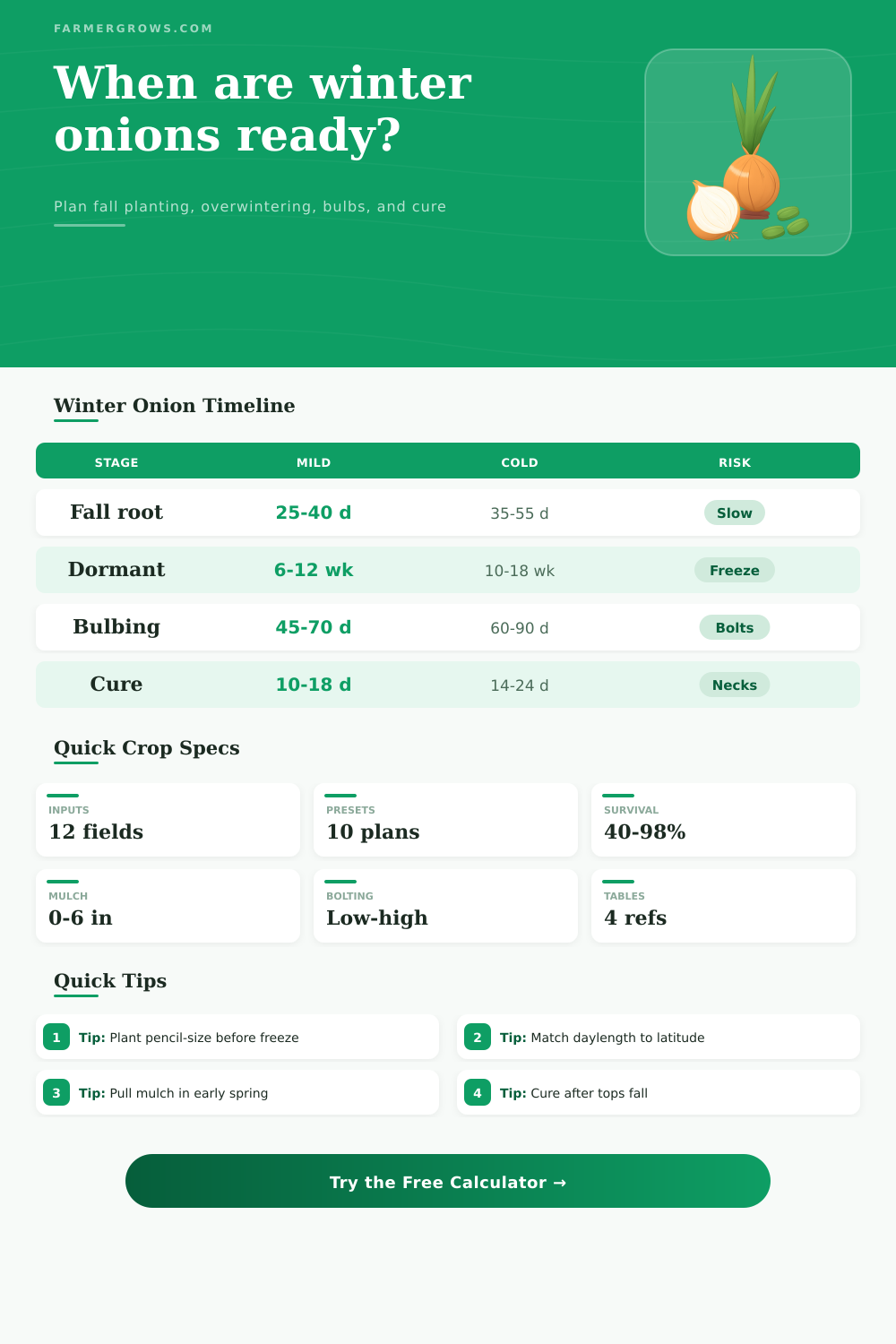
Overwintering Onion Timeline
Results combine fall establishment, winter exposure, plant size, protection, daylength fit, and spring growth speed.
| Winter climate | Target fall start | Best plant size by freeze | Timing caution |
|---|---|---|---|
| Mild southern winter | September to November | 4 to 6 leaves | Too-early planting can make oversized plants and seed stalks. |
| Cool maritime winter | Late August to early October | 3 to 5 leaves | Protect from waterlogging more than from deep cold. |
| Zone 6 freeze-thaw bed | Late August to mid September | Pencil-size plants | Mulch after cold sets in to limit heaving. |
| Zone 5 trial planting | Mid August to early September | Small but rooted plants | Use row cover or tunnel and expect stand loss. |
| Protection | Best use | Typical survival lift | Spring handling |
|---|---|---|---|
| No cover | Mild regions and well-rooted hardy varieties | 0 to 4 percentage points | Scout for heaved plants after freezes. |
| Loose mulch | Freeze-thaw rows, windy beds, raised beds | 6 to 14 percentage points | Pull mulch away once growth resumes. |
| Row cover | Cold snaps and exposed field rows | 10 to 18 percentage points | Vent during warm spells to reduce disease. |
| Low tunnel | Cold inland beds and market growers | 15 to 25 percentage points | Open ends when spring heat builds. |
| High tunnel | Protected fresh bulb production | 20 to 30 percentage points | Watch watering because roots stay active. |
| Class | Bulbing light cue | Overwinter fit | Common result |
|---|---|---|---|
| Short-day | About 10 to 12 hours | Southern and mild coastal beds | Early bulbs, less northern storage potential. |
| Intermediate-day | About 12 to 14 hours | Many middle-latitude overwinter plantings | Balanced fresh or cured bulbs in late spring. |
| Long-day | About 14 to 16 hours | Northern hardy trials with protection | Later bulbs, more risk if winter kills stand. |
| Day-neutral or unknown | Variety-dependent | Use when label is unclear | Wider date estimate and more scouting needed. |
| Signal | Likely cause | Calculator effect | Field response |
|---|---|---|---|
| Seed stalks in spring | Large fall plants plus long cold exposure | Raises bolting risk and shortens storage expectation | Harvest bolters early for fresh use. |
| Slow spring leaf growth | Cold soil, wet bed, low nitrogen, or shade | Pushes bulbing and harvest later | Pull heavy mulch back and feed lightly. |
| Early top fall | Bulbs mature quickly or plants are stressed | Moves harvest earlier but may reduce bulb size | Lift when most necks soften. |
| Thick green necks | Late nitrogen, immature bulbs, or wet harvest | Extends curing estimate | Cure longer with strong airflow. |
Fall size matters: The strongest overwintering stands are rooted before hard freeze but not so large that cold exposure pushes them toward bolting in spring.
Mulch is seasonal: Apply loose mulch after soil cools, then pull it back as spring growth resumes so the crowns dry and bulbs can size cleanly.
Onion planting requires a certain optimism. Sowing or transplanting now expects seeds or tiny transplants to root and overwinter. They must then push through freezing ground and expands into bulbs by early summer. When most everything else here barely begins.
Fall-planted onion seedlings offer an early crop, out ahead of high summer heat and the bulk of springtime sowing. The catch is getting them strong enough to survive winter without being pushed out of the ground by frost, but not so large that they bolt when spring arrives. It’s a fine line.
How to Grow Onions in the Fall
Define your local conditions, then enter them in the calculator above. That does math for you. The process depends on weather patterns… No guessing required.
First: What’s your fall planting date? And how do you plan to plant: direct-seed, or buy transplant? Each method has its own rate of root establishment. Three-to-five-leaf, pencil-size plants is ahead of the game. They anchor before soil freezes solid. Seedling-sized plants are at risk of being heaved out by frost; extra-large ones expend energy that can absorbs flower stalks too soon. It’s all about finding that sweet spot in between.
Survival rates are directly related to winter protection. Mulch acts as an insulator that keeps soil temperatures stable during freeze-thaw cycles. Mulch is the insulation. When ice expands it will lift plants above soil level without any cover. Exposed roots die from exposure and drying out. The tool takes into account different degrees of protection (high tunnel, bare ground etc) and factors that into your projected % survival rate. Even just straw on top adds more than ten percent to stand survival. That’s often the difference between harvestable crops or bare rows. It keeps plants alive and in place in soil.
Another complicating factor is daylength sensitivity, which most home gardeners miss. Onions and other alliums are actualy photoperiodic, meaning they respond to daylength and not just temperature when it comes to when they stop growing leaves and start putting their energies into making bulbs. A short-day onion grown too far north, for instance, might bolt immediately as soon as spring light increases. A long-day onion grown in a more southern location may never see the sufficient number of days to begin bulbing. You’ll end up with those pencil-thin-necked little things different than round bulbs.
Match your daylength needs (long-day or short-day) with your latitude to get the timing right for bulbing up. No wasted flower or leaf growth here on the plant’s part. As temps warm and spring rolls on, things really get cooking fast. With your target bulb size in mind, the calculator will predict a possible harvest date and an estimate of when they should of starting to bulb up.
Do you want some to eat fresh early? Or do you want to grow bigger bulbs for longer storage? For storing quality, the curing is what seals the deal. To properly cure bulbs, keep them out of the weather where air can circulate well so the neck and outer skin can dry thoroughy. Harvesting too early results in fat green necks, which will rot during storage. Too late and the skins may crack open, inviting disease from the dirt. Ten to 20 days curing time allows the layers to harden off and come apart cleanly.
There’s no way around it: success with winter onions boils (ha-ha) down to respect for the seasons, not rebellion against them. There’s no pushing along root development in frozen soil, just as there’s nothing you can do about bolts once cold starts it up. All we’re doing is getting plants into a safe-size range before winter gets really ugly. And then we leave spring to do its thing.
Adjust the amount of plant-protecting hardware and the timing of the planting based off your specific area. This turns what could be an unsure experimental project into a sure way to get early-season produce. Those pencil-size sweet spots in fall pay off in June, while neighbors continue to wait on summer crops.