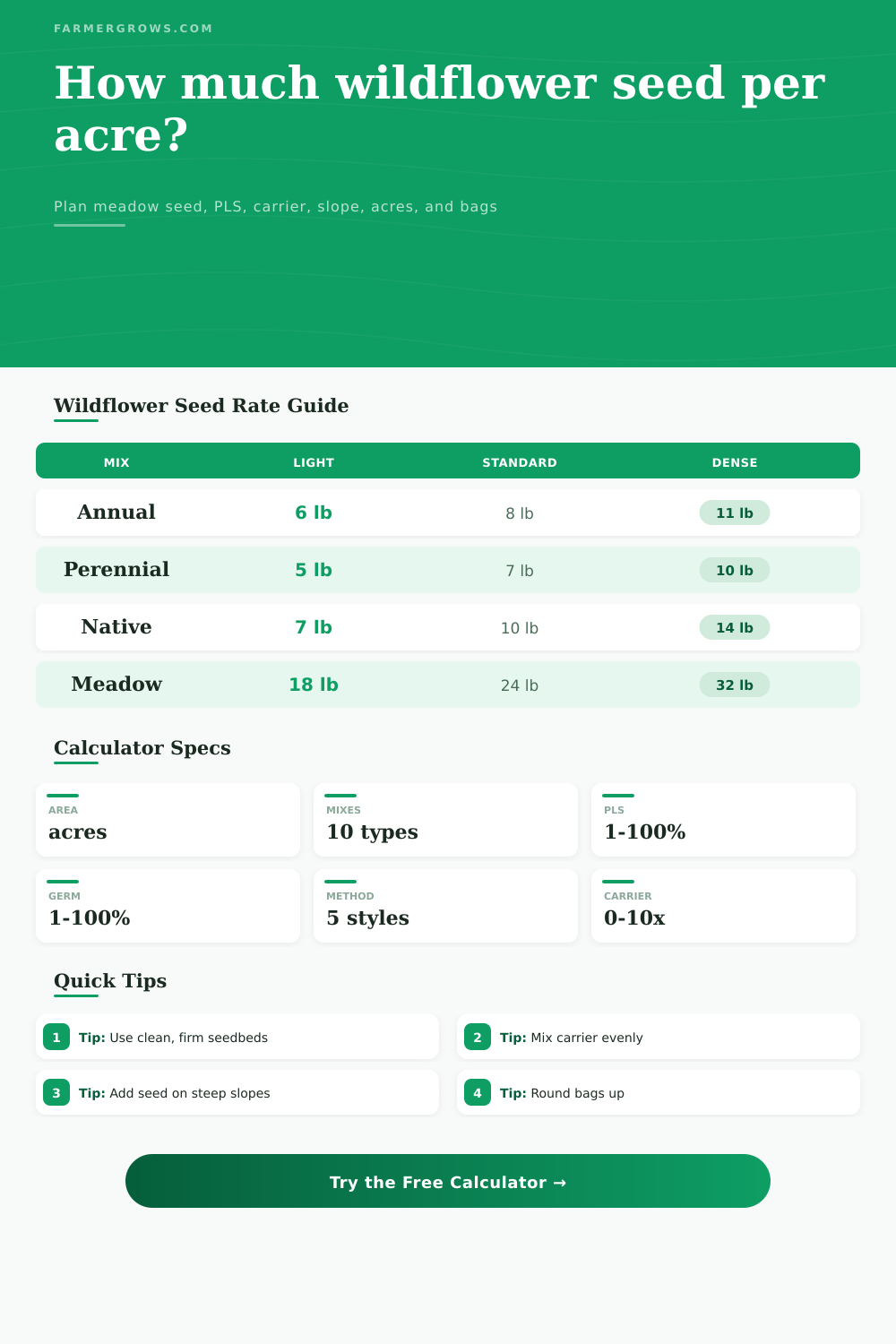
Wildflower Seed Per Acre Calculator
Estimate wildflower seed per acre for meadows, pollinator strips, native plantings, erosion cover, and garden-scale plots using mix type, PLS, germination, seeding method, slope, site prep, carrier ratio, and overage.
Pick a starting point for the planting goal, then adjust acres, seed tag values, method, slope, site preparation, carrier ratio, density, and overage to match the actual site.
Uses heavier annual seed counts for quick first-season color, but usually needs reseeding or a perennial partner for long-term cover.
Lower pounds can work when the seedbed is clean because perennial species are often smaller seeded and slower to establish.
Native mixes are best planned by pure live seed because species size, dormancy, and germination vary widely in the same bag.
Grass and flower blends use more total pounds per acre because the grass portion builds cover, erosion control, and competition.
Wildflower Seed Plan
These results convert target PLS pounds into bulk seed to order, then estimate carrier material and per-pass spread amounts.
Use these PLS pounds per acre as planning ranges. Supplier labels and local conservation recommendations should guide final species-specific restoration projects.
| Wildflower mix type | Light density | Standard density | Dense or restoration density |
|---|---|---|---|
| Annual color wildflower mix | 6 lb PLS/ac | 8 lb PLS/ac | 11 to 12 lb PLS/ac |
| Perennial flower meadow mix | 5 lb PLS/ac | 7 lb PLS/ac | 10 to 11 lb PLS/ac |
| Pollinator flower blend | 6 lb PLS/ac | 9 lb PLS/ac | 12 to 13 lb PLS/ac |
| Native shortgrass prairie mix | 7 lb PLS/ac | 10 lb PLS/ac | 14 to 15 lb PLS/ac |
| Wildflower and grass meadow mix | 18 lb PLS/ac | 24 lb PLS/ac | 32 to 36 lb PLS/ac |
| Tag situation | Live fraction used | Bulk seed for 10 lb PLS | What to enter |
|---|---|---|---|
| Excellent cleaned seed, high germination | 90% | 11.1 lb bulk | PLS 95%, germ 95% |
| Typical commercial meadow mix | 75% | 13.3 lb bulk | PLS 85%, germ 88% |
| Native mix with dormant or hard seed | 60% | 16.7 lb bulk | PLS 75%, germ 80% |
| Older seed lot or low viability mix | 45% | 22.2 lb bulk | PLS 65%, germ 70% |
| Factor | Low adjustment | Moderate adjustment | High adjustment |
|---|---|---|---|
| Seeding method | Native drill, 1.00x | Broadcast pack, 1.12x | Hand scatter, 1.22x |
| Slope or erosion | Flat site, 1.00x | Moderate slope, 1.12x | Critical bank, 1.28x |
| Site preparation | Clean firm bed, 1.00x | Fair bed, 1.10x | Rough or no-till, 1.18x |
| Desired density | Light meadow, 0.80x | Standard, 1.00x | Restoration, 1.45x |
| Planting situation | Carrier ratio | Typical passes | Practical note |
|---|---|---|---|
| Drill with native seed box | 0 to 2 lb/lb seed | 1 or 2 passes | Carrier may be unnecessary if the drill meters fluffy seed well. |
| Broadcast spreader on small acreage | 3 to 6 lb/lb seed | 2 split passes | Carrier stretches low seed volume so the spread pattern is easier to see. |
| Hand seeding garden or edge strips | 5 to 10 lb/lb seed | 2 or 3 passes | Divide seed blend into equal batches before walking each direction. |
| Hydroseed or tackified slope mix | 0 to 3 lb/lb seed | 1 slurry pass | Follow equipment capacity and mulch loading limits for the slurry tank. |
PLS math tip: Many wildflower mixes contain species with very different seed sizes and dormancy. Use the seed tag when available, and treat catalog rates as bulk-rate guidance only when no PLS data is supplied.
Carrier tip: Blend seed and carrier in several small batches, then split the total blend into passes. That keeps tiny seed from settling at the bottom before the whole acre is covered.
This calculator estimates seed quantities for planning and ordering. Local soil, rainfall, weed pressure, species mix, seed dormancy, and conservation program rules can change the best final rate.
The wildflower seed we buy is sold by the pound and by promise. We reach into our colored packets and sprinkle across ground, trusting that what’s printed on the packet is entire story. It isn’t.
Though both bags may be the same size, a pound of coneflowers will sow one way; a pound of black-eyed Susans another. You won’t know the true math involving germination rates, pure live seed, and soil contact until after you buy the seeds but before you plant them.
How to Do the Math for Your Seeds
Bad planning, not bad weather, are why most meadow projects fail. You tell it what’s up at the site, defining its conditions. And then the calculator do the math: converting fuzzy plans into concrete poundage.
Start with the mix type (the base line). Flashy annual mixes mean lightweight (cheaper) seed; go heavy with these guys if instant color is needed. With native perennial prairie mixes, the seeds may be small and hard so they weighs less.
Then there’s the matter of Pure Live Seed, known as PLS. This is the percentage of actual viable flowers in the bag, versus inert stuff such as dead seed, chaff, dirt, etc. Your tag claims an eighty-five-percent purity and eighty-eight-percent germination rate? You’re paying for mostly inert material by weight.
The difference between the two mean a meadow that appears to have been lightly dusted with pollen instead of being plant community.
People overlook the quality of site more than you can imagine. Even if you spend top dollar for the best native mix available, if you throw the seed on hard packed clay or thick layers of matted down grass clippings, half of it will rot and float off. The tool accounts for this, ranging from perfect to not-so-perfect. A perfect seedbed is firm and clean with good contact, while a not-so-perfect one have rough no-till-like conditions. Seed won’t stick as well on a rough bed so you need a little bit more margin (nature eats up part of your margin).
Then there’s the matter of slope. Rain settles seed on flat areas. Steep banks mean rain washes it all into ditch. Gravity impacts poor establishment, so we add a multiplier for slope erosion.
See how to select native plants. The equation changes, too, when you start adding methods. Using a native seed drill puts teeny seeds right where they belong in the ground, efficiently and with less waste than broadcasting by hand or with a spinner spreader. Broadcasting requires an extra-big bump in rate just to make sure there is some chance that enough will reach a viable spot. The variability built into any kind of broadcast method explain why the tool makes allowances for the variation that happens in your spread.
The other unsung hero of small-scale seed sowing are the carrier material. The little seeds of wildflowers, for instance, don’t meter well in conventional garden spreaders. Combined with something like rice hulls or sand as a carrier, the mixtures flows evenly. The calculator lets you know precisely how much carrier to purchase, no more guessing in the dark.
How full should the bag get? That’s up to you, but there are ecological consequences. For example, a lightweight stand might be appropriate on a roadside verge where maintenance isn’t an issue. However, in a high-competition restoration plot, denser planting will require more seed to out-compete weeds. You can adjust the target from light to standard to dense. And the tool react by adjusting bulk requirements.
This is a safety net. Human error happens. Bags spill; edges get missed; drill calibration drifts. So add a little extra. Ten or fifteen percent overage is not wasteful; it’s insurance that you won’t have patchy results.
You should of run the numbers. The results tell you which bags to purchase, how to divide your passes, and how much carrier to mix. This turns a guess into a plan.
And really: The trick is mainly knowing what you’re buying. Pounds of potential. It is not flowers. It’s pounds of live seed, what will actualy grow, that the calculator zeroes in on, stripping out all of the packaging noise.
After you know your carrier ratio and your bag count, it’s just a matter of waiting. Seasonal timing and soil moisture will kick in after that. There is no forcing a meadow to bloom, but you can make sure that you’ve done everything possible to get it going. Weeks of wondering why something didn’t grow later? Avoid those weeks by starting with the math, and then leave the rest up to the meadow.