Wildflower Seed Calculator
Estimate bulk seed, pure live seed, carrier volume, and planting timing for pollinator strips, native meadows, slope cover, orchard alleys, and pocket wildflower plots.
Wildflower mixes are sold as bulk weight, but labels usually report purity and germination. This calculator converts your target seeding rate to pure live seed, then adjusts bulk seed for method, site prep, slope, and overage.
Seed Order And Field Plan
Results update from your area, PLS, method, soil prep, slope, overage, region, and season.
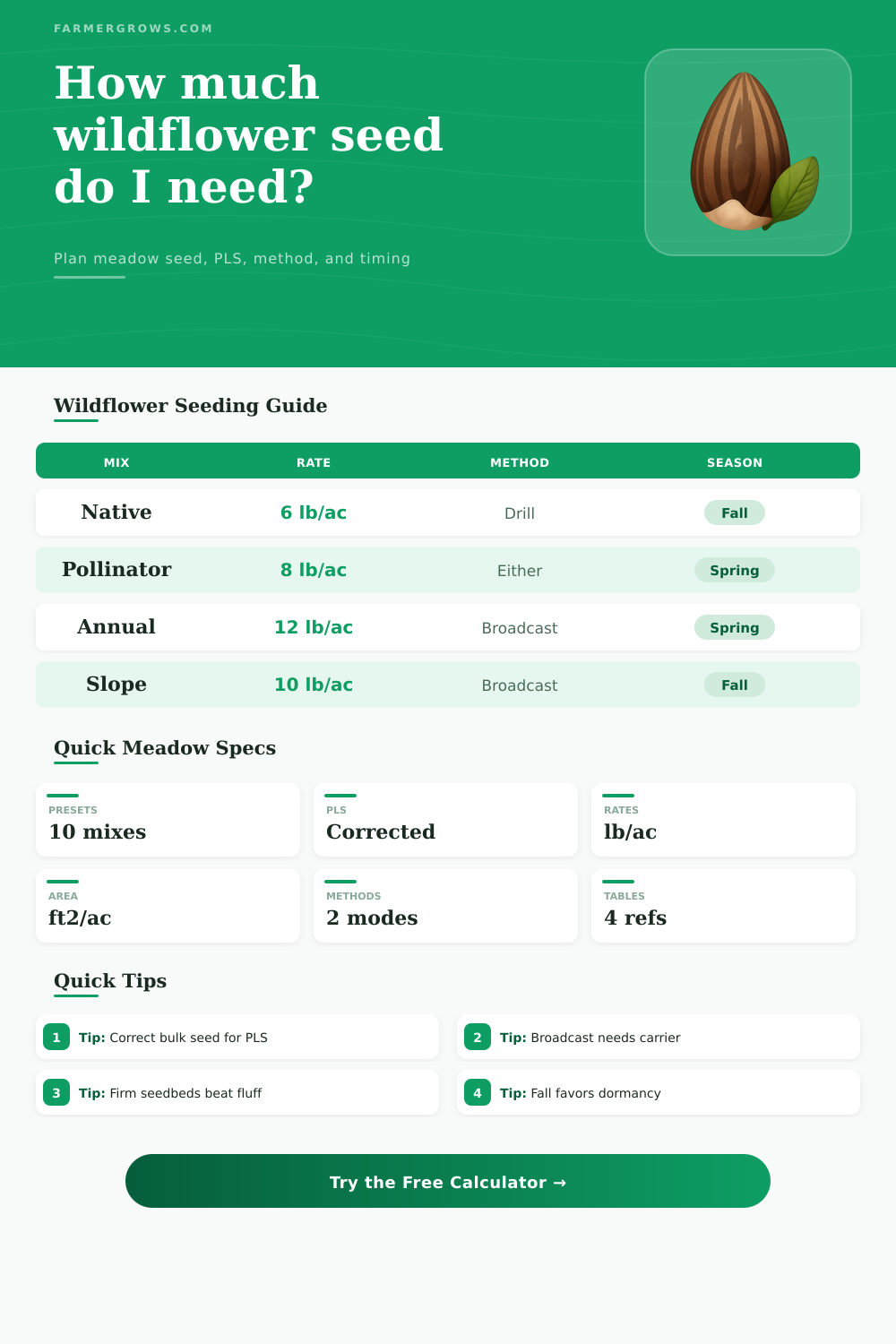
| Seed mix type | Typical PLS rate | Broadcast bulk cue | Best use |
|---|---|---|---|
| Native wildflower and short grass meadow | 4-8 lb PLS/ac | Often 6-12 lb bulk/ac after PLS correction | Long-term meadow, prairie pocket, low input border |
| Pollinator conservation mix | 6-10 lb PLS/ac | Broadcast 10-18% extra for even distribution | Farm field edges, bee forage, butterfly habitat |
| Annual wildflower display | 10-16 lb bulk/ac | Use label rate if sold for ornamental color | First-year color, events, seasonal roadside display |
| Low-grow flower lawn or edge | 3-6 lb PLS/ac | Keep grasses modest to avoid shading flowers | Paths, lawns, orchard alley edges, small beds |
| Wet meadow or swale mix | 6-10 lb PLS/ac | Mulch lightly where water can move seed | Ditches, rain gardens, damp low spots |
| Dry prairie or western xeric mix | 4-7 lb PLS/ac | Dormant or monsoon timing often improves catch | Sandy, gravelly, low-rainfall, low-fertility sites |
| Label purity | Germination | PLS percent | Bulk seed needed for 10 lb PLS |
|---|---|---|---|
| 98% | 90% | 88.2% | 11.3 lb bulk seed |
| 95% | 80% | 76.0% | 13.2 lb bulk seed |
| 90% | 70% | 63.0% | 15.9 lb bulk seed |
| 85% | 60% | 51.0% | 19.6 lb bulk seed |
| 80% | 50% | 40.0% | 25.0 lb bulk seed |
| Region | Spring window | Dormant window | Timing notes |
|---|---|---|---|
| Northeast / Upper Midwest | April to early June | Late October to freeze-up | Dormant frost seeding is useful for many native perennials. |
| Central Midwest / Great Plains | March to May | November to early December | Drill after weed flush control; pack before and after broadcast seed. |
| Southeast / Gulf states | February to April | October to December | Avoid hot dry late spring; watch aggressive warm-season weeds. |
| Mountain West / Intermountain | April to June | October to December | Fall dormancy often fits snowmelt moisture and cool germination. |
| Pacific Coast / Maritime | February to April | September to November | Fall planting can use winter rain, but control perennial weeds first. |
| Southwest / Desert edge | February to March | Late fall before winter rain | Some sites rely on winter rain or monsoon timing for establishment. |
| Step | Typical timing | What to do | Why it matters |
|---|---|---|---|
| Weed flush and kill | 4-8 weeks before seeding | Water or wait for weeds, then cultivate, solarize, smother, or spray. | Wildflowers establish slowly and lose against a live weed canopy. |
| Final seedbed firming | Same day to 1 week before seeding | Rake smooth, roll or cultipack until footprints are shallow. | Tiny seed needs shallow contact, not burial in loose fluffy soil. |
| Broadcast and split pass | Planting day | Mix seed with carrier, seed half north-south and half east-west. | Two passes reduce skips and clumps in small-seeded blends. |
| Roll after seeding | Immediately after broadcast | Press seed into soil; do not cover most fine seed deeper than 1/8 inch. | Firm contact improves moisture uptake without burying light-germinating seed. |
| Mulch or erosion cover | Right after seeding on slopes | Use clean straw, hydromulch, tackifier, or erosion blanket as needed. | Prevents seed drift and washouts before roots anchor the slope. |
Seed shallow and firm. Most meadow mixes contain tiny species that should sit near the surface. For broadcast work, press seed into the seedbed instead of burying it under loose soil.
Separate seed from hope. More seed cannot fix poor site prep. Spend the extra pass on weed control and seedbed firming before spending heavily on rare native seed.
Wildflower meadows appear carefree once they’re in bloom, but getting them there isn’t simple at all. Bulk-weighted mixes sold by seed companies list purity and germination percentages on their labels that hardly total 100 percent. Whether your planting comes out as empty patches for years or grows in full depend on the difference between what you ordered and what actualy arrives.
This is why we do all this with pure live seed calculations. This is percentage on the bag: How many seeds out of each pound you’re holding are actually alive, as opposed to dead or coated in inert material that won’t help them grow. So if the bag says it’s got a purity rating of seven eight percent pure live seed, then you’ll need about twenty eight percent extra by weight of bulk seed to reach the same desired seeding rate on the ground.
How to Calculate Seed Amounts
Once you plug your label figures and desired rate into calculator up top, it do the rest of the math for you. This way, the seeds that don’t germinate are already accounted for before you even place your order.
The numbers change based off how you seed. With a drill, seed goes down evenly spaced and at even depth. So the published rate is naturaly pretty darned close. When broadcast seeding, seed falls on top of the soil and may be blown around a bit by wind and rain or fall onto thatch. The tool adjusts slightly up for broadcast work, but then it also consider slope and the quality of your soil prep.
If you have a nice firm seedbed, you can get away with using fewer seeds since each one stand a better chance of remaining in contact with moisture. Slope requires more, as does rough residue; losses increase rapid when rain comes along and begins to move things on surface.
Another seemingly minor detail, which I discovered from experience trying to hand-sow tiny wildflower seeds, is the carrier material. Using something with a little volume to throw (like sand, cracked corn or rice hulls) allow for even distribution, particularly if divided in half and worked back and forth across area in a cross pattern. You’re not guessing at the hardware store; the calculator will tell you just how many bags of carrier you’ll need, according to the broadcast rate you selected.
Beyond all that is regional timing. In the Northeast, where winter comes as rain to work seed into ground, cool season things typically do best when planted after a hard frost. Down South, waiting until late spring for the heat to arrive might mean there is too much heat then the time roots start growing. The tool will recommend a rough time window based on your season and region, though you’ll want to watch more than just the suggested date; you should of also check the actual conditions of your soil (temperature/moisture).
On that page are the reference tables that detail typical rates for various mixes: Annuals, Quick Color Mixes, Forb Heavy Prairie Blends, etc. Prices vary because each site has its own conditions, such as slope, weed pressure, and moisture patterns. The calculator allows you to adjust for those factors so you don’t have to take a chance with your order.
The numbers don’t tell what happens after the seed goes in the ground. During a meadow’s first season, patience is required as the plants spend more time deepening root systems than growing flowers. Most gardeners give up right about then and assume they must of done something wrong, which explains the quiet year.
Your seed order based on the calculator was just the beginning. The balance comes from a good weed-control effort beforehand. It also require solid tamping-down of the bed before sowing and timely rains for the vulnerabel seedling period.