
If your viburnum snubs fails to bear berries even though they have flowered, you might be tempted to blame them. Or perhaps it is the gardener thinking, “I’ve waited all year for these fruits of my labor!” By September, the branches is mostly bare. But it’s typically not the plant’s fault. Here’s where pollination comes into the picture; and where a little counter-intuitive logic apply.
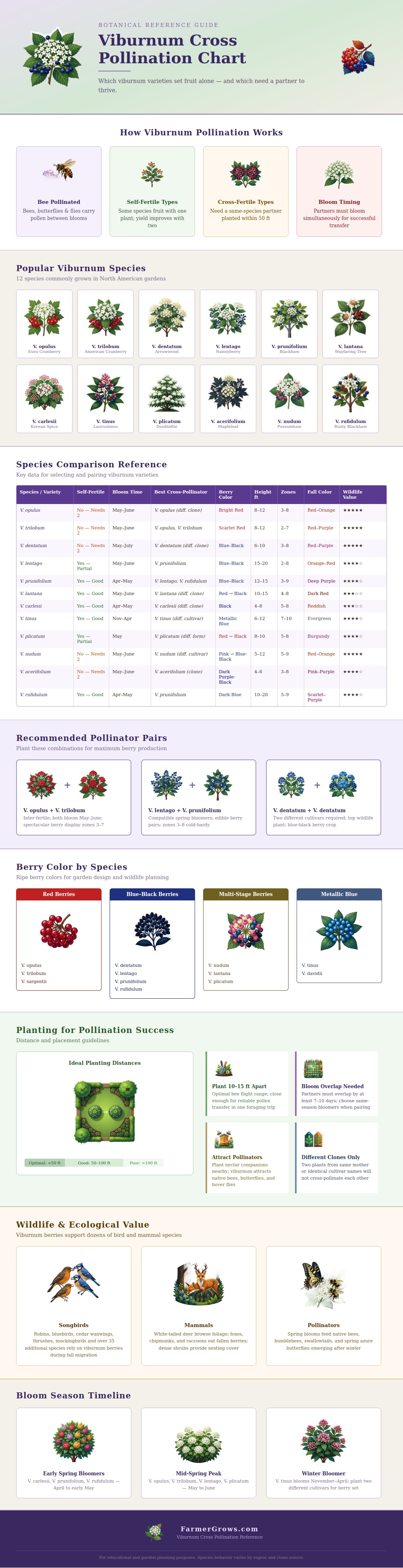
To understand how to get viburnum to set fruit, first know that viburnums are reproductive strategists. First of all: One plant won’t do. Some plants is self-fruitful, meaning they can pollinate themselves, but they usually does not do this well without another plant as a partner. Cross-pollinating plants require two individuals; these are indicated on a chart that also separates them from the self-fertile ones. If you grow an isolated European Cranberrybush or Arrowwood by yourself, for instance, you’re simply creating a leaf machine, not one capable of fruit.
How to Help Viburnums Grow Berries
The reason: Pollinators such as bees transfer pollen from bloom to bloom. To be effective, they must has a receptive flower nearby, and some pollen that isn’t used up. The clock also runs out. If the timing for flowering isn’t right (i.e., too far apart), then there will be no berries. Even if two plant are side by side and all conditions are right except for one flowering a few days ahead of the other, it won’t work. For example, recommended pairings such as Blackhaw and Nannyberry works: Their bloom periods overlap, so they’re timed just right to cross-fertilize. Plant two different varieties of Arrowwood together, and unless one of them blooms three weeks earlier than the other, you get no berries at all. The reasons are some variation among varieties, or microclimate differences that affects flowering time slightly. Close proximity doesn’t hurt, but only if your plants biological clocks is ticking together.
So does distance matter? Yes. A bee needs to be able to make an easy foraging trip from one plant to another. Most of us gardeners tend to think that closer is always better, which is usualy right. But there’s such a thing as too close: Ten or so feet between planting partners is best. If they are over one hundred feet apart, you won’t get reliable pollen transfer and your fruit set will be much lower. The reason has nothing to do with what the plants want, but rather how insects behave based off their instinct. By design, bees are lazy. They’ll take path of least resistance if you give them one.
If pollination is successful, the payoff is wildlife value. When viburnums bear fruit, they becomes an ecological powerhouse. Migrating birds, such as cedar waxwings, robins, and bluebirds; depend on them in particular during their journey to find food when they aren’t migrating. Smaller animals consume fallen berries from the soil, deer browse the leaves, and its tight habit create cover for songbird wanting to hide from predators. Again: It’s more than just eye candy; it’s creating a working mini-ecosystem. Each cluster of berries equals calories for local wildlife struggling through the cold.
The combinations take some thought, but it’s worth it. It doesn’t require that you commit all the species interactions to memory, just be sure to read up on compatibility before purchase. Select pairs that are appropriate to your hardiness zone and also pair them with someone who blooms at the same time (or near it). A visual key to the relationships makes it easy: Which ones play well in certain zones? They’re arranged in logical order.
When you “get” how the mechanics of mixing things work from a fair distance, then suddenly the mystery of the bare branches dissolves. No more guesswork. No more wondering what went wrong. Now you get to design a landscape that plays. Viburnum: The berry show is the last act of a good growing season, and that’s when vibies shine through winter with great beauty. It lasts and lasts and lasts. But by honoring pollination needs, you make sure that last act comes off on cue. Your garden is not just a collection of individual plants, but a series of connected partnerships. You would of had more life and richer color all year long.