
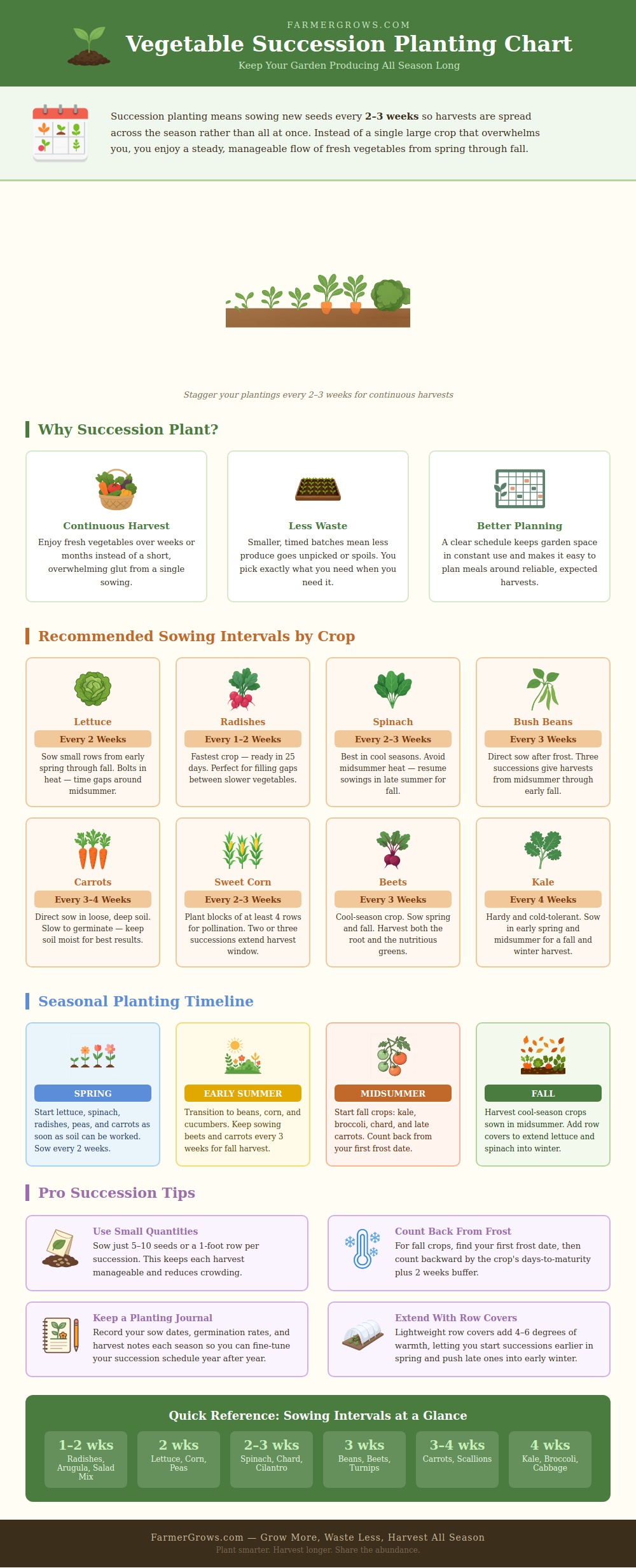
Vegetable succession planting means “out with the old and in with the new” One plants new crops just after you harvest the old. This way the garden gives fresh food the whole season, even after the first cold. Here is the point: you sow in rounds during the whole year.
For example, you can plant several times the same vegetable. Lettuce works from October until February. Rather than planting everything at once, you plant a few rows monthly.
Plant new crops after you harvest to get food all season
Like this the garden gives food during a long time. Practically, a family does not eat 30 heads of lettuce in one week, so spacing out sowings makes much snesion.
It easily happens that vegetables come everywhere at once. Zucchini, tomatoes and cucumbers cover everything in the kitchen one week after another. Better you spread the growing season for a safe supply.
Depending on the crops you can start sowing in autumn.
Corn, peas and beans work well if you plant them in two weeks of intervals. Indeterminate tomatoes or peppers fruit until cold, so succession planting is not needed for them. Long lasting vegetables as onions work better planted all at once.
Once producing crops, that do not last well, work for succession planting; as lettuce and cauliflower.
When vegetables as lettuce, spinach or peas pass there peak, you pull them and immediately replant. You use every square foot, even little spaces after ended cucumber or when the coriander becomes seed. In empty places you lay something new.
For instance, you can plant sweet corn after spring peas. Root vegetables as beetroots, radishes or carrots enter in early July where was broccoli. Like this three crops grow and harvest in one same place during the season.
Interplanting is the peak of succession planting. It helps to mix and combine various vegetables with flowers in one space. Low flowers and vegetables on the edges of garden beds use spaces otherwise wasted.
The leaves and roots of crops cover soil and stop weeds.
This method doubles or even triples the production each season. Start the autumn garden in July and using indoors helps a lot. Transplanting in the fields when summer heat fades and space opens keep the productionstrong.