
It’s happened to you before: You prepped the soil, ordered the seed packets, sowed them in hope and then, three weeks later, looked out at garden and saw a mess of foliage. There was too many plants, all crowded and producing little fruit. Failure, right? Not really, just a failure of spacing.
When most of us ask where to plant our seeds, we forget to ask how much room those seeds need. That means there is less air flow. It also means plant health and yield is compromised.
Why Spacing Is Important
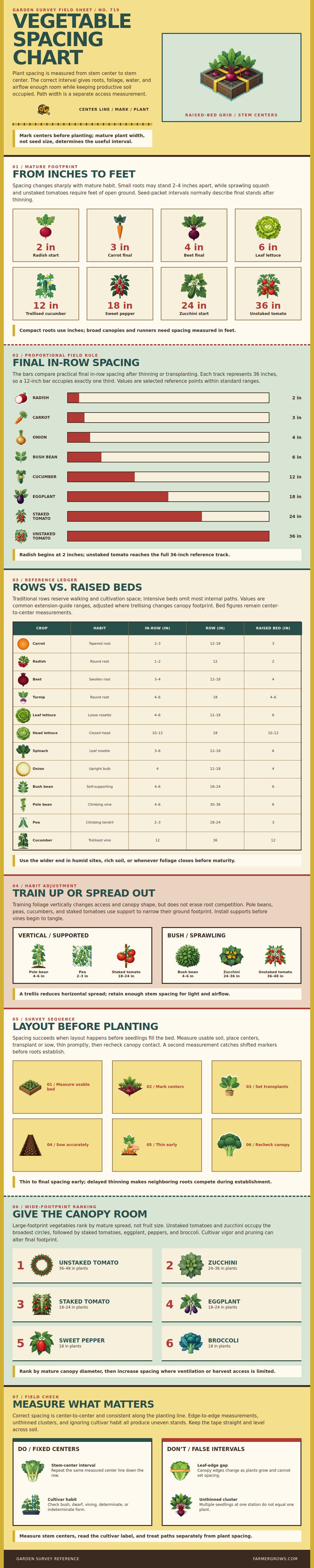
Spacing is measured from the center of one stem to the next. The chart show the final size of the plant, which is why this measurement matters. Because, yes, they do grow. A tiny radish seed doesn’t seem like it requires such space. But then there’s that big old root to accommodate. An unstaked tomato may start off compact, but gets wider as it goes. Plant by seed size and your garden will be too tight-packed. Plant by eventual width, and allow for foliage and roots.
The chart makes those sizes clear, and puts broad-canopy plants such as zucchini at one extreme of the spectrum. Remember: It’s the final plant who calls the shots. Not the seed that started it all.
Many growers ignore the difference between bush and vining habits until it’s too late. The graphic illustrates impact of vertical training on the way these plants use the area they occupy on the ground. Because peas and pole beans grow upward (not outward), you can grow them as close together as a few inches apart. Ditto with staked-up tomatoes, which also conserve horizontal space. Tomatoes, too, should have at least eighteen inches between centers or their roots will starve.
But those bush bean spread out horizontally. Plant them close together like the vines and you’ll get no air flow, encouraging disease. Growing them on supports saves space, but never eliminates the need for spacing between stems.
It’s not only about the numbers; there’s also order in this operation: Mark before you plant, says the graph. What? Sounds like such a pain. Why would I want to do that? Because it makes your life easier later, so many fewer hours spent thinning and pulling weeds! Measure the bed (the one you can actualy use). Mark where the spots are. Plant the transplant. Thin early.
Yes, thinning is the most hated chore of all; it seems so wasteful to yank out good little seedlings. But let them grow on and they’ll battle each other for space and light and nutrients. Better to have five strong plant, rather than twenty weaker ones.
And then there’s row spacing. It depends off your method. With traditional rows, you leave room to walk between them for cultivation, but with raised beds, every inch is used to grow something. The chart reflects this by using wider spaces for traditional rows different than for intense beds, where every inch counts.
If you’re in a rich-soil location, or particularly a humid one, go to the wide side of range. Your plants will be bigger (and they’ll want to breathe). Always: Keep the canopy open. Keep the roots fed.
The garden is A matter of space management, right? You can eye it for a rough measurement or use your tape measure to mark the exact spots in the center. Either way, the message is the same: make sure each plant has room to breathe and it will reward you. Respect its mature footprint; measure between plants. Don’t hesitate to thin. You should of thanked yourself later for being so thoughtful ahead of time. It’s all back to that first layout; where a little care with the measuring tape saves a season’s worth of regret.