
Sow seeds, watering well, then wait. Nothing happens. And nothing happens. A week later; then another.
What’s happening? You know: The bare spot in vegetable-garden row teases you with its rudeness. Check the seed packet, where it says “in 5 days,” and think maybe this is a bum package of seeds.
Why Seeds Wait to Grow
Actualy, it’s usually just more physical, not dramatic. Seed waits until conditions are right to awaken. So when it doesn’t happen, it isn’t usually that the seed is no good. It’s that the conditions weren’t quite right.
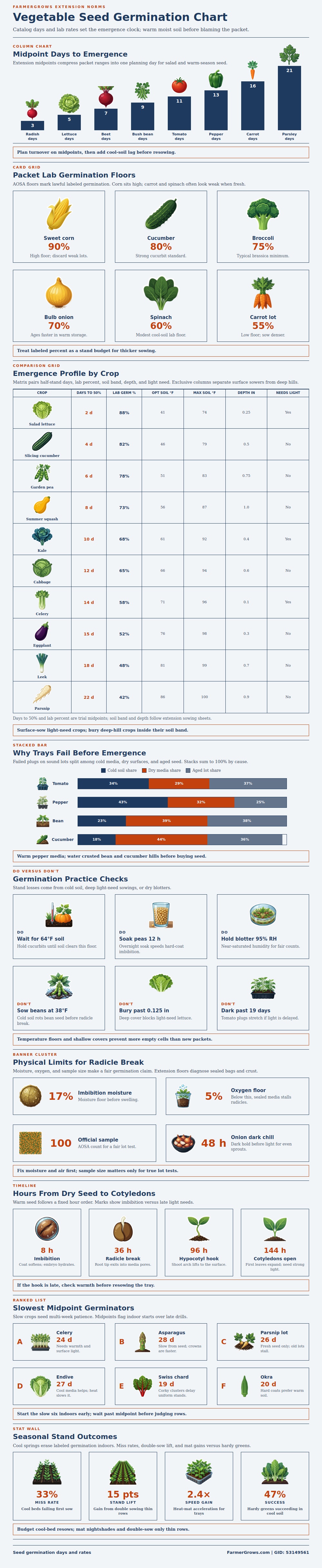
And what does the chart tell us? The emergence timelines aren’t guesswork; they’re biological clocks based off moisture and warmth. A slow clock means that in cool soil, things don’t happens so fast. A warm tray of radishes may pop-up in three days, while a chilly patch of carrots will take more then two weeks. Why the disparity? Temperature.
Once you realize each veggie have its own unique thermal window, and you know it’s not your fault, you stop blaming the seed packet. You check your thermometer instead.
Most failures occur before cracking open the seed. According to the information I read, most failed trays does so because the surface was dried out or the medium itself was cold. Not due to genetics. Even if the germination rate says ninety percent on the back of the packet, what good does it do you if your medium is too cold? The seed doesn’t move forward; it remain in a state of dormancy. It is a safety mechanism. If it’s not the right time for the seed to begin growth, then why should it? That’d kill it. The embryo knows this and therefore waits until it is safe to grow again. It is up to you to make that safe.
What about those that must of have light to get going? Those are tricky. Kale, lettuce, and celery is surface sowers. The key for them: Don’t cover them so much or they’ll suffocate before they ever begin to grow. They want to see daylight to tell them it’s time to go. The picture shows that surface sowers should be planted shallowly. Quarter-inch deep is fine. Any more deeply buried, and nope. You killed them.
Newcomers often make this mistake by assuming deeper is better. No. Deeper = darker. Darker = stop. (These seeds speak English.)
Beans and squash is not the same. Not as far as light goes; they want good soil depth and warmth. Wet, cold soil is bad for beans. Rot sets in if you plant too early in cool soil. The seed plumps up and becomes soft, then falls apart rather than forcing a root outward.
Peas soak overnight so that they have more time to break through their tough coat. Beans would rather remain dry till the ground warms.
And don’t think the “days” on the label tell you much beyond how many days; also read about the days-to-story. Be patient with slow growers. Parsnips and celery will take almost a month to emerge. Three weeks of seeing nothing feels like failure, but no…it’s just how they do things. Get them started inside early, giving them time to get a head start. They avoid unpredictable weather in spring. Direct sowing them in a cool spring? You’re fighting biology.
Use heat mats. That accelerates things. Weeks become days. Cheating? No. Managing the environment to meet the seed’s expectations.
IT’S A NEGOTIATION between you and the seed: What does the seed require biologically? Meet it with heat, water, and light. If your tray’s been empty, examine the situation. Was it buried too deeply? Too hot or too cold? Too dry? Most likely fixing those variables will bring green shoots right up.
The seed was ready; you were just waiting for the right moment to send the signal.