
Vegetables aren’t all created equal; they falls into many categories and you can easly feel overwhelmed by them at the grocery store. The fact is, veggies are a diverse bunch, each with its own nutritional profile, and we shouldn’t treat them as one single group. Knowing there distinctions allows you to create truly nourishing meals.
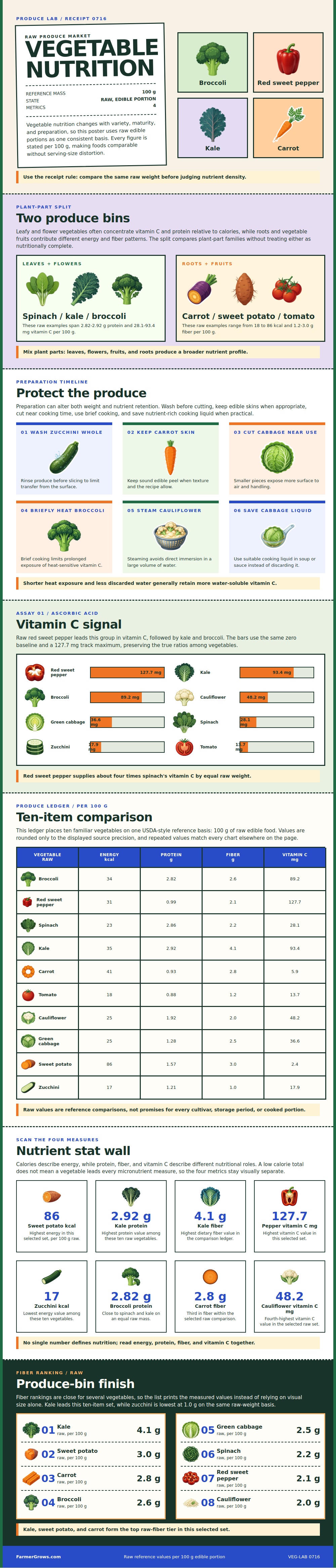
The numbers aren’t confusing if you break them out by weight (per 100g) of vegetables, which eliminates the mystery surrounding serving size: Now we can better compare different type of produce, like a leafy green to a starchy root. The graphic above shows how much energy, protein, fiber and vitamin C is in each item, making it clear that a starchy root contain more then a leafy green does, for example. Pick one type of vegetable over another, and the nutrition equation of whatever dish you’re making are different.
Why Vegetables Are Different
Some vegetables is high in vitamin C. Some of them are powerhouse foods for this nutrient. On top of my list are raw red sweet peppers which contains more vitamin C than kale or broccoli. Adding color to your plate is not just an aesthetic choice; it is a functional strategy for boosting your immune support. Great job on all those minerals from spinach… But maybe you need a pepper for hitting your daily target of vitamin C.
For example, a sweet potato contain far more carbohydrates then a tomato or zucchini. When I’m training for an ultra, this added density can be helpful for energy. If calories are something you’re watching closely, then perhaps go with cauliflower or zucchini instead.
Including fruits, roots, leaves and flowers represent a wider range of nutrients. You need to know what vegetables to purchase (see above) and how to prepare them. For example, boiling for 20 minutes ruin heat-sensitive nutrient such as vitamin C. Wash your produce before you cut it to prevent nutrients from leaching out during slicing. Whenever possible, leave the skins intact (as with carrots and potatoes). Underneath lies fiber, and nutrients. Instead of boiling, try steaming or briefly sauteeing. Save the cooking water; it’s packed with dissolved nutrient. Toss it into a sauce or soup.
A single magical food isn’t the answer; nutrition come down to knowing what you’re eating, and keeping things in balance. There is no single chart of numbers to memorize. Just know that each vegetable have its own benefits. Maybe kale leads in fiber among greens? Raw red sweet peppers top list for vitamin C? Mix it up and cook it lightly, and give your body the broad spectrum of input it requires.
You should of tried different vegetables before.