
Most people begin by shopping for seeds, enthusiastically, armed with a fistful of seed. And that’s just fine; it’s as far as most people go, too, which is not where anyone start successfully.
Before even cracking open that first seed packet, you must plan, and you do that by sitting down and measuring what space youve got (don’t guesstimate what might fit in there). A successful kitchen garden isn’t a jumble of whatever seedling made it into your hands first; it’s a garden mapped out ahead of time. Mapped to accommodate the way water flows, direction sunlight moves, and laws of physics when it comes to getting in and out of your yard. Get that part correct, and the rest of growing season fits easy within reach. There will be no scrambling for survival.
How to Plan Your Garden
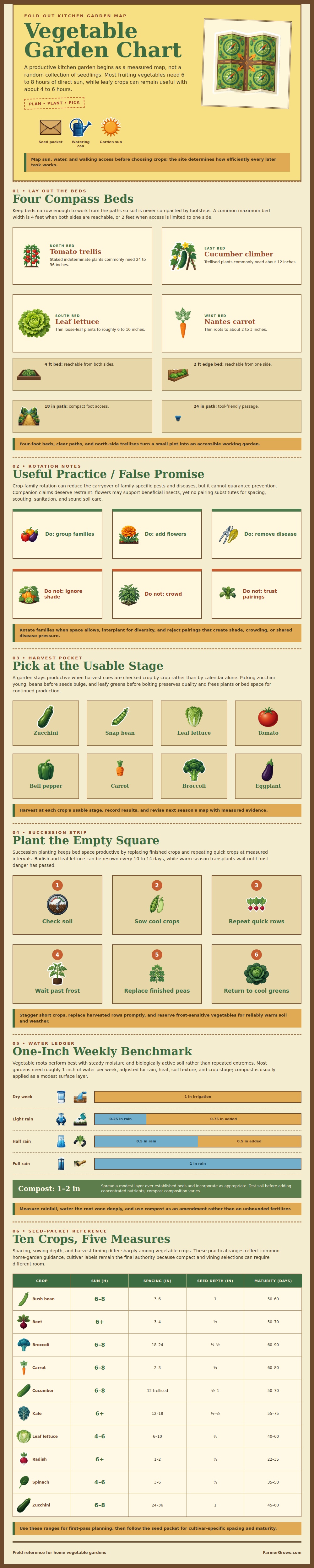
How big is it? The answer is in the chart above. This section of book is most ignored by novices, who learns about bed size when their knees ache. Make your beds narrow. From the pathways, you should of be able to work in soil and never step on ground.
Why? Because compacted soil suffocates roots. And it kills off microscopic life, the microbes; that make a plant healthy. If you can reach both ends, four feet across is maximum width. Against a fence, two feet works for edges. That sounds limiting, but it transforms the garden. It makes it a system that sustains itself different than a construction project.
Tomatoes goes on the north side. Leaf lettuce goes on the south side. This lets you manage shade; no one crop starve out the other.
After laying down the beds, you may be tempted to fall back on companion-planting mythology. These myths promise miracles. And they aren’t so miraculous, really, or even very effective. Yes, rotating your crop families helps lower soil-borne pests and disease. It is a slow form of defense. Yes, flowers attracts beneficial insects. But no, marigolds don’t substitute for good spacing; tomatoes don’t either. Inspect for trouble frequent. Trust in the power of healthy soil, not garden stories. It’s all in the mind, most of it (gardeners long for a shortcut). There is no such animal as a pest-proof plant. The answer is good old-fashioned husbandry.
When does it get harvested? It is not just about the calendar; it is also about timing. Snap beans are best picked before there seeds bulge out. Pick zucchini when they are baby sized. Keep the plant going. Don’t wait too long. Plant stop. The same goes for all crops: kale and carrots. With each one, the idea is to keep things going. You harvest at a usable stage to free up energy and space for growth. It has a rhythm of give and take. It requires attention; it pays you back.
The same holds true with water management. Intensity doesn’t matter more than consistency. Most gardens requires an inch of water weekly. Adjust up or down based off heat and rain. Deliver that water to the root zone. Don’t just spritz things on foliage. The deeper you go, the better; deep watering prompts roots to move downward, making plants less prone to drought. Adding a modest layer of compost to help hold moisture is good, too. And it feeds soil biology. But it’s no magic bullet, nutrient-wise. Test first before applying any other fertilizor. Not all composts are created equal.
Don’t leave any squares empty. Plan for succession planting: Radishes, for example, can be sown every couple of weeks. Stagger them; you want some coming on all the time. It takes some planning. But the reward: a productive garden all season.
Make a map. Follow the spacing. Let your plants tell you what they want. The most successful gardens aren’t those with the greatest number of varieties in them, each square foot has a purpose.