
What to do? You’ve got the right soil, amended and watered properly, but still have droopy-looking plants that never recovered. You’re not alone; perhaps you missed one critical aspect of gardening: which plants should be planted next to each other in your garden beds. Meet your neighbors, the biological way. There’s no such thing as magic here, just companion planting (and how it can help). The idea is to make a place a mutually beneficial neighborhood, where plant don’t just compete…they help each other.
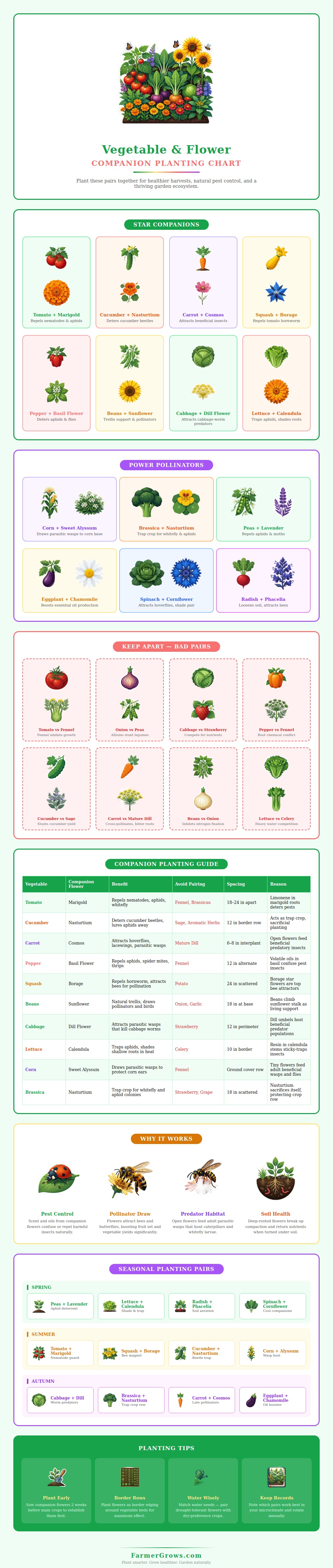
Tomatoes always have company: marigolds. Marigold roots exude a chemical called alpha-terthienyl that inhibits nematodes in the ground, including root-knot nematodes. Destructive microscopic worms that can wreak havoc on tomato plants. No sprays required; just the chemical protection provided from having these flowers growing among your greens. This results in less wilted stems and cleaner fruit.
Good Plant Neighbors for Healthy Gardens
But it’s not just about pest control. Growing flower is key to building your garden ecosystem. If you grow sweet alyssum under corn stalks, for instance, that flower draws in the good guys: parasitic wasps, which prey upon corn earworm moth pests. To do their job, those good guys require flowers to perch on between meals to fuel up on nectar. When they don’t get that meal, they move on. Supply the nectar, and you’ll keep natural enemy as part of your system. It is a little investment that pays big dividends in your crops’ yield.
But there are some that don’t play nicely with others. Some plants stops the growth of their neighbors. For instance, fennel is bad company for tomatoes and peppers; it produces chemicals which leach into soil and stunt these neighboring crops’ growth. The chemical defense protects the fennel from being stunted itself. Similarly, growing garlic and onions can throw off nitrogen fixation in beans. To get nitrogen from atmosphere, legumes require a specific kind of bacteria in soil, yet the onions and garlic stop this process. You’ll have fat onions but skinny beans if you grow your beans this way. It’s win-win, unless you’re a bean.
Success depends on timing. Sow your companion flowers a couple of weeks ahead of your main crop. This gives them time to get established and start producing good stuff, such as attracting pollinators or releasing helpful compounds from their roots. Otherwise, the flowers will be drowned out by other veggie, which grow faster. They will be useless as flower companions then. Consider them hired help; give them some time to settle in first.
Then there is the issue of how much water each plant need. Moisture-loving lettuces shouldn’t live next to drought-tolerant herbs because too much water will rot the sage’s roots. However, watering the sage enough might wilt lettuce. Reduce such tensions by grouping together those that shares your watering regimen. To make it even more efficient, and less stressful for everyone.
The visual guide recommends keeping compatible pairs close together. There are no strict rules for companion planting, though some proven combinations to start with include nasturtiums and cucurbits, or basil and peppers. Observe what happens between plants in your own microclimate. Watch the interactions and take notes. It will feel as though you have more then just a monoculture, you’ve got a strong gardening community.
Choose wisely when selecting companions, and suddenly harvest takes care of itself. No longer do we fight against nature; we work with it. And then, voila! We’ve got an even garden. There is not too much of one thing here and not enough there. It feels self-sufficient with a balance of all things. It is proof that good company makes healthy plants.