Tomatoes Per Plant Calculator
Estimate how many tomatoes one plant can produce, how many pounds that represents, how many plants you need for a harvest target, and where yield is being gained or lost.
Tomato yield changes by variety, pruning, support, weather, pollination, water, fertility, and harvest loss. This calculator starts with a realistic fruit-size yield model, then adjusts it for the way your crop is actually being grown.
Your Tomato Yield Estimate
Adjust the inputs and calculate to see fruit count, harvest weight, weekly picking pace, and target plant needs.
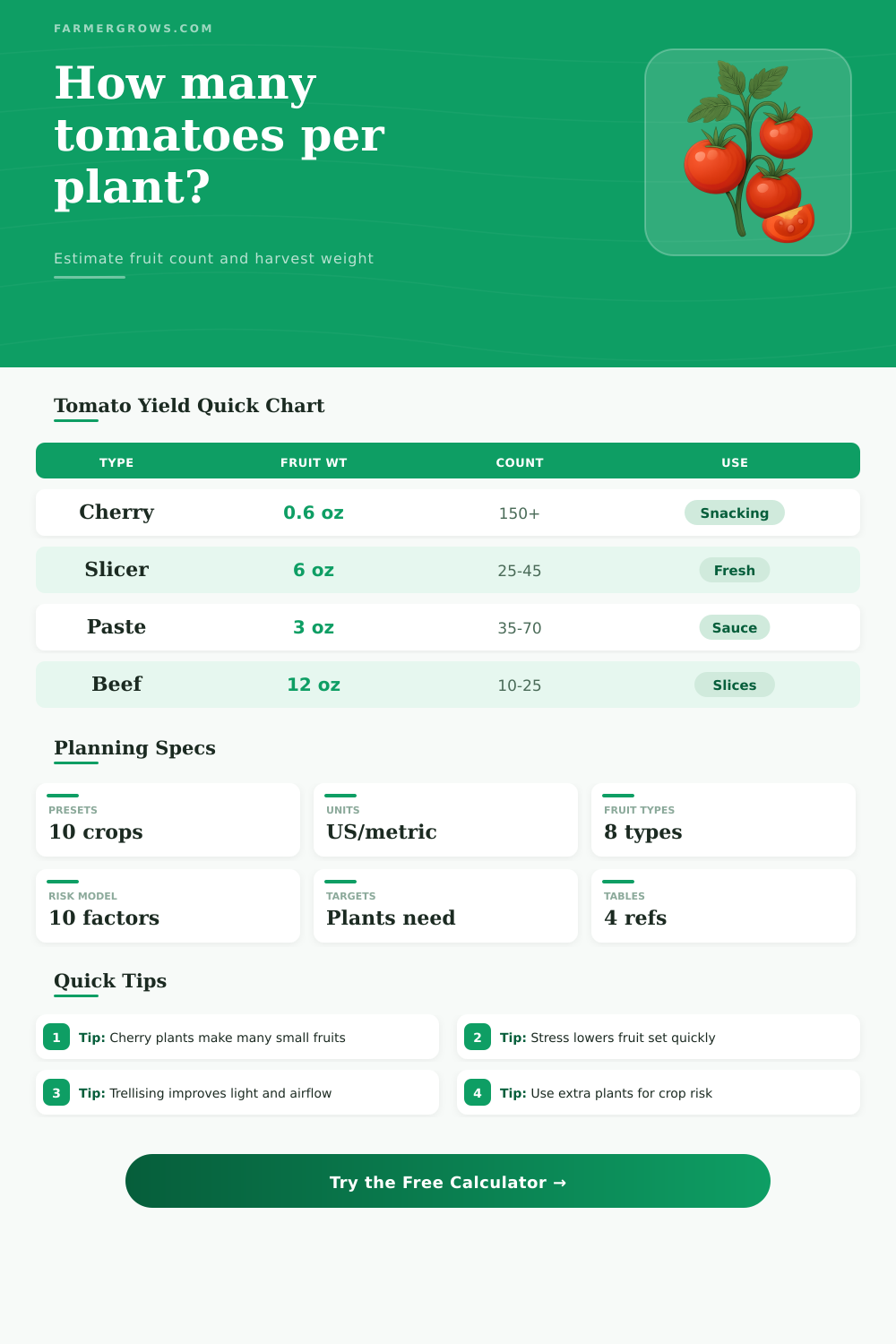
| Tomato type | Average fruit weight | Typical lb per plant | Typical fruit count |
|---|---|---|---|
| Cherry tomato | 0.4 to 0.8 oz | 8 to 15 lb | 160 to 480 fruit |
| Grape tomato | 0.35 to 0.6 oz | 7 to 12 lb | 185 to 550 fruit |
| Saladette tomato | 1.5 to 3 oz | 9 to 16 lb | 48 to 170 fruit |
| Paste tomato | 2.5 to 4 oz | 10 to 18 lb | 40 to 115 fruit |
| Medium slicer | 5 to 7 oz | 10 to 20 lb | 23 to 64 fruit |
| Large slicer | 7 to 10 oz | 12 to 22 lb | 19 to 50 fruit |
| Beefsteak tomato | 10 to 18 oz | 8 to 18 lb | 7 to 29 fruit |
| Factor | Low setting | Good setting | Why it matters |
|---|---|---|---|
| Sunlight | 4 to 5 hours | 8 plus hours | More light supports flowers, sugars, and fruit sizing. |
| Root volume | 5 to 8 gal | 15 plus gal | Restricted roots reduce water buffering and nutrient access. |
| Water | Irregular | Consistent | Even moisture reduces blossom drop, cracking, and blossom-end rot. |
| Support | Sprawling | Trellis or cage | Support improves airflow, harvest access, and fruit quality. |
| Pollination | Weak flower set | Good vibration | Heat stress and poor pollen movement reduce fruit count. |
| Goal | Fresh slicer plants | Cherry plants | Paste plants |
|---|---|---|---|
| 25 lb fresh eating | 2 to 3 plants | 2 to 4 plants | 2 to 3 plants |
| 75 lb family supply | 5 to 8 plants | 6 to 10 plants | 5 to 8 plants |
| 150 lb sauce and fresh | 9 to 15 plants | 12 to 20 plants | 8 to 14 plants |
| 300 lb market crop | 17 to 30 plants | 24 to 40 plants | 16 to 28 plants |
Count and weight are different. A cherry tomato plant can produce hundreds of fruit while still weighing about the same as a slicer plant with far fewer tomatoes.
Plan with marketable yield. Disease, splitting, sunscald, birds, missed pickings, and blossom-end rot can remove a meaningful share of the harvest.
Containers need enough soil. A small pot can flower well at first but lose fruit size when the plant runs short on steady moisture and nutrients.
Use weekly pace for harvest labor. A 12-week crop with 120 lb total harvest averages 10 lb per week, but peak weeks can be much heavier.
The difference between what you hope to grow. Say, thirty pounds of fruits from each plant (and what you get), the withered vine that yields just enough for maybe two salads, is where most garden plans come unstuck. Why? It isn’t always due to bad luck or a lack of good soil. More often than not, it’s because no one ever taught us how to do the math of our own harvest before we started sowing seeds.
How many plants will realisticly fit in your bed and have a fighting chance at making it through summer intact? No guessing.
How to Calculate Your Tomato Harvest
The way the calculator above (which adjusts for real-world growing conditions in your garden) work: It begins with reasonable default yields for various kinds of tomatoes (recognizing that heavier varieties like beefsteaks produce fewer fruits per plant), and adds multiplier factors based on variables you enter. Water regularity, sunlight, support systems, and anticipated losses to rot and/or disease.
In other words, the calculator approaches things the way an experienced commercial grower does when planning a crop: anticipating worst case scenarios, and planning accordingly while budgeting for average. If you pick beefsteak variety, for instance, the system knows these are big fruits. There may be few tomatoes on a plant but each one will weigh a lot. This means the overall pounds-per-plant yield will be high, even though number of tomatoes per plant will be low. That makes a difference, since knowing that affects how much room you’ll need to set aside for them and what frequency of checks on the vines to see which fruits might be ready next.
Tomatoes follow a very different set of rules. With cherry tomatoes, it’s all about the number, not weight. A cherry tomato plant will have two hundred little babies hanging off its branches over the course of the season; a beefsteak vine will struggle to hang up even a couple dozen big boys. Both types of vines takes the same level of care but their harvest pace couldn’t be more different than before. Cherry tomatoes beg to be picked regularly (every other day or so), lest they rot in the heat, while beefsteaks want consistent watering, not too much, not too little, to keep them from splitting open when they get heavy.
This difference plays into the tool: You can customize how aggressive you are with supports and prunings. If a tomato’s on a trellis, for instance, it gets good air circulation (less fungus) and produces just a little more fruit. Another tweak to the knob is equal to pounds of tomatoes at harvest time.
Consistent watering is perhaps single most neglected factor in tomato growing. Drought resistance? Yes. Stress-resistant fruit production? No. To prevent blossom drop, the plant needs reliable moisture. It also needs steady temperatures. This allows it to be in reproductive rather than survival mode. Irregular watering? It is a stealthy yield-killer. Enter this one into calculator and give yourself a rating for “water reliability”… In areas where summer is a dry season, depending solely on rain will reduce your projected crop accordingly, which is not pessimistic, it’s realistic. With regular hand-watering or drip irrigation the numbers are very different; that means plant’s inner processes stay in a state of balance.
The other key variable: if you’re in containers, the size of container matters. Even with lots of fertilizer, there’s only so big the roots will grow, limiting overall yield. The tool includes a field for limited root volume to reflect that reality. If you step it up to a fifteen gallon pot or larger, plant can stretch out fully and reach its genetic potential. It is like trying to run a marathon with your shoelaces tied together; you can move, but you wouldn’t of reached your top speed.
With all crops outdoors, there will be losses. Some of those tomatoes gets eaten by birds. Some leaves rot off from blight. Some fruit cracks open in the rain. You can enter percentages of harvest and disease loss into the calculator. We are not interested in growing a maximum theoretical yield but our actual marketable yield. If you think local pests will cost you 20% of your crop, you can account for that in your final count of what actually makes it onto your counter. Whether or not you want to make up for this with another ten plants is now a deliberate choice instead of a wishy-washy hope.
Pre-planning not only helps prevent crowding, but also saves space. What looks like an efficient use of space may be really dense. Once the canopy closes off, there is no air circulation and then we get the mold. Look at the reference tables and compare how many of which types of plants matches what you’re planning to harvest. Are you aiming for a full pantry of sauce or just enough for fresh eating? Adjusting number of plants based off the amount of produce you realistically expect to get will make sure that come season’s end you’re satisfied, not frustrated. Preparation is often the key between a good year and a great one.