
Sometimes in the grocery store you’ll see a pile of tomatoes that all look the same but aren’t going to have the same flavor. You don’t realy know until you try them, so sometimes its hard to know which one you’re going to like. And then sometimes you get home and make a sandwich and it’s just kind of blah.
Most of the time, you’ve got the wrong tomato for the job.” Some tomatoes were bred for slicing; some for sauce. Some are simply very sweet by nature. Knowing this make a difference in the taste.
How to Make Tomatoes Sweeter
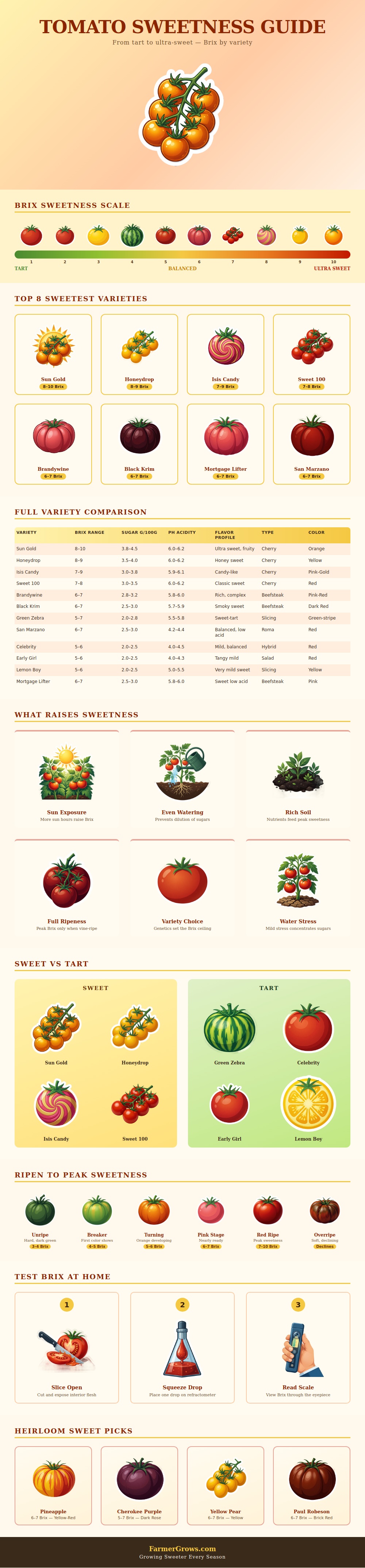
So what does all this mean? The visual guide describes it based off brix levels (which refer to the level of sugar), aka how sweet the fruit is. In other words, it’s a measurement of dissolved solids, basically, how sweet the fruit is, and the higher the number, then the more tart/sweet it is. And that’s where a cherry tomato such as Sun Gold will taste like candy compared to your typical salad tomato, because it’s so much sweeter on the chart, with a lower score meaning more tartness.
This list highlights tomato varieties with high sweetness level. Sun Gold tops the list, along with Honeydrop and Isis Candy, which often has the same kind of sweetness to reach the dessert status. When you’re serving kids food, or just want something fruity instead of ketchup, these are the tomatoes you want.
Sweetness-wise, these heirlooms such as Black Krim or Brandywine rank lower down the scale, but they comes with other benefits. They have deep flavor and sometimes even a smokiness that you don’t get in those sweeter cherry types. You give up sugar. You pick up flavor character. And the chart illustrates the divide between sweet cherries and the more balanced (slicers) or acidic (cooking) varieties. If you didn’t know that, you might keep faulting your Brandywine tomato for lacking sweetness. But all it was ever aiming to be was robust, not sweet.
The sweetness equation is one that you have a little bit of control over when growing your own tomatoes. You don’t get to modify the genetics of the seed, sure. But you do gets to make a difference as far as how much sweet stuff it makes.
The largest contributing factor is the sun. More hours under direct sunlight mean more photosynthesis. More photosynthesis leads to higher levels of sugar in the tomato. It is biology. So if you find yourself with some bland-tasting tomatoes, consider where they’re situated. Is it shade? Well, there’s not a darn thing you could of done about it, regardless of which variety you picked.
And how you water it matters. Water regularly to ensure the fruits don’t get too soft, but let it go mildly dry to really concentrate the sugars. Why does a tomato seem tastier when grown under slightly drier conditions? The plant sucks up the water from the ground, concentrating the flavors within the fruit. It is a delicate balance. If it is too stressed nothing grows; if it is just stressed enough, it makes for intense flavor. It goes from dilute soup to rich broth.
And finally, there is timing. You’ll get a better-tasting tomato when it’s been left to ripen on the vine different than if you’d picked it green. As the chart shows, sugar levels rises steadily as the tomato turns from hard green to full-on red. If waiting’s possible, there’s big payback here: Those last few stages are when the fruits’ sweetness realy develops. In short, the closer they get to going deep red, the better, just waiting until the color change occurs is the surest shortcut to a sweet bite.
Whether your perfect tomato is a complex heirloom or a high-Brix cherry, the quest is the same: finding the one with the right taste for you, grown in the right conditions. That moment when you bite into something and know again what makes tomatoes so good. It is not just veggie; it is a pleasure in eating what we’ve grown.