
Thirty minutes into your recipe, you look at your tomatoes and they aren’t behaving. You wanted a nice chunky sauce, but ended up with something more like soup; you wanted a crisp salad, but got mush. If that sounds familiar, relax: Many cooks have been there, and most of the time it’s not your technique that’s the issue.
Most likely it’s the tomato, specificaly its structure, the tomato itself, which isn’t just one kind of fruit, but a category whose members varies widely in their physical makeup. Knowing what sort of tomato you’re cooking matter. The size and firmness is important for both practical and aesthetic reasons.
How to Choose the Right Tomato
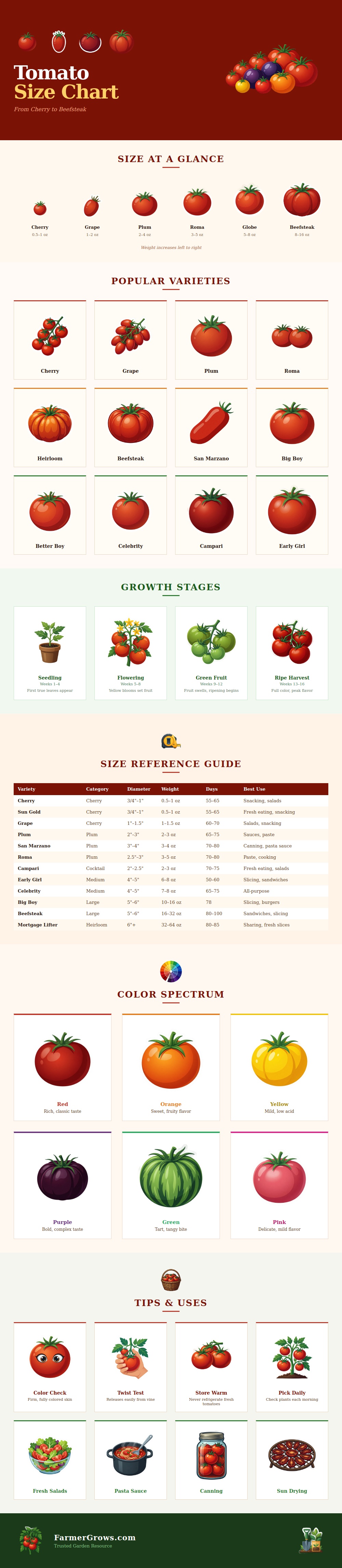
Within that range are tiny cherry varieties weighing just ounces, and huge beefsteak ones weighing sixteen ounces or more. You’ll see on the chart how it plays out in size, from lightweights that fit neatly into your mouth to hefty slicers that would do a fine job feeding an army.
Why does all this matter? The heavier something is, its texture are meatier. An ounce-size grape tomato has dense flesh and a tight skin, perfect for holding together in a salad. A bit heavier, in the middle range of weights, is Romas or plum tomatoes, they have less seed, but also some thicker flesh. Those sorts of tomato are gold standard for sauces, since their structure breaks them down easy without going watery. Make a thick marinara using watery beefsteaks, and you’ll find yourself boiling off excess water for the better part of the afternoon. It is a waste of both flavor and time.
Finally, regarding quality: The visual guide can shows you how the plants grows over time, which gives a hint about timing of growth. Towards the end of life cycle, weeks prior to harvest, fruit will plump up as it approaches full size and gets sweet. At this point the fruit reaches its final form, and also gains sugar. But the problem for most home gardeners is picking too soon; we’re after a certain shade of color that isn’t actualy achieved yet.
While yes, the color helps, it’s just part of the story, and the true test comes through what I call the twist test (more on that in the tips). With a gentle twist, a ripe tomato come away from the plant easily. If you must cut or really yank at it, the fruit is not ready. When you get that pop off, that’s the sign the fruit has reached maturity and the stem have fallen off, telling it: your job here is done.
Pick items every day, especially if it is hot outside, to try to stay ahead of it. Things goes fast.
Most people make a mistake with storage… And it’s an easy one to fix. Never refrigerate fresh tomatoes (the cold washes out the scents that give the fruit its aroma, and destroys the cell walls). Keep them on the counter with the stem end down to keep the flesh firm; otherwise, your fridge turns a vibrant fruit into a mealy, bland sponge. That simple practice maintains not just the taste but the texture.
The color spectrum also tells you something about flavors (see graphic). Red tomatoes have a traditional rich acidity. Yellow- and orange-colored ones tend to be more mild and sweet, making them good when you’re looking to cut acid in a recipe. Purple heirlooms deliver a bold, complex depth that stands up all on its own. Knowing what kind of flavor profile you seek before picking or buying will spare you disappointment come mealtime.
Which tomato is right for the task? It’s not so much a question of taste then it is a question of physics. If you want to make a burger, get a big beefsteak; it has the structure to stand up to being placed on a bun without melting all over itself. It’s the same if you’re making something with tomatoes like pasta sauce: you need a correctly sized fruit. And ditto if you don’t: small cherry tomatoes don’t do anything for burgers, but they are ideal for quick snacking or for skewering.
The point: think about what you want to do with the fruit first, then go look in the market (or the garden) at its shape and size to help guide your recipe. Match the fruit to the function, and you’ll enjoy the results more than waste less time trying to fix things later. That single, simple decision of which tomato to select could of been the difference between a good meal and a great one.