Tomato Seedling Planting Depth Calculator
Estimate transplant hole depth, buried stem length, trench length, rootball cover, first-leaf clearance, and recovery risk for tomato seedlings before they go into garden beds, containers, or high tunnels.
Tomatoes can form roots along buried stem tissue, so many transplants are set deeper than the original pot. This tool keeps the rootball covered while protecting leaves, graft unions, cold soil recovery, and container bottom clearance.
Buried tomato stems can grow adventitious roots, but the plant still needs healthy leaves above the finished soil surface.
The calculator keeps the first retained leaves above soil and flags plans that would bury foliage or splash-prone nodes.
A shallow trench can bury a long stem horizontally when deeper soil is cold, dense, or too close to a container bottom.
Grafted tomatoes should keep the graft union above soil so the scion does not root and bypass the rootstock.
Tomato Seedling Depth Plan
Depth result will appear here.
1. Seedling Shape Guide
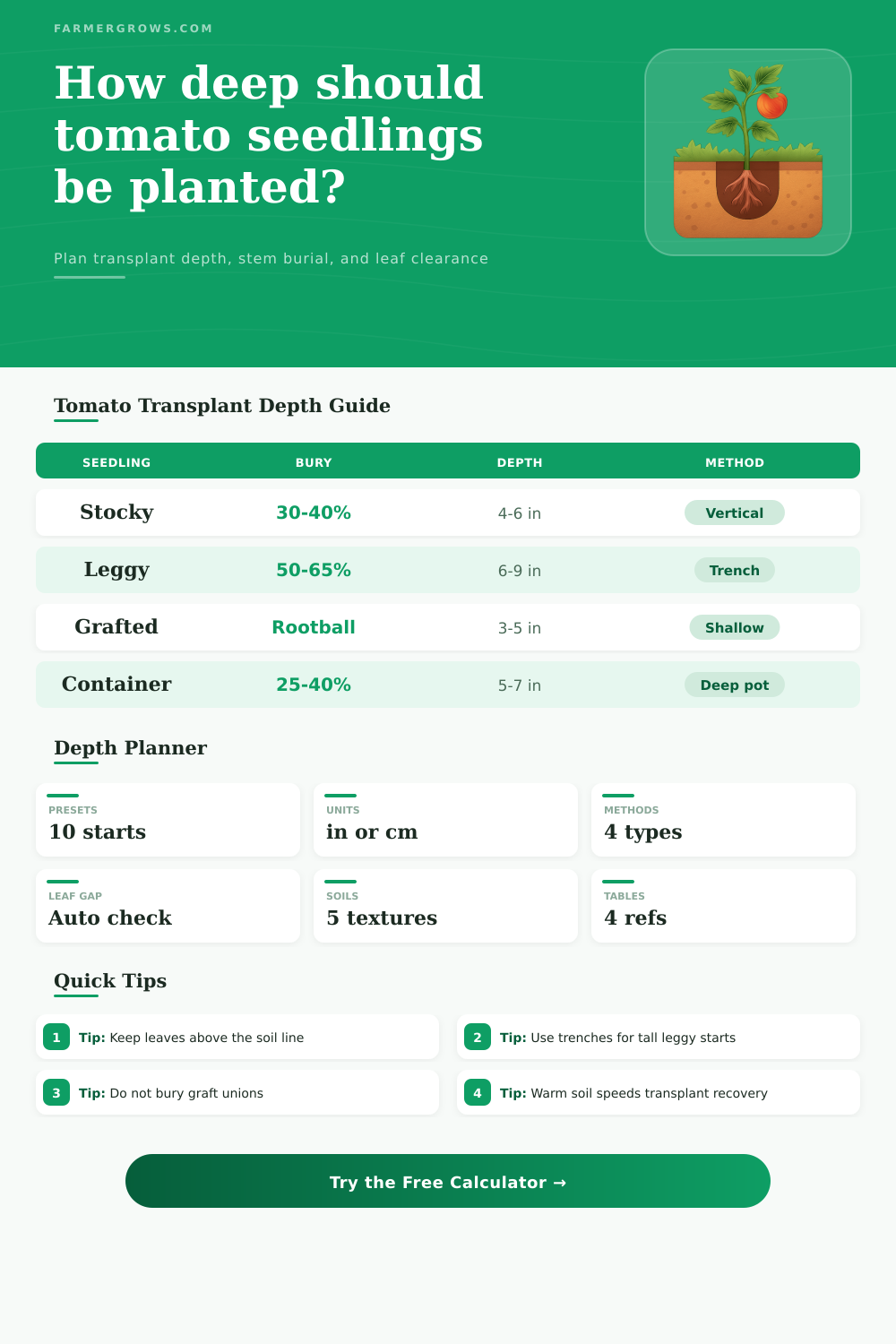
| Seedling condition | Suggested burial | Best method | Leaf handling | Depth caution |
|---|---|---|---|---|
| Stocky 6 to 10 inch transplant | 25% to 40% of stem | Vertical hole | Remove only cotyledons if needed | Avoid burying low true leaves. |
| Standard 10 to 16 inch transplant | 35% to 50% of stem | Vertical or angled hole | Strip leaves that would touch soil | Keep several healthy leaves exposed. |
| Leggy 16 to 24 inch transplant | 50% to 65% of stem | Shallow trench | Remove leaves along buried stem | Do not force a very deep cold hole. |
| Grafted tomato | Rootball only | Shallow vertical hole | Keep graft union exposed | Burying the union defeats rootstock value. |
| Dwarf or patio tomato | 20% to 40% of stem | Container deep pot | Preserve compact canopy | Check pot depth before deep planting. |
2. Soil Temperature And Recovery
| Soil temperature | Transplant response | Depth adjustment | Recovery note | Best action |
|---|---|---|---|---|
| Below 55°F | Slow root growth | Reduce deep burial | Cold soil delays recovery | Wait, warm bed, or trench shallowly. |
| 55 to 60°F | Moderate recovery | Use conservative depth | Protect from chilly nights | Water in and avoid heavy mulch at first. |
| 60 to 70°F | Good recovery | Use normal depth | Good rooting zone | Deep set works well for most starts. |
| 70 to 80°F | Fast recovery if moist | Normal to slightly deeper | Watch drying in sandy soil | Mulch after soil is warm and moist. |
| Above 80°F | Heat stress possible | Avoid excessive burial | Transplants wilt easily | Plant in evening and shade briefly. |
3. Method Conversion Table
| Planting method | Hole or trench depth | Horizontal length | Best fit | Do not use when |
|---|---|---|---|---|
| Vertical deep hole | Rootball plus buried stem | Rootball width only | Warm loose soil and stocky plants | Deep soil is cold, wet, or compacted. |
| Angled planting | About 70% of vertical depth | Moderate slot | Medium leggy plants | Stem would kink or leaves touch soil. |
| Shallow trench | Rootball depth plus 2 to 4 in | Buried stem length plus rootball | Tall leggy seedlings | Grafted tomatoes or brittle stems. |
| Container deep pot | Limited by pot depth | Rootball area | Patio tomatoes and grow bags | Pot has poor drainage or little root room. |
4. Leaf And Graft Clearance Checks
| Clearance item | Minimum target | Why it matters | Correction | Calculator flag |
|---|---|---|---|---|
| Lowest retained leaf | 1 to 2 in above soil | Leaves buried or touching soil invite rot | Plant shallower or remove the leaf | Leaf gap result |
| Graft union | 1 to 2 in above mulch | Scion rooting can bypass rootstock | Reduce burial on grafted plants | Graft-safe status |
| Growing tip | 4+ in above soil | Plant needs active leaves for recovery | Leave more top growth | Top growth card |
| Container bottom | 2+ in root room below rootball | Prevents perched roots and water stress | Use a taller pot or plant less deep | Depth fit status |
Remove cotyledons and lower leaves along the buried stem, but keep enough healthy foliage above soil for quick transplant recovery.
A shallow trench keeps the buried stem in warmer upper soil and avoids digging into cold, wet, compacted layers.
Deep planting works best when water reaches the original rootball as well as the buried stem area where new roots will form.
Set grafted plants at rootball depth and keep the union above soil and mulch so the rootstock remains in charge.
Tomatoes are planted deep, because they make roots along their stem. This extends root system and helps stabilize branches as they bear heavy fruit. The bigger the root mass, the better job it does grabbing water, and anchoring everything else.
The calculator (above) knows how much stem is thick enough for good rooting at different seedling sizes; you don’t have to guess at that number or the temperature of soil. It’s all about balancing a tomato’s needs for new roots while ensuring its leaves stay out of the dirt, where they would rot and fail to photosynthesize. Bury too much stem, and you risk not only rotting those lower buds but trapping moisture next to them.
How Deep to Plant Tomatoes
TIP: Most of us plant with leaves touching ground, which invites fungal diseases such as septoria and early blight into the plant. The reference table on the page explain which seedlings is shaped to be planted how (whether vertically), deeply buried, or some other method. (A 2-foot-tall, leggy heirloom won’t work vertically; a stocky six-inch plant can handle a moderate burial.)
Floppy, tall starts will usually fail when planted this way; their thin stems can’t hold up, and the soil at greater depths isn’t warm enough. If plants is leggy, trench them. Dig a shallow trench horizontally and set the plant down sideways; bury the bottom half of stem but leave growing tip sticking up into warm topsoil.
This adjustment change the recommendation depending on your soil texture and temperature. Heavy, cold-clay soil will slow root growth, so you shouldn’t bury the plant too deep and risk hurting it by delaying its recovery. It advises a shallower trench than… Or simply no trench at all, but burying just enough stem to be up into warmer, oxygen-rich upper levels.
They’re different: Grafted tomatoes has their own set of rules. When you purchase a grafted seedling, you’re paying for that plant’s strength and disease resistance, which is achieved by combining it with the rootstock of a different variety. The calculator alerts you if there’s a chance of bypassing the beneficial rootstock, the graft union, by burying it in ground; the top portion of the plant might try to grow its own roots downward. That’s something you don’t want to happen, particularly on high-value plants.
What about soil type? Will it be too fast or slow to move water around seedling? Sandy ground will leach away fast, and you might have to go a bit deeper with your hole (to maintain that moistened rootball). Rich-soil raised beds retain moisture nicely; you can plant at normal depths without risk of drowning. The tool takes such factors into account: It will adjust its advice to suit available soil depth and rate of drainage.
It’s not about getting a precise number. Instead, it’s about knowing your situation and transplanting successfuly. You should of consider if they have delicate stems, how cool the soil might be in spring, and if they have leaves that will need stripping off for easy transplanting. Knowing this beforehand means less stress to them and faster recovery so they can expend their energies on producing fruit, not just surviving.
After you plant, proper watering is key (as with anything). Don’t use too little or too much water. Too much too early can drown a newly transplanted seedling. This is especially true if it was started in a greenhouse and hasn’t had time to harden off. You want to get water down into the area that’s supposed to start taking root, the rootball and buried part of the stem, and settle the soil around them to close any air pockets.
The more you take your time measuring out and planning how you’ll do this, the better result at harvest time. No struggling in the dirt here, your plants will be standing tall.