
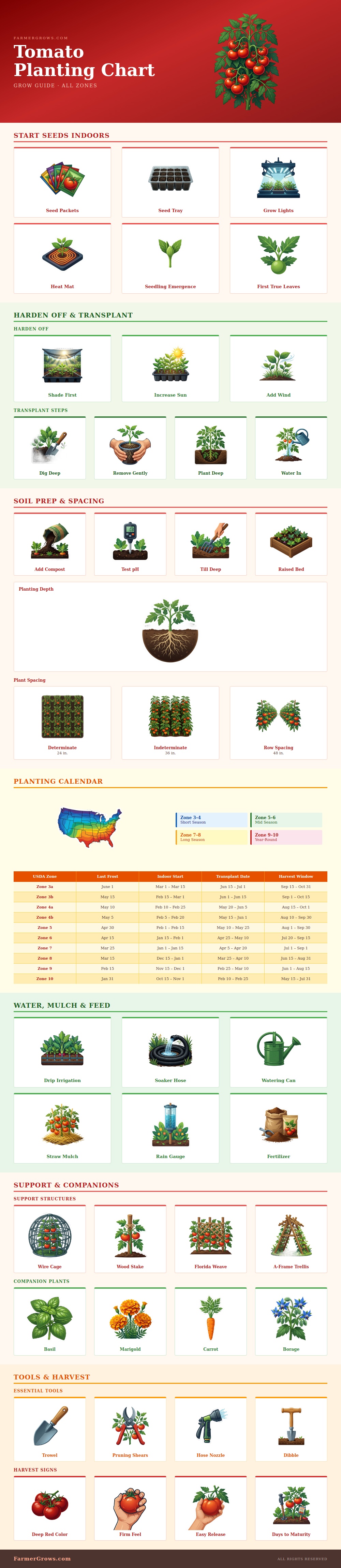
The tomato seedling is green twig, and you hold it in your hands in the garden center. The label says pounds of fruit! No wonder beginning gardeners are doubtful. But what does the timetable from seed to eating look like? Here it is on a chart, one per climate zone, and there you can see where impatience comes into play. Nope, tomatoes don’t grow fast. Slowly they do. Give them a head start.
First comes seed starting: Indoor gardening doesn’t require a greenhouse. It requires a seed tray, some heat mats, and a grow light. If conditions is right, the seeds will pop up fast (as the how-to demonstrates). Once they sprout their first true leaves, however, that’s when the fun starts. That’s when you begin what is known as “hardening off.”
How to Grow Tomatoes
People skip it because it sounds like such a drag. You bring the baby plants out of doors for an hour, then two. Slowly you expose them to sun and wind. If you don’t do this, you shock them and then they’re wilting in the outdoor heat. Sometimes they never recover. This step is what separates thriving plant from a struggling one.
After frost danger has passed, you plant. And that’s where the visual layout becomes useful. The spacing is not generic. Determinate plants should be spaced at least twenty-four inches apart. Indeterminates: Thirty-six inches. Why? Because too close together = no air flow. No air flow = invitation for disease. Tomatoes (and they’re especially prone to fungal issues) can also gets tomato blight.
And the chart calls out how deep to plant. Deeper than it may seem. Why? Because tomatoes develop roots along their stems, burying the plant makes for a stronger rooting system, and better anchoring system. It is counter-intuitve but true.
Prepare the soil well: Compost helps. Why? It provides consistent fertility, of course, but it also help with drainage. Test your soil’s pH: Tomatoes like slightly acid soil. A trowel? Shears? The guide says that is correct; those tools are recommended.
Tomato cultivation: Again, consistency counts: drip irrigation beats sprays; no wet foliage (promotes disease); stress-free environment (meaning dry soil around the roots). Root zone should of been kept cool by mulch (straw works great); maintains moisture, too. It is low effort with a big-time reward.
Staking is A MUST: Wire tomato cages are fine if you are growing determinate tomatoes with compact growth, but heavy indeterminate plants often needs staking or a Florida weave system. To do otherwise invites rot and makes picking tricky.
The last ingredient is timing. When do you plant what? The calendar tells you that, with a month-to-month map of seed-starting time. It also tells you the transplanting time based off your zone (3 to 10). In short-season zones, do not plant too early or too late. If you plant too soon, you get leggy plants. If you plant too late, there is no time to set fruit before fall. A little more leeway in warmer zones…but the principle holds true. Race the frost dates.
The wait is worth it. Look for signs that the fruit is ripe, such as a firm texture and deep-red color. Tomatoes will slip loose from the vine. Payback for all that care starts here: Eat a home-grown tomato. All those thoughtful steps add up to good eating. This is your reward.