
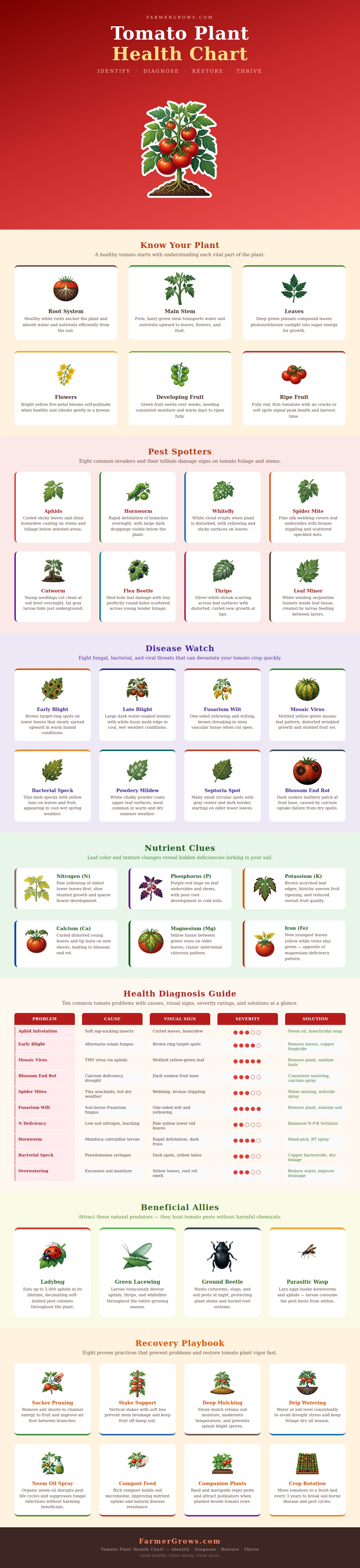
When you see A tomato plant with one yellowing leaf, panic: What’s wrong? How do I save it? Can I stop the spread to my other tomatoes? This kind of fear about the worst (and blight) may be more imagination than actualy reality.
Tomato plants is remarkably tough and tell-tale signs of their distress will appears visually; so they can be saved, if you know what they’re telling you.
How to Fix Tomato Plant Problems
Is it pests, diseases, or a nutritional problem? That’s important: An insecticidal spray won’t help a fungal problem, for example, and you’ll waste both money and time. Read the pattern, not just symptom; early blight causes brown “target-like” lesions on foliage, for instance, whereas curled foliage may indicate either spider mites or aphids. Usually, early blight begins on bottom leaves and works up, so removing affected foliage will be more successful then spraying all over the place, and again: Promote good air flow, too.
A pale yellowing of the oldest foliage is commonly confused as a symptom of some sort of disease, but it’s more typically a nutrient clue: A nitrogen deficiency. That means the plant’s relying on its old tissues to sustain its new growth, and needs fertilizer. Not a doctor. If your new leaves look yellow (but the veins are still green), that’s the reverse scenario; it indicates an iron deficiency, and requires another kind of soil amendment. Overdoing it can burns the roots, so don’t go fertilizing if you’ve got this one wrong.
Eight most common pests: The story of each has its own signature, hornworms, for instance, are especially bad (they will defoliate a plant overnight) and you may spot their big, black droppings first; with other pests such as aphids, you may see the sticky honeydew but not green-camouflage caterpillar itself. Know your enemy! Soft-bodied types such as aphids is easily killed with insecticidal soaps or perhaps neem oil. For others like hornworms, hand-picking is frequently best (match treatment to pest).
The recovery playbook stresses the value of drip irrigation and heavy mulch. These methods keeps plants happy during hot spells and prevent trouble before it starts. Dry conditions cause soil to dry out fast, which causes blossom end rot. This is not a disease; it is related to how plant takes up calcium. It is much easier to prevent this problem than to cure it. Adjust your watering routine to make your plants happy.
Instead of relying on harmful chemicals to control pests, invite helpful ones such as lacewings and ladybugs into garden. The predators will do your work for you, as will building a resiliant environment through rotating crops, making compost, and maintaining healthy soil microbiome. Work with nature, which means helping plants cope with their small stresses and thrive even with them. You’re looking at creating conditions for growth.
When it comes to tomato growing, listening matters. Your plants will tell you if they’re happy (or not) and you’ll want to pay attention; diagnose correctly… And respond accordingly. The reward: a crop of firm, ripened fruits that show thanks for all you’ve done; that’s true success. And that means taking things slow, and observing; and saving one healthy leaf at a time. You should of seen the results!