
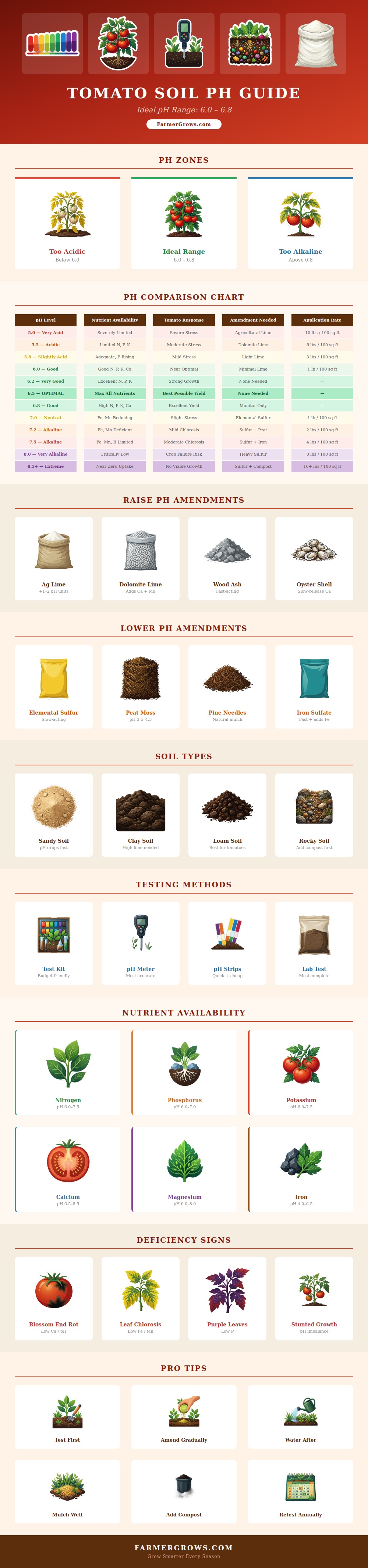
You can water regularly and plant the perfect seed, but if you don’t pay attention to soil chemistry, your tomatoes might be flavorless. Soil chemistry is a variable that trips up a lot of gardener. Most important is its pH level… The gatekeeper for nutrition. It determine what gets released from the soil (available to your plants) and what stays locked up in the dirt.
Tomatoes have a narrow window for best growth… That’s their gate. In this range they can absorbs the essential nutrients of nitrogen, phosphorus, and potassium. Beyond this range, they struggle to take in those nutrient. A good pH range for growing tomatoes are between 6.0 and 6.8. This is not random! That’s when the plants can take up major macronutrients most easily.
Why Soil pH Matters for Tomatoes
Below that, too acid: things you add may dissolve beyond what the roots can absorbs. Growth slows; you get purple leaves. Above that, too alkaline: micronutrients including iron and manganese lock up in soil. What happens then? Chlorosis means leaves go yellow but veins remain green. The plant is starving even though nutrients are in the ground.
One soil type does not act like another. Sandy soils loses their acidity fast. Sandy soils leach acidity quickly, meaning the pH can drop faster then you expect. Clay soils resist changes in pH and hold on to alkalinity. Loam is typically the best place to start but it must be monitored as well. Each pH level affects how nutrients are taken up in soil. Nutrients is most available at a pH of 6.5 while they cause moderate stress at a pH of 5.5. By amending these areas, you eliminate guesswork when repairing them.
Improving soil conditions isn’t a single treatment; it’s more like taking medicine for an ailment that never goes away. To adjust soil pH (up or down), first determine what it needs. Is the pH too low? Raise it with dolomitic lime or agricultural lime. Is it too high? Lower it with elemental sulfur. Keep in mind that with any of these amendments, too much will cause opposite condition. You don’t want to swing the other way, just as if you took antibiotics and killed off all the “good” microbe, leaving yourself vulnerable to other infections.
Chemical treatments takes time. So do biology-based ones. Most gardeners fail when they expect instant change.
To find out what’s going on with your soil: Test it. There is inexpensive do-it-yourself test kits; that’ll get you roughly in the ballpark. For more accuracy, use a proper soil meter or have a soil sample tested by a lab. What you don’t measure, you can’t amend. Know your number and tweak slowly.
Build soil structure by adding compost. It will help hold nutrients and also buffer pH change. Keep it mulched which reduces stress and evaporation. Re-test each year (best in early spring). This routine turn soil management into a controlled practice.
Yes, tomatoes are tough, but no, they’re not magic. Give ‘em good growing conditions, and they’ll reward you. Eliminate growth barriers like pH levels outside the 6.0-6.8 range, and you’re on your way. Often, it is all about chemistry: will you have a great harvest or just an okay one? Grow great tomatoes by getting soil right. It’s tiny, yes… But not unimportant. Want big tomato success? Make life easy for your tomatoes.