Tomato Plants in a Hanging Basket Calculator
Estimate how many tomato plants fit a hanging basket, the finished wet load on the hook, daily watering demand, and realistic cherry tomato yield for compact and trailing varieties.
Use this as a planning estimate for edible hanging baskets. A basket that looks roomy when planted can become crowded once tomato roots, wet potting mix, fruit load, and wind movement are added.
1Choose a tomato basket preset
2Compare basket tomato habits
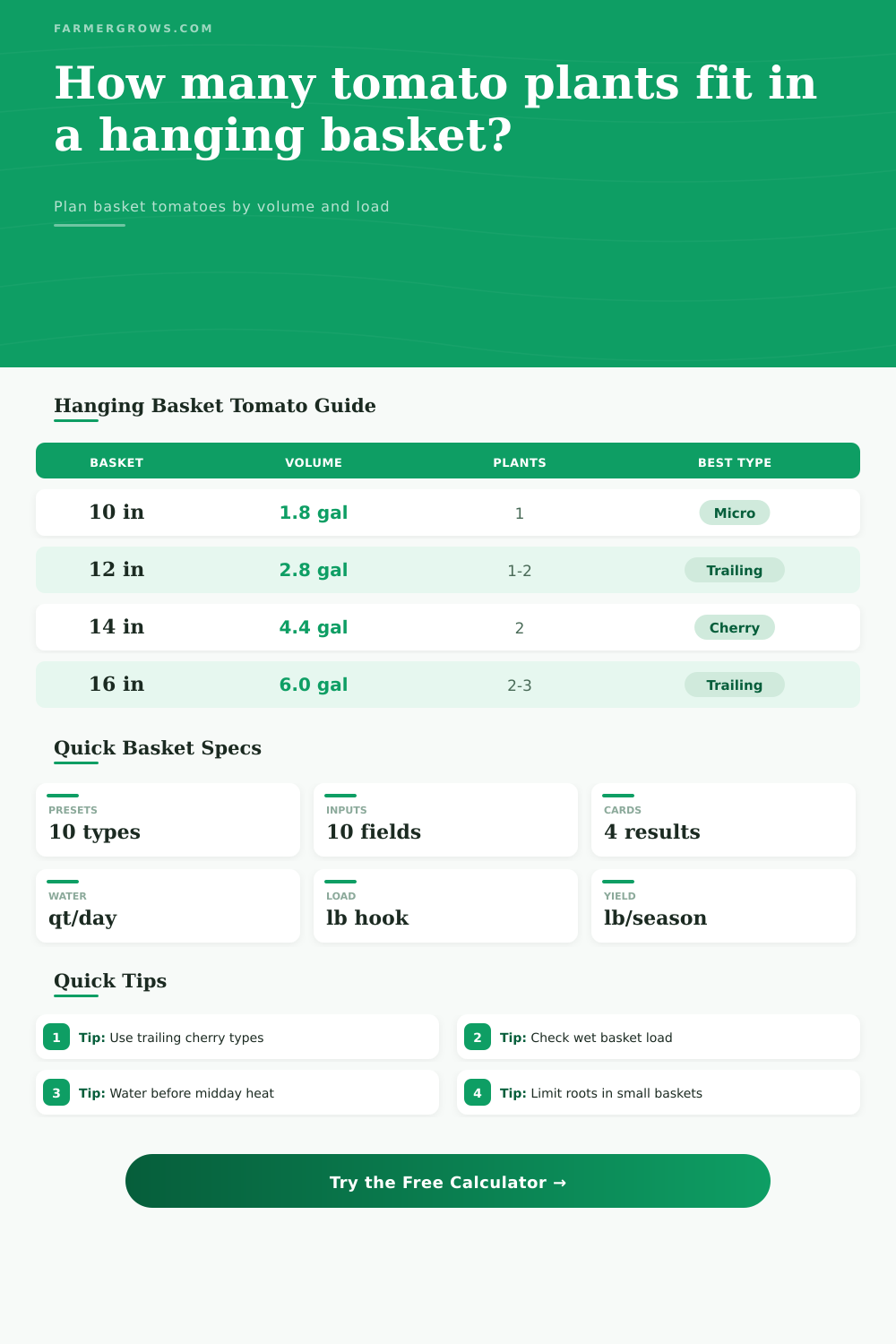
Bred to cascade over the rim. Often allow 1 to 2 plants in 12 to 14 inch baskets, or 2 to 3 plants in large baskets with frequent feeding.
Stays short but can be dense. Usually needs more root room per plant than trailing types, plus a small cage or central tie.
Fits shallow baskets and window-box style hangers. Yield is lower per plant, but crowding risk is easier to manage.
3Enter basket and crop details
Hanging Basket Tomato Plan
Basket plan summary.
Calculation breakdown
4Basket volume quick checks
5Reference tables
| Named variety | Habit | Typical basket | Plants per basket | Expected yield per plant |
|---|---|---|---|---|
| Tumbling Tom Red | Trailing determinate cherry | 12 to 14 in | 1 to 2 | 1.5 to 3 lb |
| Tumbler F1 | Trailing hybrid cherry | 12 to 16 in | 1 to 3 | 2 to 4 lb |
| Hundreds and Thousands | Cascading cherry | 14 to 16 in | 2 to 3 | 2 to 5 lb |
| Red Robin | Compact determinate | 10 to 12 in | 1 | 0.6 to 1.5 lb |
| Micro Tom | Micro dwarf | 8 to 10 in | 1 to 2 | 0.2 to 0.6 lb |
| Basket size | Usable depth | Approx volume | Best plant count | Load caution |
|---|---|---|---|---|
| 10 inch | 6 inch | 1.6 gal | 1 micro or 1 compact | Usually light |
| 12 inch | 7 inch | 2.7 gal | 1 trailing, 1 compact | Check small hooks |
| 14 inch | 8 inch | 4.0 gal | 2 trailing cherries | Use rated chain |
| 16 inch | 9 inch | 6.1 gal | 2 to 3 trailing cherries | Wet load can be high |
| Load item | Typical range | Why it matters | Planning note |
|---|---|---|---|
| Moist potting mix | 25 to 55 lb/cu ft | Main load source | Compost-heavy mixes weigh more |
| Water held in basket | 10 to 25% of mix load | Peak weight after watering | Self-watering inserts add load |
| Tomato biomass | 1 to 5 lb/plant | Stems, foliage, and fruit | Trailing types spread load outward |
| Hardware safety margin | 50% or more | Wind and movement add stress | Do not use the exact hook rating |
| Growing condition | Water impact | Yield impact | Basket response |
|---|---|---|---|
| 6 to 8 hours sun | Moderate | Best balance | Water once or twice daily in heat |
| Less than 5 hours sun | Lower | Lower fruit set | Use fewer plants and lighter feeding |
| Hot over 90 F | High | Blossom stress possible | Mulch top and add afternoon shade |
| Windy balcony | Very high | Can reduce fruit size | Use bigger basket and drip irrigation |
6Basket tomato tips
For most 12 inch baskets, one strong trailing tomato gives steadier water demand than three crowded plants. Add plants only when the basket volume and support load both stay comfortable.
Hanging basket load is highest right after watering, rain, and fruit set. Use a bracket and chain rated well above the calculated per-basket load.
Hanging tomato gardeners has their own set of problems. You purchase a couple of trailing cherry tomatoes, put them in a basket, then hang them on a hook. For a while they look great, and then the heat comes. Because air circulates all around the root ball, the soil dry out rapidly. Even frequent watering fail to perk them up; the plants sag. Or perhaps you notice the bracket bending weighted down by soggy soil and dripping vines.
Physics isn’t intuitive, but this one is. A hanging basket are a suspended system. It involves both plant care and basic engineering. How do you balance root volume, water retention, plant growth, and structural load? Most people thinks just about appearance. Or that their soil will be heavier when it’s sodden, or they’ll dry out in the wind.
How to Calculate Weight and Water for Hanging Tomatoes
Enter your conditions (and even dimensions of your basket) into the calculator above, and let it do the math for you. This way, you won’t guess wrong and find yourself with no room to hang a full container when it rains hard, especialy if you are hanging it from an eave.
The other reason the support rating input is so important: Wet potting mix is HEAVY! A cubic foot of most common peat-based mix weigh more like forty pounds when wet. And then there’s the weight of the basket itself, plus the liner, the chain… and all those tomato plants’ growing fruit and stems. Watering them well multiplies that load even further. So what happens on a breezy day? Your wet basket exceed the max weight of your S-hook, oops.
To estimate the wet weight of your contents, the tool considers both volume of soil and how much moisture it typically holds. Before planting first seedling, it alerts you if you’re within a safe range. Why does everyone get this one wrong? Because we think empty means safe (but it doesn’t).
Exposure really matters here, too. Evaporative loss will be greater if your pot sits on a windy balcony where the wind hits the soil from all sides. This is more different than it would be on a sheltered patio that retains moisture better. To provide a realistic number of gallons required each day, the calculator factors in both temperature and wind. Depending on exposure, you may need to water twice a day when it’s really hot out.
This affect both plant survival and fruit quality. Cracked skins and blossom end rot is symptoms of inconsistent watering. What better reason to know how much water you’ll need before planting so you can plan ahead instead of responding to wilting foliage?
And what better time to weigh the pros and cons of using a self-watering reservoir insert? Those things really holds a lot of water, but they add lots of extra weight to the hook.
Overestimating plant count is a common failing among enthusiastic gardeners. More plants do not mean more tomatoes if they are competing for limited root space. Even though trailing varieties are designed to cascade, you can only stretch them so far into a standard basket. Two trailing cherry plant per 14-inch basket would be comfortable; three would become bound by roots and dry out quickly.
To help you figure out how much soil each variety needs based off its growth habit, I’ve included several reference tables on this page. Naturaly restricted root systems make micro dwarf types suitable for even smallish containers. Heavy fruit load means vigorous hybrids requires deep pockets of soil.
Pick your poison: Durability or density? A less-crowded basket holds moisture longer, and also supports itself better. There is always a balance between the mechanics of growing tomatoes in suspension and the life of it. You seek strong support and steady watering habits. You yearn for lush leaves and heavy fruit production.
Enter the calculator, which translates hazy worries about weight and volume into hard data. What size basket can hold what you selected? Will your hardware be up to it, or will the variety outgrow its container? Use this tool to begin with middle-ground guesses on both fronts. Replacing a busted hook (or saving a shriveled-up root ball) is tougher than just adding another plant at the last minute.
Assume the worst-case scenario: prepare for the hottest day of summer, not the gentle spring morning when you first hang the basket. When you do, a risky experiment becomes a reliable harvest. You should of prepared better!