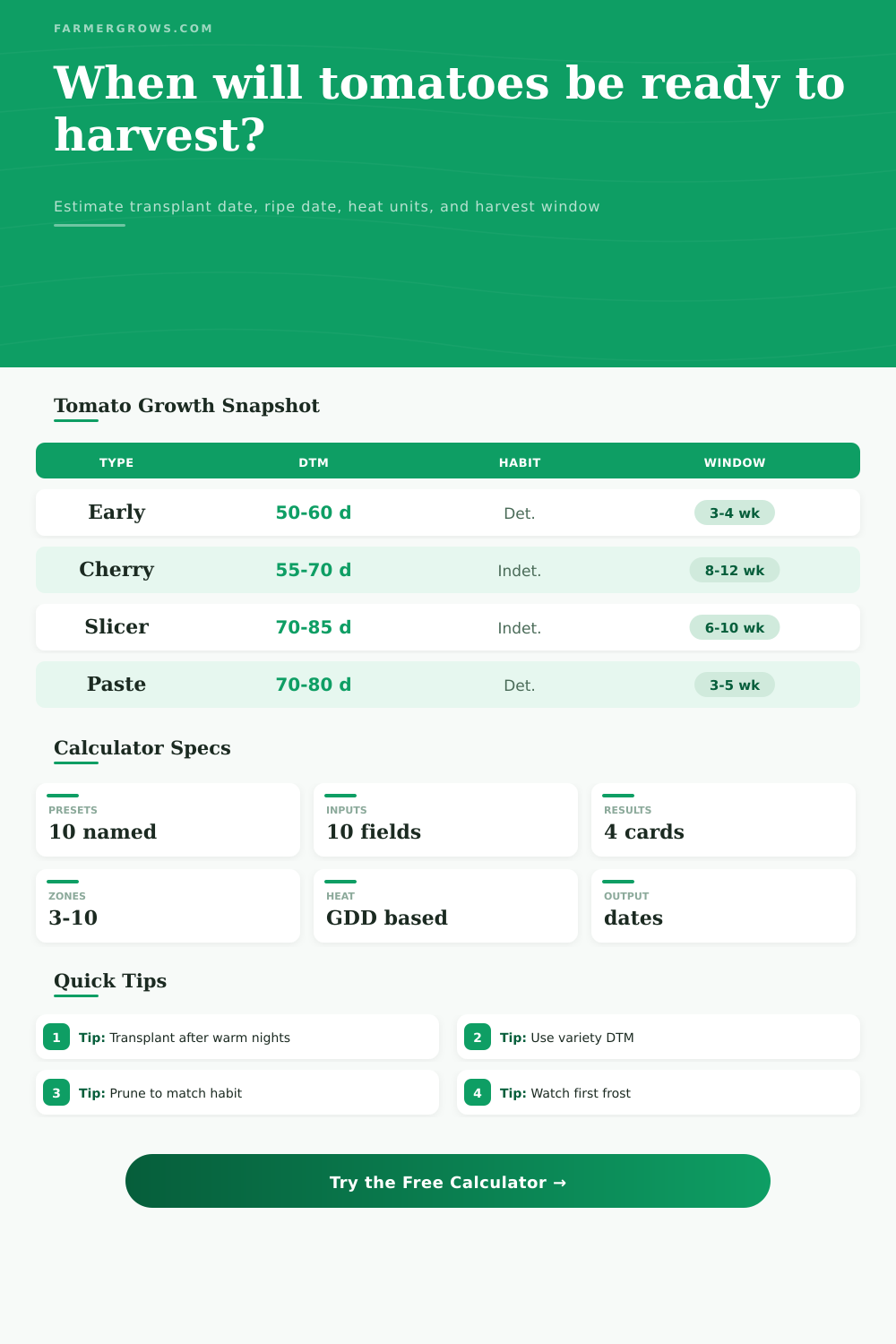
Tomato Growth Time Calculator
Estimate tomato transplant date, first ripe harvest, heat-unit progress, frost safety, and harvest window from seed or transplant timing, variety days to maturity, USDA zone, greenhouse help, pruning habit, and temperature.
Load a common tomato variety and growing setup, then adjust dates, frost limits, temperature, greenhouse cover, and pruning style for your own garden.
Seed starts include nursery growth before outdoor transplant, so first harvest is seed date plus seedling age plus DTM.
Most seed packets count tomato days to maturity from transplanting, once plants are hardened and soil is warm.
Warm weather shortens the practical calendar while cool nights slow fruit set, ripening, and root growth.
First ripe date and harvest length are limited by the first fall frost unless a greenhouse or cover extends the crop.
Tomato Growth Timeline
Calculated from the selected tomato variety, date basis, heat units, frost dates, greenhouse boost, and pruning style.
| Variety preset | Typical DTM | Growth habit | Best timing use |
|---|---|---|---|
| Sungold cherry | 57 days | Indeterminate | Early cherry harvest with a long picking window. |
| Early Girl | 57 days | Indeterminate | Fast slicer for short seasons or first tomato goals. |
| Celebrity | 70 days | Semi-determinate | Balanced cage plant with a steady midseason crop. |
| Roma VF | 75 days | Determinate | Paste tomato with a shorter concentrated harvest. |
| Brandywine | 85 days | Indeterminate | Long-season heirloom that needs a wide frost margin. |
| Factor | Calendar effect | When it helps | When to be cautious |
|---|---|---|---|
| Average 70-78 F days | Fast normal pace | Flowering, fruit set, and ripening are all active. | Keep water even to avoid blossom-end issues. |
| Cool nights below 55 F | Adds 3-10 days | Plants survive, but fruit set can stall. | Use cover or wait to transplant. |
| Greenhouse boost | Subtracts 4-14 days | Warmer soil, warmer nights, and frost extension. | Vent during hot days to protect pollen. |
| Single leader pruning | Often 2-4 days earlier | Speeds first fruit and improves airflow. | Can reduce total canopy if overdone. |
| USDA zone | Typical last frost | Typical first frost | Tomato timing note |
|---|---|---|---|
| Zone 3 | May 25 | Sep 15 | Choose early varieties, greenhouse cover, or large transplants. |
| Zone 4 | May 15 | Sep 25 | Early slicers and cherries give the most reliable crop. |
| Zone 5 | May 1 | Oct 5 | Most 70-75 day tomatoes fit with spring patience. |
| Zone 6 | Apr 15 | Oct 15 | Main-crop slicers and paste tomatoes usually fit well. |
| Zone 7 | Apr 1 | Oct 30 | Good margin for heirlooms and long cherry harvests. |
| Zone 8 | Mar 15 | Nov 15 | Spring heat can be strong; protect flowering in hot spells. |
| Zone 9 | Feb 15 | Dec 15 | Fall tomato crops may perform better than midsummer crops. |
| Zone 10 | Jan 15 | Jan 1 | Use local heat and disease timing more than frost dates. |
| Tomato type | First harvest pattern | Main harvest window | Planning tip |
|---|---|---|---|
| Cherry indeterminate | Early clusters | 8-12 weeks or longer | Pick often to keep plants setting fruit. |
| Large slicer | Moderate start | 6-10 weeks | Support heavy clusters and keep soil moisture steady. |
| Determinate paste | Grouped ripening | 3-5 weeks | Good for sauce days and batch harvesting. |
| Dwarf or patio | Compact flush | 4-7 weeks | Container heat can speed ripening but raises water demand. |
Respect transplant warmth. Tomatoes can survive cool soil, but they often wait there. A plant set after warm nights can catch an earlier stressed transplant.
Use DTM as a starting point. Days to maturity is usually counted from transplanting, not seed sowing, and it assumes reasonable warmth and care.
Match pruning to the plant. Indeterminate tomatoes respond well to pruning and trellising, while determinate paste tomatoes need enough leaf area to fill a concentrated crop.
Watch the frost deadline. If first ripe fruit lands close to fall frost, choose a faster variety, add cover, or start with older transplants next season.
Frost dates are planning averages, not guarantees. Local elevation, wind exposure, urban heat, cold pockets, soil temperature, and disease pressure can move the tomato calendar by a week or more.
The tomatoes aren’t always on schedule. You buy seeds that promise fruit in 60 days, yet in early October you’re staring down at some green ones. What gives? People tend to think of the calendar as a strict rule rather than fuzzy guideline. Growing conditions vary by genetics, soil temperature, and weather trends where you live. If you understands that dynamic, you’ll have a more dependable crop.
This calculator (above) takes into account variables that seed packets don’t, like frost margin and heat accumulation, and subtracts the guesswork. When will it set those little fruit to turning red? The calculator factors in the required heat for flowering and fruiting of tomatoes (which require a minimum number of heat units). Input average daytime highs and nighttime lows; if nights drop below fifty-five degrees, the tomato stop producing fruit even if days are warm. The calculator refines its estimate accordingly.
How to Use the Tomato Calculator
If you shelter your plants with a low tunnel or greenhouse so they remains warmer, the timing will change to match. If you start from seed, the math is different than purchasing transplants: When it says “70 days,” on a seed packet, that’s measured from planting in the garden… Not from the moment you sow the seed. Subtract six to eight weeks (if you started indoors) to account for time spent growing in nursery. Then plan back from your target day of harvest using the calculator, which includes an adjustment for this.
This also works for long-season heirlooms. Some of them may not reach maturity before first frost if they are sown too late. It does take pruning style into account, too. Removing suckers can help indeterminate types by redirecting energy away from new leaves and toward fruit. Determinates, however, will rely on their leaves to sweeten up a crop that all rips off at once in a burst of ripeness. The tool factors that kind of pruning into its calculations, too, since it may mean earlier-fruiting plants but lower overall yield.
The hard deadline is the season’s frost date. You’ll want some leeway for harvest and final stages of ripening, even with 70-day varieties. First frost isn’t a promise; think of it simply as an anchor point for planning. To grow big, sweet beefsteak tomatoes, you need time, so you must start early by selecting early varieties in cool spots like Zone 4 or 5. With warmer zones, you can experiment more; though you also risk heat stress, which causes blossoms to drop when temps gets too high during bloom time.
The tool also comes with reference tables detailing these trade-offs based off type of tomato. For example, cherry tomatoes generally bear on an extended schedule. This means the crop is setting and will ripen over time, resulting in a longer harvest period. Paste types and slicers are more likely to ripen all at once, in big, concentrated bunches.
Knowing that makes your picking less random. It is no longer just a matter of choosing some fruit here and there as you please. Instead, it becomes a planned meal or a predictable source of sauce ingredients, salad additions, or canning fare. It turns harvesting into a predictable supply chain for sauces, salads, or canning projects.
With tomatoes, that means managing not just the soil, but also expectations. By matching your climate data to each variety’s genetic maturity time, the calculator offers a realistic starting place: no more guessing. No, it won’t keep disease at bay or bring any rainfall (though perhaps it will one day). But it does offer a basic framework. Find your starting point by working with the seasons and what you can grow. And then head outdoors and watch what realy happens, because seeing things grow teaches us so much.