
Tomato-growing demands a certain kind of patience that most gardeners only learn to love when they stand back and watch a tomato plant doing nothing for what seems like weeks on end. Plant the seed. Water the seed. Wait. Add some water. Dig it up and look at the roots? No. But go easy if impatience starts setting in.
Even though you can’t see what’s happening, the plant is hard at work. When you know its growth rhythm, your relationship to the plant shifts from being an anxious observer to becoming an informed partner. Knowing the timeline makes a difference but it is more helpful to recognize signs than to follow days on a calendar.
The Stages of Growing Tomatoes
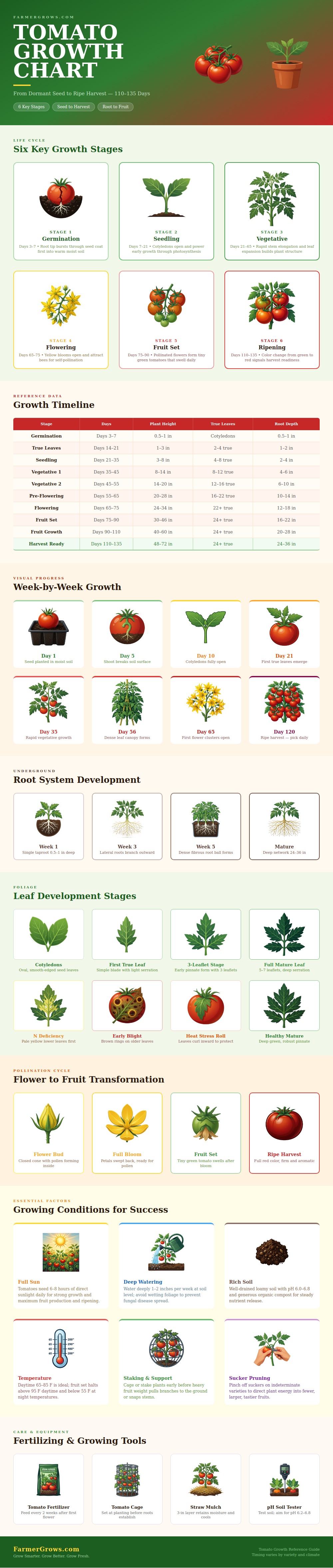
Below ground things start to happen first: In the first week, nothing happens above the surface, but down below, tip of root pushes through seed coat. This is how it all starts, the foundation for what follows. What happen in this phase sets the stage for rest of the plant’s life. Make a mistake at this point, and the plant will suffer later on.
As the chart indicates, in the first couple of weeks the cotyledons push open. Those oval-shaped leaves from the seeds is called seed leaves, or cotyledons. And guess what? They’re not just there to be pretty. They do photosynthesize and supply their young selves with energy for their earliest growth. That’s why many gardeners think the plant wants food so soon… Because they mistake the cotyledon for real foliage. Not so. The plant hasn’t asked for any food yet; it want moisture and light. Give the plant time to tap into energy reserves stored inside.
True leaves appears about three weeks later, marking the beginning of the real growth. Now is the vegetative stage: Leaf size expands, and the plant rapidly elongates stems. The plant is building its infrastructure. It build a sturdy trunk that can absorbs the weight of future fruit. Cage or stake it now (yes, early); otherwise, you’ll damage roots while installing the cage if you wait till the plant has grown up and gotten tall.
At about day sixty, the plant should of been covered with thick layer of leaves. This not only creates a microclimate for the roots but regulates moisture and soil temperature.
Most people get confused during the switch from vegetative (growing) to reproductive (flowering). It’s fragile. Most people mess up here. That’s why they ask, “Why isn’t my tomato growing?” What you see in the chart is when pollinated flowers become tiny green tomatoes. Flowers may fall off if weather is unpredictable. Too hot or too cold, no dice on the fruit formation. No, not a disease. A response by the plant to conditions. If it senses it can’t hold up the load, it quits making fruit.
To prevent that, water the roots consistantly and do not spray the leaves, as this invites fungus. Maintain the environment of even temperatures and consistent watering.
Now it’s ripening. The tomato gets sweeter and begins to turn from green to red. How long this process happens depends on the variety. Heirloom varieties have slower ripening than other tomatoes; some are fast. Expect to start harvesting tomatoes every day around day one hundred twenty.
Tomato plant roots grow deeply in the ground, upwards of twenty to thirty inches. Leaves will reach their full maturity with well-developed jagged edges. Inspect your nutrient balance and soil pH if your leaves begin to curl up or go pale. Ideally, tomato plants likes a pH in the range of 6-7. Correcting this can make a huge difference in your crop.
“Growing tomatoes is all about letting nature do its thing, not trying to force nature. Nature does most of it for you: You give her support, water, structure. And she finishes the job. When you know what’s happening at each stage, you don’t fight nature. Instead, you begin to trust the plant. That leads to a better crop because it comes from patience.