
WHEN A PROBLEM occurs with tomatoes, you can often sense the trouble brewing. What happened? The plant look healthy with a strong stem and green leaves. But then something happen. Fungus, or pests. Quick: hornworms or some type of fungus? Fast action helps: Soil isn’t always the answer; neither is water. Often it’s neighboring plants.
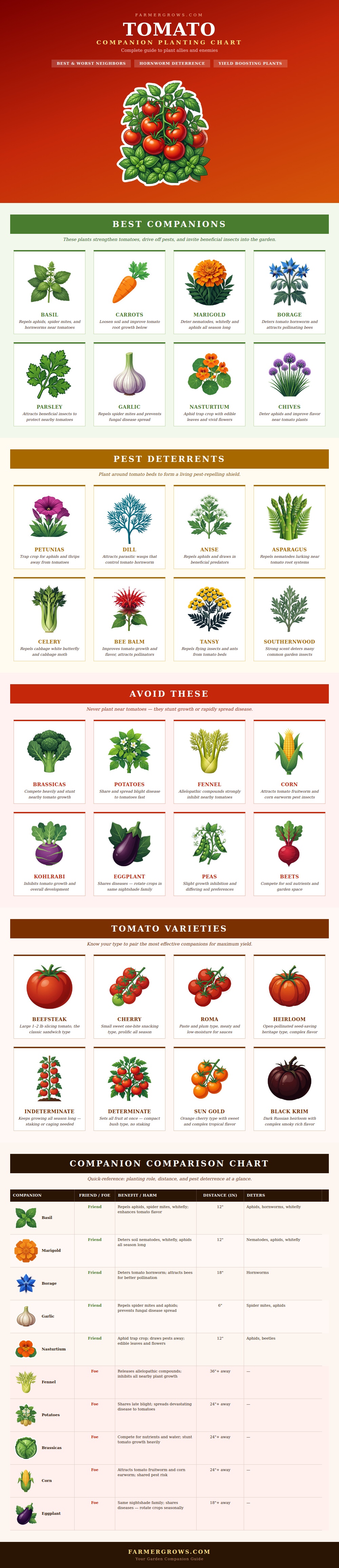
That’s where companion planting comes in: a naturaly strategy for creating a neighborhood in which one plant help another grow, deterring pests and doing so biologically. Who’s helping, who’s hurting? And how do you know if it matters until you try (and hope)? The chart above tell you.
How to Plant Tomatoes with Other Plants
Useful allies include basil. That pungent aroma masks the tomato plant and throws off pests such as spider mites and aphids, who uses their sense of smell to locate their meal. If you tuck in some basil a foot away, it act as kind of shield against invaders, and perhaps enhances the flavor of the fruits, too. Other allies include Marigolds, which is not just for decoration. Substances they release from there roots are toxic to root-knot nematodes, which otherwise threaten tomato roots. It is a two-front defense.
Knowing what not to grow is just as important. For example, potatoes. Close cousins in the nightshade family. They are related enough to share same crop diseases as the tomato. Grow one and you invite the late blight to come calling. Keep them separated by at least two feet. Better yet? Rotate. Another no-no: fennel. This wicked thing emit compounds that stop growth of its surroundings. No sharing among friends. It is also marked off on chart with a red flag. If you don’t listen, be ready for garden trouble.
Know your plants. Tomatoes are heavy feeders,” says the author. “They don’t want to share their space with some ferocious competition.” Water- and nutrient-hog brassicas such as broccoli and cabbage will stunts tomatoes. That’s one fight that tomatoes lose more often than most of the time.
To be more specific, is there better competition? How about carrots and chives? These don’t compete much for space; plus they provides perks. As carrots grow, they loosens the soil, which aerates the growing area for tomato roots. This is symbiosis.
Staking indeterminates (those that get tall and continue producing) would of been good with a strong companion, such as borage, whose size also fills in the void above; determinates (bushy tomatoes, which stop growing once fruit set is complete) don’t require quite so much headroom, but still enjoy being nestled under something that deter pests such as nasturtiums or garlic. Nasturtiums serve as a trap crop for tomatoes: attracting aphids off the tomatoes, then you sacrifice the nasturtium to save the tomato. More tomato harvest!
It’s community out there. It’s community in here. We call our garden a community of plants. It is a community of plants. Each one fight its own battles, as long as you choose wisely whom to invite and how they will play well together. Work with nature’s built-in instinct. Making it all a functioning unit called a garden.
And a nice basil plant beside a tomato? This is smart planning. That’s what makes for a good harvest, when the garden takes care of itself.