
If you know tomatoes, chances are good that you think of them as red fruits growing on a vine. That’s true enough… But not the whole story.
*Solanum lycopersicum* (the tomato) comes in all shapes and sizes: tiny micro-fruits, to meaty slices approaching two pounds of beefsteak. Knowing where they land on the spectrum makes sense. It will be the difference between a watery disappointment and a strong base for your cooking.
How to Choose the Right Tomato for Your Needs
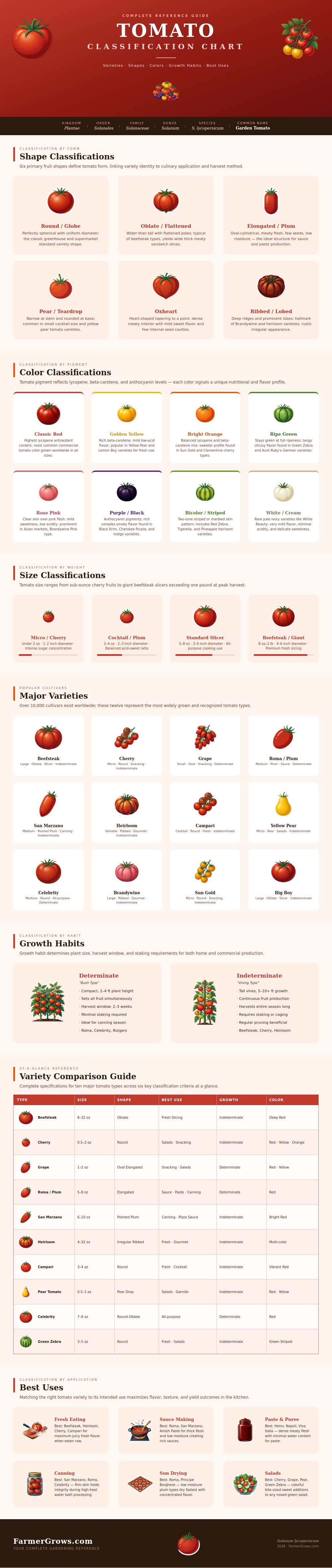
In the graph, I’m categorizing them by form (above). Form matter more than we think. If you’re looking for a burger in which the bread-to-meat ratio is high, you want a flat tomato such as a beefsteak type. The wider tomato will stand up to the heat and pressure of that kind of use. For sauce, on the other hand, what you want is a long shape, plum tomatoes, or lower moisture content with less seed overall. That way there’s less waiting around for the water to cook off. Match the architecture of the fruit to how you’ll be using it.
Beyond beauty: Color also gets more complicated. Each pigment level indicate the fruit’s internal chemistry. Lycopene (a powerful antioxidant) makes classic red tomatoes red. Beta-carotene dominates yellow and orange ones. Yellow and orange varieties tends to be slightly less acidic, and therefore milder and sweeter (important if you eat them fresh), and particularly if your stomach is sensitive. Even fully ripened green tomatoes remain green. Their flavor delivers a citrus-like, tangy punch that can liven up an otherwise heavy dish.
See the chart? Each color is its own flavor-and-nutrition package. When you decide by color, you’re making a statement about both health and taste.
Then there’s the growth habit. Determinate tomato plants are compact bush types that set all their fruit at once. Indeterminate plants are vining types that produce until frost. These needs to be caged or staked and pruned regularly, but they offer a steady supply of fresh fruit through the season. Planting one kind or the other will prevent frustration; you don’t expect a continuous harvest where one would of been made to finish up early.
The next piece of the puzzle is size classification, which determines use. Cherry and micro-tomatoes is jam-packed with sugar. They are great for snacking on or popping into a salad. Cocktail size is just right for balancing sweet-acid ratios. Good in lighter foods. Standard slicers are the all-purpose workhorses. Giant beefsteak-sized tomatoes is saved for top-drawer fresh eats. It’s easy to get a sense of relative size when looking at this visual reference.
Many people grow just one kind of tomato, thinking it can do everything. But that’s no way to get a great-tomato sandwich if you only planted Romas, and they won’t work for the base of a burger. No, a beefsteak will water down your sauce. Know what you want to eat. Read up on how tomatoes are classified, there are many ways… And select the right option from the list.
Maybe you’re craving the smoke and depth of a purple heirloom tomato? Maybe it’s the sweet dependability of the Sun Gold cherry instead? Your best ally is the tomato’s diversity.
Tomato growing means being open to variation. Variation isn’t just about ripening to red fruit. It means learning how every type has its own color and shape and habit. If we matches our cooking needs to what the plant does best, it pays off. We end up with food that tastes right.
Next time you are shopping in the seed aisle, or walking around the nursery, don’t just go for the shiny red package. Go for the habit of growth. Go for the shape. Let the classification help you choose. And enjoy the diffrence on your plate in your kitchen.