
Too Little Acid: A bulging jar lid signals a lack of acidity, the environment in which bacteria thrives. If you’re a most home gardener, you don’t think much about chemistry of keeping food safe; just taste. But knowing what your tomato varietys acid level is will make for safe storage.
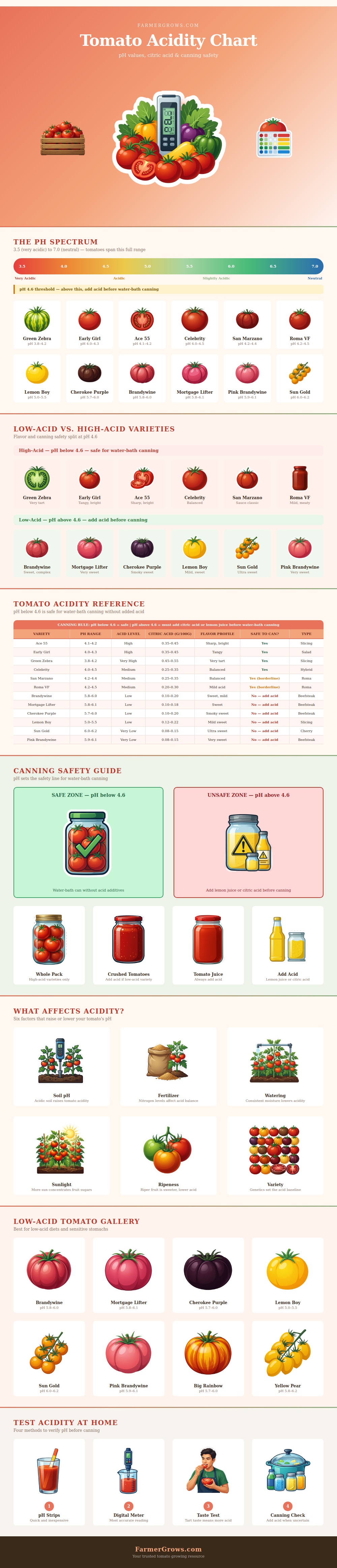
A pH below 4.6 is considered within the safety range. Tomatoes below that will be what we call “high-acid,” and can safely be processed in a boiling water bath as-is, with no other addition needed. Above 4.6, however, mean there is room for botulism spores to thrive. You’ll need to adjust by bringing down the total pH by using an acidifying ingredient like citric acid or bottled lemon juice.
Why Tomato Acidity Matters for Safe Canning
This chart illustrates where your tomatoes falls on the safety scale. Tomatoes with lots of acid include Green Zebra and Early Girl varieties. They’re about a 4.0… 4.3 on the pH scale, which means that they has enough naturally acids to keep your foods safe when you preserve them,” he says. On the other hand, heirlooms such as Cherokee Purple, Mortgage Lifter, and Brandywine have more mild, sweeter flavors (and a higher pH (about 6).0) closer to low-acid range.
A good-tasting fresh tomato, you may think? Safe for home-canning? Not so much. Tomatoes with naturaly low acidity aren’t protected enough to be safe in a water-bath canner. Making unacidified sauce from Brandywines and jarring it up take a big leap of faith.
The graphic breaks them down by pH range, into high- and low-acidity types. A variety’s starting point is set in its genetics. Environmental factors can changes that mark by a few tenths in either direction. The more sun a plant gets, the lower the pH, which means there is more sugar concentration. Consistent water will reduce this because water will dilute what is happening inside. Fertilizer with high levels of nitrate will influence the acid-sugar equation; so will growing the plants on acidic soil, which has been known to increase acidity of fruit. Despite all of those variables, however, the biggest factor is still genetics.
If you’re not sure about the acidity of your tomatoes, a simple at-home test is worthwhile. The quickest snapshot: Use pH strips that is available inexpensively online and elsewhere; these provide a quick look at your fruit’s acidity. More precise digital meters also requires careful calibration. If you suspect a tomato might be on the low-acid end of the spectrum, tartness will often clue you in. However, this depends off personal opinion and therefore is not reliable as margin of safety.
When in doubt, add some acid; then you’ll have a safe crop to enjoy all winter long. Canning is a precise science; knowing how acidic (or not) your tomato are helps. You’ll get to enjoy the flavor of those heirlooms…safely. Whether it’s Pink Brandywine or Green Zebra: If it’s got low pH, respect that, add some acid if necessary, and don’t mess with perfection. When the jar opens in months to come, your careful past self should of thanked you for it.