Tenderstem Broccoli Growth Time Calculator
Estimate tenderstem broccoli germination, transplant readiness, first spear cut, repeated picking window, plant count, yield rhythm, and climate fit from your sowing date and season.
Tenderstem broccoli is planned differently from heading broccoli. The useful crop is a run of slender stems and tight buds, so the calculator separates seedling time, first cut, follow-up cuts, plant spacing, and heat pressure.
Best for slim, sweet stems picked while buds are tight and before yellow bloom.
Very similar kitchen use, usually harvested as small bunches every few days.
One large crown matters most; side shoots are secondary rather than the main crop.
Overwintering and purple sprouting types can take much longer before stems begin.
Fast flowering shoots are useful for greens, but they behave differently from tenderstem.
Tenderstem Broccoli Growth Plan
Your tenderstem timing summary will appear here.
| Tenderstem type | Typical first cut | Best season | Picking span | Timing note |
|---|---|---|---|---|
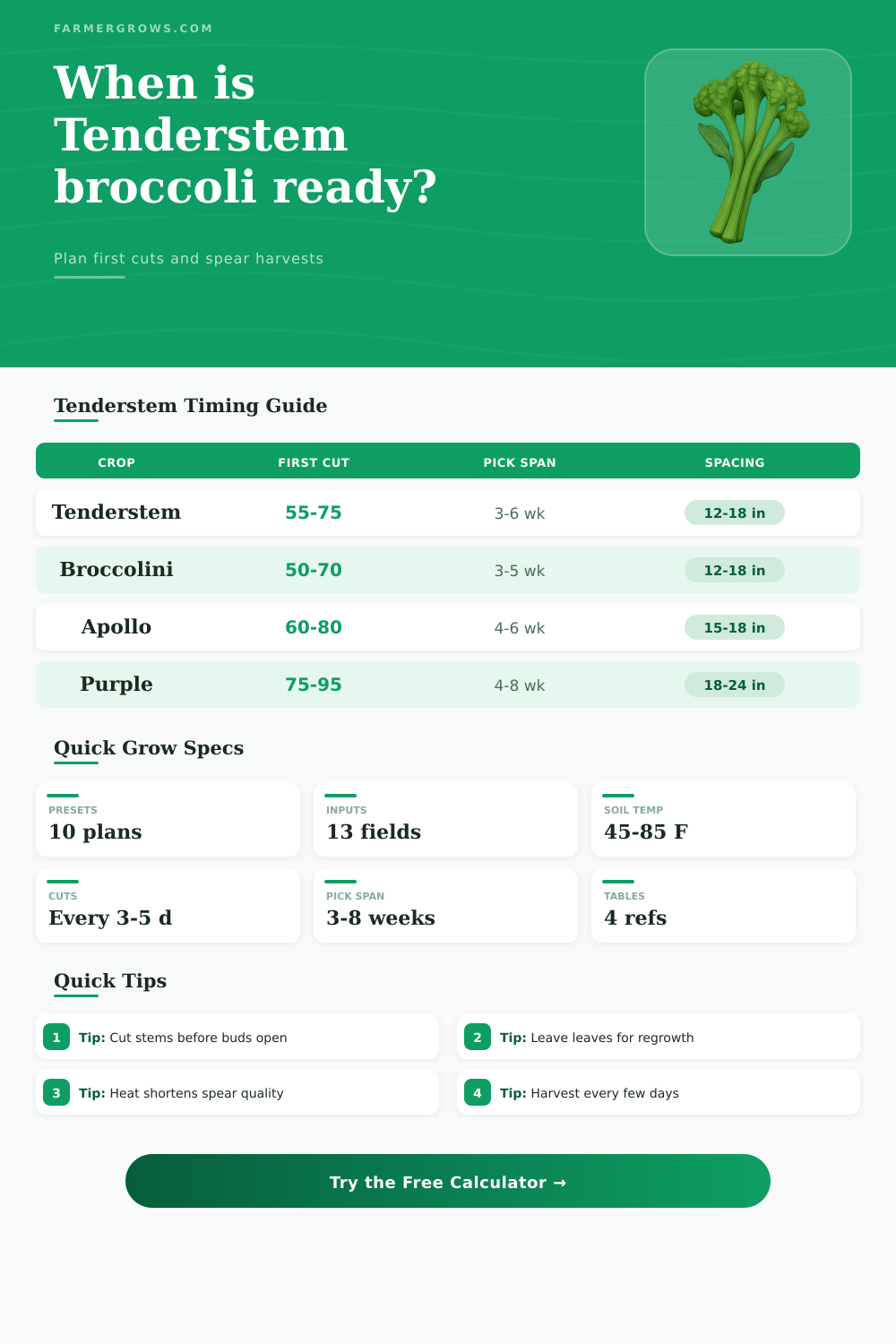
| Tenderstem style hybrid | 55 to 75 days from transplant | Spring or fall | 3 to 6 weeks | Cut central stem early to push side spears. |
| Broccolini style | 50 to 70 days from transplant | Mild spring, fall, winter | 3 to 5 weeks | Quality drops fast if buds open yellow. |
| Apollo or sprouting hybrid | 60 to 80 days from transplant | Cool spring or fall | 4 to 6 weeks | Good stem crop when moisture stays steady. |
| Purple sprouting type | 75 to 110+ days from transplant | Cool fall or overwinter | 4 to 8 weeks | Often slower, especially if overwintered. |
| Temperature band | Germination effect | Growth effect | Harvest effect | Planning action |
|---|---|---|---|---|
| Below 45°F soil | Slow or uneven | Roots stall | Delayed first cut | Use modules, cover, or wait. |
| 45 to 55°F soil | Germinates slowly | Cool but workable | Stems sweeten | Add a few days to the plan. |
| 60 to 75°F soil | Reliable | Best establishment | Strong spear quality | Ideal for most sowing and transplanting. |
| Above 85°F weather | Can dry trays | Stress increases | Buds loosen fast | Shade, water, and harvest earlier. |
| Spacing plan | Plant spacing | Row spacing | Best use | Expected stem behavior |
|---|---|---|---|---|
| Compact raised bed | 12 to 15 in | 18 to 24 in | Home beds, baby stems | More plants, smaller stems, faster canopy. |
| Standard tenderstem | 15 to 18 in | 24 to 30 in | Most garden and market beds | Balanced stem size, airflow, and regrowth. |
| Wide cool crop | 18 to 24 in | 30 to 36 in | Purple or longer-season types | Larger plants with stronger side branching. |
| Container patch | 10 to 12 in | Single row | Large tubs or grow bags | Shorter harvest window unless fed steadily. |
| Harvest cue | What to cut | Typical interval | Leave behind | Quality warning |
|---|---|---|---|---|
| First central spear | 4 to 7 in stem with tight buds | Once at first maturity | Healthy lower leaves | Do not wait for flowers. |
| Side spears | Slender stems before yellow bloom | Every 3 to 5 days | New growing points | Late cuts become fibrous. |
| Hot spell harvest | Smaller, earlier stems | Every 2 to 3 days | Enough leaf canopy | Heat loosens buds quickly. |
| End of crop | Final useful shoots | When stems thin out | Crop residue for removal | Remove tired plants before pests build. |
Cut the main tenderstem spear as soon as buds are tight and the stem is long enough to bunch. Leaving it too long slows side shoots and risks flowers.
Keep plants watered after each cut and leave enough leaf area to rebuild. A light nitrogen feed after the first picking can extend the spear window.
With most broccoli, you have one event: You plant it for one big head and then the season’s over once you harvest it. Tenderstem reverses that equation. Instead of a single massive crown, Tenderstem yields slender but sweet stems in repeated flushes. Like an asparagus bed rather than a traditional brassica.
When your harvest are spread out over weeks, timing gets critical. You want to align peak production with cool weather to protect the crop from heat stress, which means knowing precisely when to expect first spears to emerge. Plug in your frost dates and sowing date, and the math is done for you, just like the calculator at the top. You won’t have to guess how long it takes for things to germinate.
Tips for Growing Tenderstem Broccoli
What’s far better than taking the resulting date on faith is understanding what goes into figuring it out: Keep in mind that newer hybrids selected for repeat crops tend to do their thing a bit more quickly then older varieties of sprouters. When you see “55 days” as a count, it sounds fast, but those 55 days start at transplanting, not from sowing. If you’re starting seeds in flats or trays, keep this in mind; you’ll want to subtract about three weeks for time spent growing up a seedling before the plant is ready to move outdoors.
Most folks think of frost dates and fear death for young plants, but high temperatures is just as bad. They cause buds to pop open and go yellow far too early. You want them to keep developing until stem’s tough enough to cut without being fibrous and bitter. Once that yellow bloom happens, it’s game over; time to go eat something else.
The tool lets you plot where your expected first cut date falls relative to average bands of temperature, which will help you see how close you are to this danger point. If you land in mid-July in a heatwave, you’d be wise to adjust your sowing schedule back a couple of weeks. It is better to have a bit of a later start then mushy stems nobody wants to chew.
Space matters bigtime for tenderstem broccoli if you want to prolong the crop. You may want to put more plants in your bed to get a higher yield, but don’t. To produce new side shoots after cutting down the center stem, tenderstem require good light and air circulation. Too-closely planted means that canopy will be dense and humid, inviting mildew and slowing growth.
Fifteen or eighteen inches apart among plants is typically the sweet spot between too much space and not enough, allowing for good airflow and light penetration. Spacing play a huge role in how long the crop lasts. Standard spacing of fifteen to eighteen inches between plants usually strikes the right balance between density and airflow. A reference table on the page lays this out clearly. That depends on plant size (bigger plants can grow more branches) and width of row. A chart of options is on the page’s reference table.
Successful harvesting takes more than just knowing when to sow. The key is cutting the central spear while its buds are still tightly closed and dark green. Otherwise, you’ll slow production of side shoots or even risk having them flower completely. After that first cut, pick every couple of days and you’ll be in a cycle. Frequent harvests tells the plant not to bolt but produce more growth instead.
Resist the temptation to strip all leaves from the plant; those lower ones has the energy to fuel the follow-up spears. A gentle application of nitrogen once or twice (after the first harvest) helps encourage fast regrowth, which will extend your spear window, too.
Timing: There’s no exact “right” moment for planting tenderstem, but there’s an approximate sweet spot that’s not as much about perfection and more about finding a rhythm. With a crop like this, think of it as harvesting in waves rather than meeting one single deadline. Tweak your sow dates so you’ll have great spears over the course of a month instead of just a few weeks of so-so broccoli. It honors the plant’s thermal limitations, and keeps them cool while maintaining consistent cuts.
Get your timing right, and the balance between a good crop and a great one hinges on waiting through the lull until that first spear shows itself. You should of checked the weather more carefully to avoid mushy stems which occurs when it gets too hot. Actualy, making sure you have enough space is very important based off the growth habits of tenderstem plants. It can be quite luxurius to eat them fresh from the garden if you do things correctly.