Tabasco Pepper Growth Time Calculator
Estimate Tabasco pepper timing from seed, transplant, flowers, or small pods with sauce-red harvest dates, upright pod pick frequency, plant height, red batch timing, and yield.
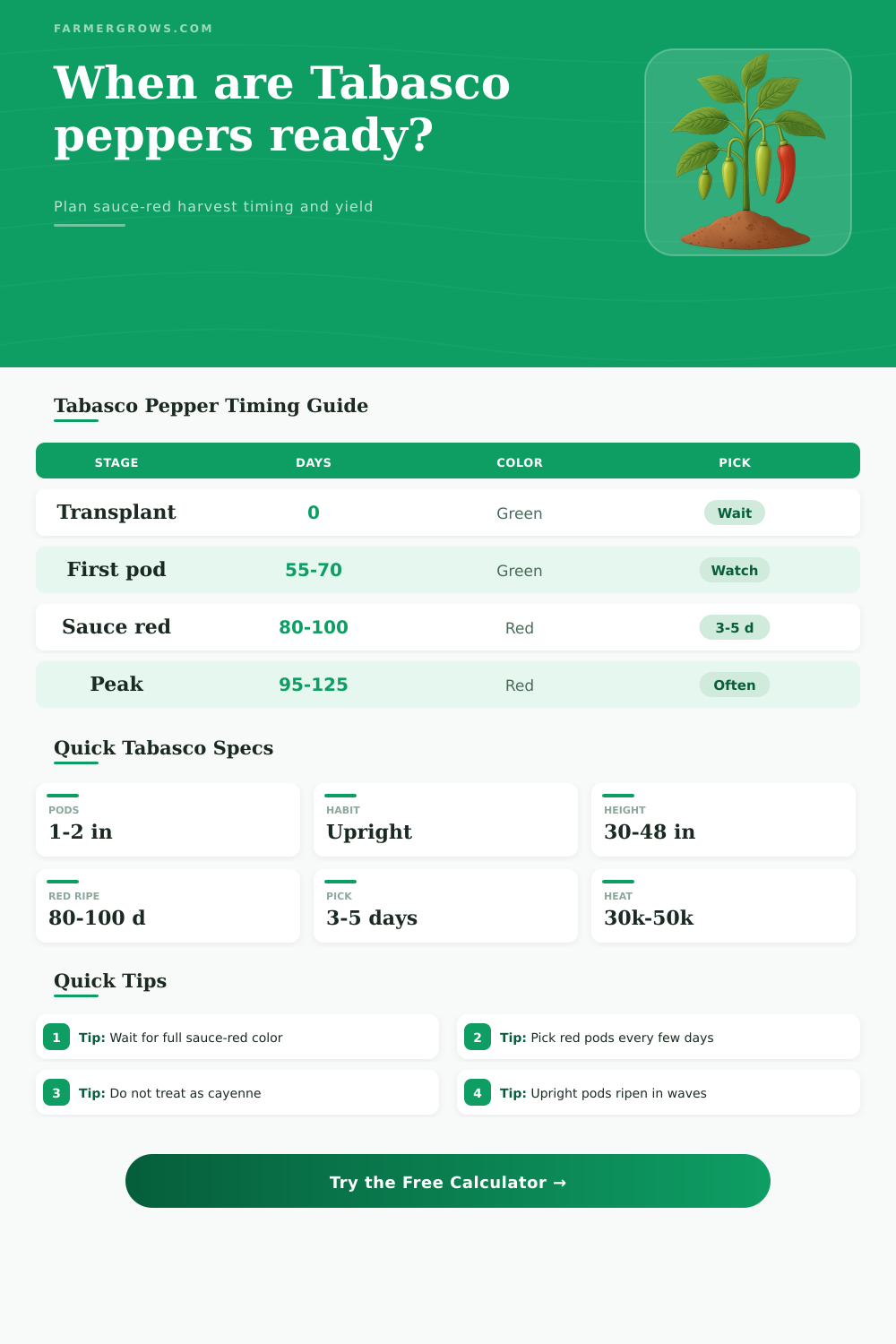
Tabasco is not a cayenne, serrano, or generic hot pepper schedule. The plant sets many small, juicy, upright pods that pass green, pale yellow, orange, and finally sauce-red in repeated waves; this calculator is tuned for that red-pod harvest pattern.
📋Tabasco Growing Presets
🌶Tabasco Crop Snapshot
⚙Tabasco Growth Inputs
Tabasco Pepper Harvest Estimate
Calculated harvest timing will appear here.
🌿Cultivar, Pod Color, and Harvest Grid
| Tabasco strain | Pod habit | Color sequence | Red maturity | Harvest note |
|---|---|---|---|---|
| Classic Tabasco | Small upright pods, usually 1 to 2 inches | Green to pale yellow to orange to red | About 80 to 95 days from transplant | Pick sauce-red pods every few days once waves start. |
| McIlhenny-type sauce strain | Tall branching plants with many upright pods | Green, yellow, orange, full red | About 90 to 105 days from transplant | Best for red-only harvest planning and repeated batches. |
| Greenleaf Tabasco | Similar upright Tabasco pod set | Green to orange-red to deep red | About 85 to 100 days from transplant | Useful where disease pressure can reduce late red yield. |
| Compact patio Tabasco | Shorter plant, upright pods above foliage | Green to yellow-orange to red | About 82 to 100 days from transplant | Container size controls final height and pick volume. |
⏱Growth Stage Timing Table
| Stage | Typical timing | What to watch | Tabasco-specific detail | Decision |
|---|---|---|---|---|
| Indoor seedling | 7 to 10 weeks before transplant | Warm media, stocky plants, no flower stress | Small-fruited peppers still dislike cold roots. | Transplant only after warm nights settle. |
| Flower to tiny pods | About 2 to 3 weeks | Bloom drop during cold or very hot spells | Upright pea-size pods appear quickly after set. | Keep moisture even and avoid heavy nitrogen. |
| Green to pale pods | Roughly 55 to 75 days after transplant | Pod size reaches full small Tabasco shape | Pods are usable but not sauce-red yet. | Wait if the goal is red fermentation harvest. |
| Orange to sauce-red | Roughly 80 to 105 days after transplant | Pods turn bright red and stay firm | Tabasco ripens in waves, not one single flush. | Pick every 3 to 5 days for clean red batches. |
📏Plant Height, Spacing, and Yield Table
| Setup | Spacing | Height range | Fresh red yield | Best use |
|---|---|---|---|---|
| Open garden row | 18 to 24 in plants, 30 to 36 in rows | 30 to 48 in | Moderate to high if picked often | Home sauce-red harvests across weeks. |
| Warm high tunnel | 18 to 22 in plants with airflow | 36 to 54 in | High, with a longer red season | Earlier red waves and late-season protection. |
| Container, 5 gal | One plant per pot | 24 to 36 in | Lower but easy to pick | Patio batches when sun and water are steady. |
| Tight bed | 14 to 16 in plants | 30 to 42 in | Can drop if foliage stays wet | Only use with pruning access and airflow. |
🧪Sauce-Red and Fermentation Harvest Planning
| Harvest goal | Pod color | Pick frequency | Batch timing | Important limit |
|---|---|---|---|---|
| Fresh red sauce prep | Firm, bright red Tabasco pods | Every 3 to 5 days | Combine nearby red pick rounds if needed | This is timing only, not a recipe. |
| Fermentation-ready harvest | Fully red, clean, firm pods | Small frequent rounds | Plan batch weight after enough red pods accumulate | Do not include soft or damaged pods. |
| Seed-saving red pods | Deep red and fully mature | Less frequent, select best plants | Wait several extra days past sauce-red | Keep separate from normal mixed harvests. |
| Green hot pepper use | Full-size green to pale pods | As needed | Earlier than red harvest | Flavor and juice differ from sauce-red Tabasco. |
💡Tabasco Growing Tips
Tabasco pods reach full small upright size before they reach the red sauce stage. For fermentation or sauce planning, count only firm red pods toward your batch weight.
Once red waves start, frequent picking encourages more colored pods and reduces soft fruit. Weekly picking can work, but it raises the chance of overripe pods.
Not all hot peppers is the same as cayennes. They are small and upright, and they ripen in waves of color rather then all at once. Tabasco grows differently than the ground up: its fruits is upright and small, looking more like chilies than traditional pods; they don’t all turn red at once. It’s more of an undulating wave of color, starting with pale yellowing, followed by a few that turn orange, and eventualy the deep sauce-red color required for fermentation.
Knowing how this works is important, because early harvest can affects the taste; late harvest yields soft fruit that do not ferment well. When is that first batch of red pods due? That’s where the calculator (above) help you avoid guessing, once you have entered your climate details.
How to Grow Tabasco Peppers
The single greatest variable in your timing (post-sun) are temperature, specifically nighttime temperature. Contrary to popular belief, heat doesn’t promote pepper growth during the day so much as cool nights do, by slowing metabolic rate of plant. Warm nights do exactly the opposite: They speed up a plant’s metabolism, shortening maturation period. Even if you offer lots of sunlight, unless your nights is at or above sixty degrees Fahrenheit until late July, don’t count on an early crop. It’ll take forever.
The calculator takes this into account. It allow you to enter average day and night temps, which essentially resets biological clock according to your local microclimate. That’s why too-early planting can never be blamed on insufficient daylight hours, because when the roots is shocked by cold soil they stop growing for weeks.
Another thing few growers realize till it’s too late: Your harvesting plan should of take into account how tall the plants will grow. By nature, Tabasco plants is quite upright, and in an open bed of garden, will get as high as three feet or even higher without being restrained. This means that their lower foliage get shaded by the rest of the plant, which inhibits air circulation and increases fungal problems (particularly on hot, muggy days).
Growing them in containers compacts the habit, restricting height, but also capping there yield potential. With the calculator, you can calculate yield for different combinations of pot size and spacing to help you consider those tradeoffs. Plants spaced far apart in ground will have much less foliage touching soil, creating a drier environment for each plant to yield more fruit.
However, close spacing may feel great initially because it looks like you’re getting many more plants. But you will get fewer total fruits. This happens because the foliage touches, there is light competition and diseases increases.
Unlike most capsicums, there’s another way of thinking about picking Tabasco peppers: Wait until they’re ripe! The largest pod on the plant isn’t what you want; rather, it’s how intense their color is. When they reaches red, they have the highest capsaicin content and maximum sugar development. That is when you harvest, so you get the layered heat characteristic of a great sauce.
Because harvesting each day or every couple of days during peak season removes the chemical signal that tells the plant it has already reproduced, the plant keep trying. Leaving the overripe ones hanging around, meanwhile, makes it think, “Never mind.” That’s why letting them hang on slows the rate of flower formation. It’s all a very simple feedback loop, but not paying attention will cost you in both quantity and quality.
To succeed at growing Tabasco, you must defy the usual hot pepper regimen and learn to respect plant’s own oddities. You also need to know what to expect from your local weather patterns. Finally, you must adjust your timetable and your expectations based off the color waves. By matching your planting date to realistic temperature models, and planning on lots of little harvests (not just one big one), you turn this fickle crop into a steady supply of fresh peppers. Those tiny buds up top is going to turn into bottle-worthy flavor, if you get them timed right.