
If you only have one sweetheart blueberry bush, you’re probably disappointed and wondering why your fruit isn’t sweet. Most of the time, it won’t be. The fruit will be bland and small. Even if you do all that’s required, including providing the right kind of sun and soil, there’s one more element to the recipe for success, and that’s…another plant.
Sounds odd. But makes sense once you understand how these guys really operate. Sweetheart blueberries is also self-fertile (meaning they will set fruit on their own), but don’t expect good results from going it solo. Better: add a compatible pollinator, and have at it.
How to Grow Better Sweetheart Blueberries
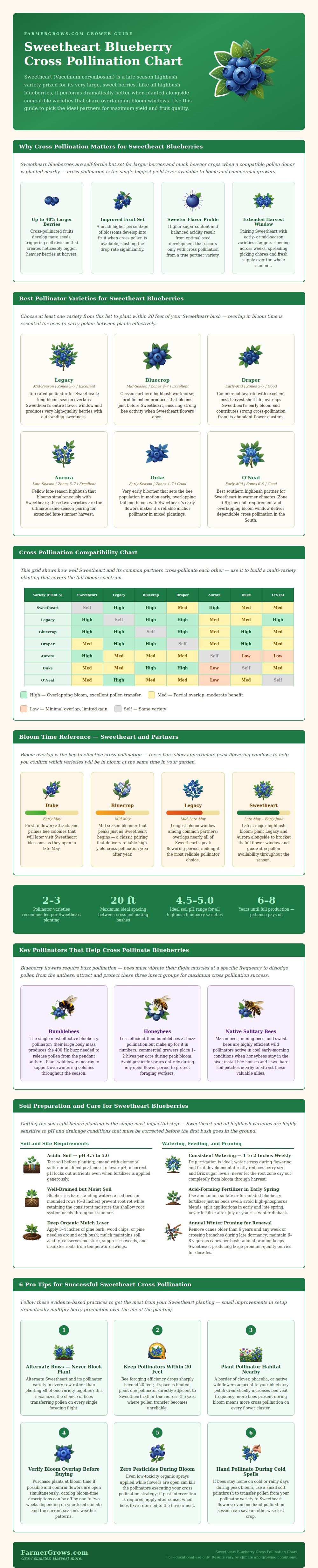
How? There are more seeds per berry. And those seeds result in more cells in the growing fruit. More cells equals bigger berries. The berries is heavier. The chart above indicates which varieties do what (it’s all about pairings, more than meets the eye). It isn’t just about quantity, but quality. The fruit is sweeter and has better acidity balance with a compatible partner. This means every bite is truly sweet instead of blah.
Then pick your mate: Match their bloom times. (The bees can’t do their job if they aren’t present when both plants flower.) For this reason, among others, the Legacy variety is generally regarded as the best. It flowers for a long time. This extends its cycle into the period when Sweetheart is producing most, meaning there is always new pollen available when it matters most.
For a consistent selection that buds up about a week prior to Sweetheart’s onset, you can count on Bluecrop; this helps get honeybees buzzing early in the year when they’re needed, and they’ll be on-call and chomping at the bit come first blossom. In warmer climates where the issue of chill hours is problematic, there’s also O’Neal, which offers a southern-friendly alternative that still provides similar levels of assurance. Regardless, the graph indicates that having highest amount of overlap will yield the greatest crop, whereas little to no overlap won’t help much.
Spacing and placement matter too: For example, bees don’t like running long distances between individual plant; they want to forage in concentration patches. The closer you plant your pollinator to your Sweetheart bush (no more than twenty feet), the higher the probability that they will have an opportunity to pollinate on each journey. Even better: Alternate the varieties in rows, forcing bees to alternate from type to type when working their way down the row. This simple shift in arrangement greatly helps fruit set over planting just one variety out in far corner, for instance. It is a small logistical tweak with big returns.
Whatever your pollination plan, good soil is a must. Sweetheart bushes do not like alkalinity: They need soil on the acidic side, in the range of 4.5 to 5.0 for best intake of nutrients. When soil is more basic, they has trouble absorbing essential minerals like manganese and iron. This can cause the leaves to turn yellow. You may still see plenty of flowers, but the yellow leaves alert you to trouble. Correcting that base problem permanently at planting time involve adding acidified peat moss or elemental sulfur. To further help keep soil acidity in place and roots cool and happy on hot days, provide a heavy mulch of wood chips or pine straw.
And don’t overlook the other critters: Those blueberries are in need of buzz pollination, the kind bees provide when they vibrate their wings to loosen pollen trapped inside stubborn anthers. Because bumblebees (being larger than most and vibrating at just the right frequency) excel at it, creating habitat for native wildflowers will naturaly support them as well. Don’t spray anything (even organic ones) when things are in bloom; those are the insects you want to have around for producing fruit.
And be patient, since a full crop won’t come along until several years… Six or more, and it’s easy to go crazy waiting. Start off on the right foot by building good partnerships now, and then sit back and let nature take its course. The payoff would of made all that upfront thinking about who to partner with worthwhile.