Sun for Lettuce Calculator
Estimate effective lettuce light, bolt risk, shade cloth needs, and harvest timing from your sun exposure, season, temperature, variety, moisture, and crop stage.
🌱 Lettuce Sun Presets
Choose a common lettuce planting situation, then fine-tune the bed details below.
☀ Growing Conditions
Your Lettuce Sun Plan
Adjust inputs to estimate light balance and heat stress.
📊 Lettuce Light Benchmarks
🥬 Lettuce Type Comparison
Best choice for partial sun, repeated cutting, and quick successions. It bolts less painfully because young leaves are harvested early.
Handles firm morning sun well, but hot afternoon exposure can push tip burn, bitterness, and early seed stalks.
Forms tender heads with filtered light and even moisture. Use shade earlier than you would for leaf lettuce.
Summer crisp types tolerate brighter beds than butterhead, especially with mulch, irrigation, and afternoon shade cloth.
📘 Sun Target by Lettuce Type
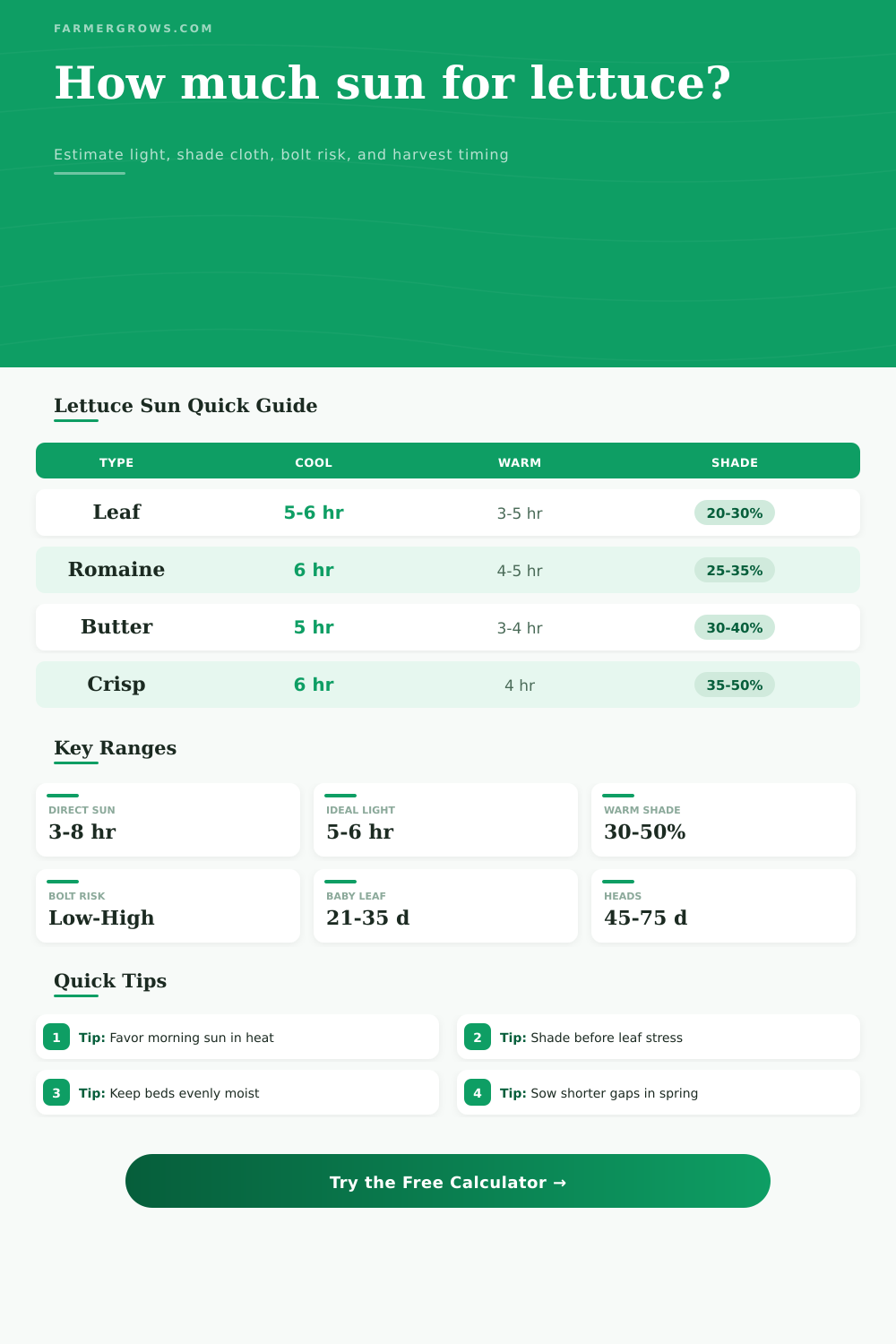
| Lettuce type | Cool season target | Warm season target | Shade response |
|---|---|---|---|
| Loose leaf | 5 to 6 hours direct sun | 3.5 to 5 hours, morning preferred | Use 20% to 30% shade above 78°F |
| Romaine / cos | 5.5 to 7 hours direct sun | 4 to 5.5 hours with afternoon protection | Use 25% to 35% shade above 80°F |
| Butterhead / bibb | 4.5 to 6 hours direct sun | 3 to 4.5 hours with filtered afternoon light | Use 30% to 40% shade above 76°F |
| Crisphead / iceberg | 6 to 7 hours direct sun in cool weather | 4 to 5 hours; avoid hot afternoon sun | Use 35% to 50% shade above 78°F |
| Batavian / summer crisp | 5.5 to 7 hours direct sun | 4.5 to 6 hours if moisture is steady | Use 20% to 35% shade above 82°F |
| Baby leaf mix | 4.5 to 6 hours direct sun | 3 to 5 hours because crops are picked young | Use 20% to 35% shade for tender regrowth |
🌡 Temperature and Bolt Risk
| Day temperature | Growth effect | Sun adjustment | Management note |
|---|---|---|---|
| 50°F to 60°F | Slow but sweet leaf growth | Extra sun usually helps | Use row cover only if nights are cold |
| 61°F to 70°F | Prime lettuce growth range | Full target sun is usually safe | Harvest on schedule for best texture |
| 71°F to 78°F | Fast growth with mild stress | Reduce afternoon exposure | Mulch and water before the hottest hours |
| 79°F to 86°F | Bitterness and bolting pressure rises | Shade cloth usually pays off | Pick early and sow heat-tolerant types |
| 87°F and above | High stress for most lettuce | Use strong shade or pause sowings | Grow baby leaf only or shift to cooler crops |
⛱ Shade Cloth Guide
| Shade cloth rating | Best use | Effective light example | Watch-out |
|---|---|---|---|
| 0% to 15% | Cool spring, fall, winter, or short sun windows | 6 hours becomes about 5.1 to 6 hours | May not cool enough in hot afternoon sun |
| 20% to 30% | General lettuce protection above 76°F | 6 hours becomes about 4.2 to 4.8 hours | Good all-purpose range for leaf lettuce |
| 35% to 40% | Butterhead, crisphead, and warm raised beds | 6 hours becomes about 3.6 to 3.9 hours | Vent well so humidity does not trap heat |
| 45% to 50% | Emergency heat waves or intense afternoon exposure | 6 hours becomes about 3 to 3.3 hours | Too much shade can make loose, pale plants |
| 60% and above | Short-term heat protection only | 6 hours becomes 2.4 hours or less | Use briefly; growth may stretch and slow |
⏱ Harvest and Succession Windows
| Harvest stage | Typical days from sowing | Best harvest window | Succession rhythm |
|---|---|---|---|
| Baby leaf | 21 to 35 days | 7 to 14 days before leaves toughen | Seed every 7 to 10 days in cool weather |
| Teen leaf / mini heads | 35 to 50 days | 10 to 18 days while leaves are tender | Seed every 10 to 14 days |
| Full heads | 45 to 75 days | 5 to 12 days once heads firm | Transplant or seed every 14 to 21 days |
| Cut-and-come-again | 25 to 40 days to first cut | 2 to 4 cuts if heat stays low | Refresh strips every 2 to 3 weeks |
💡 Lettuce Sun Tips
Tip: In warm weather, count afternoon sun as stronger than morning sun. A bed with four hot afternoon hours can stress lettuce more than six gentle morning hours.
Tip: Shade cloth works best before plants wilt or turn bitter. Install it early in a heat spell and keep irrigation steady under the cover.
There is a contradiction in growing leafy greens in a warming climate: You can sow lettuce in full sun and still lose it to heat stress. Lettuce require light for photosynthesis. But blistering afternoon rays push temperatures beyond what is comfortabley for lettuce, so it doesn’t stay sweet.
Hours of sun are counted by most gardeners, but not hours of light quality, how different a cool morning’s light can be from a hot afternoon’s. The calculator at this page will help you estimate effective light level given your conditions. It considers more than clock time. It considers shade cloth density and temperature stress, then it tells you if your bed is too hot for your variety.
How to Grow Lettuce in Hot Weather
There is a risk of bolting. Cool-season lettuce knows when time is up; it feels the heat and long days telling it to wrap things up. This means it will go to seed. To avoid that, trick it with light.
Even if you give it six hours of direct sun in the garden, the afternoon may be too hot, causing more stress than good food. That’s why the tool accounts for sun timing. In general, morning light is gentler and produce better lettuce than afternoon, when it cooks the soil and heats up the leaves. Knowing how much sun each day has will help you know whether to shade from glare or not.
No, shade cloth isn’t a sign of bad planning. It’s a precision instrument. Many people don’t want to cover their beds with it because they fear they will block too much light. Fair enough; during a heat wave though, the numbers can be on your side. With a thirty percent shade cloth, you cut the intensity of light but still have some photosynthesis going. This is enough to keep leaf temperature down and maintain quality. For your setup, the calculator suggest how much shade would of work best.
There are different varieties. For example, a loose leaf lettuce likes partial shade, whereas an iceberg crisphead need a tighter head that requires more light. What if you’re growing romaine in August? The tool will probably tell you: Get it heavily shaded so hearts stay sweet.
There’s another secret ingredient to light tolerance: Moisture. As a bed dries out it will also warm more quickly, compounding the heat stress. Before bolt sets in, this uneven watering could make your lettuce bitter even if the light exposure was right. The bolt risk score is improved by taking into account moisture level of the bed. Remember: Lettuce thrive when light and water work together. If one is too much or not enough, it’s hard to adjust the other to get them both just right.
The last control lever you have is the one related to harvest timing. For instance, baby leaf lettuce is less exposed to peak of summer heat; there’s just less time between when seed reaches the plate. Harvesting young means growing better in adverse conditions. Depending on the stage you chose, that’s what the calculator calculates as your window of harvest. If your goal is full heads in high summer, it will advise you to expect longer exposure. You might also consider a different variety, such as a more heat tolerant one like Batavian summer crisp, or a succession planting strategy.
No more guessing what season is right. You no longer need to fret about whether it was too hot and scorched them or too cloudy to be sufficient. Instead, manage the bed’s local weather; not the weather of the whole region. Toss some shade up ahead of time. Water consistently. Pick early.
This is not advice, but how successful lettuce are grown. Match your plant physiology to its light requirements… And you end up with sweet, crisp heads, not bitterness-filled stalks. The calculator shows you how to do that, making fuzzy garden hunches into a solid plan for your patch.