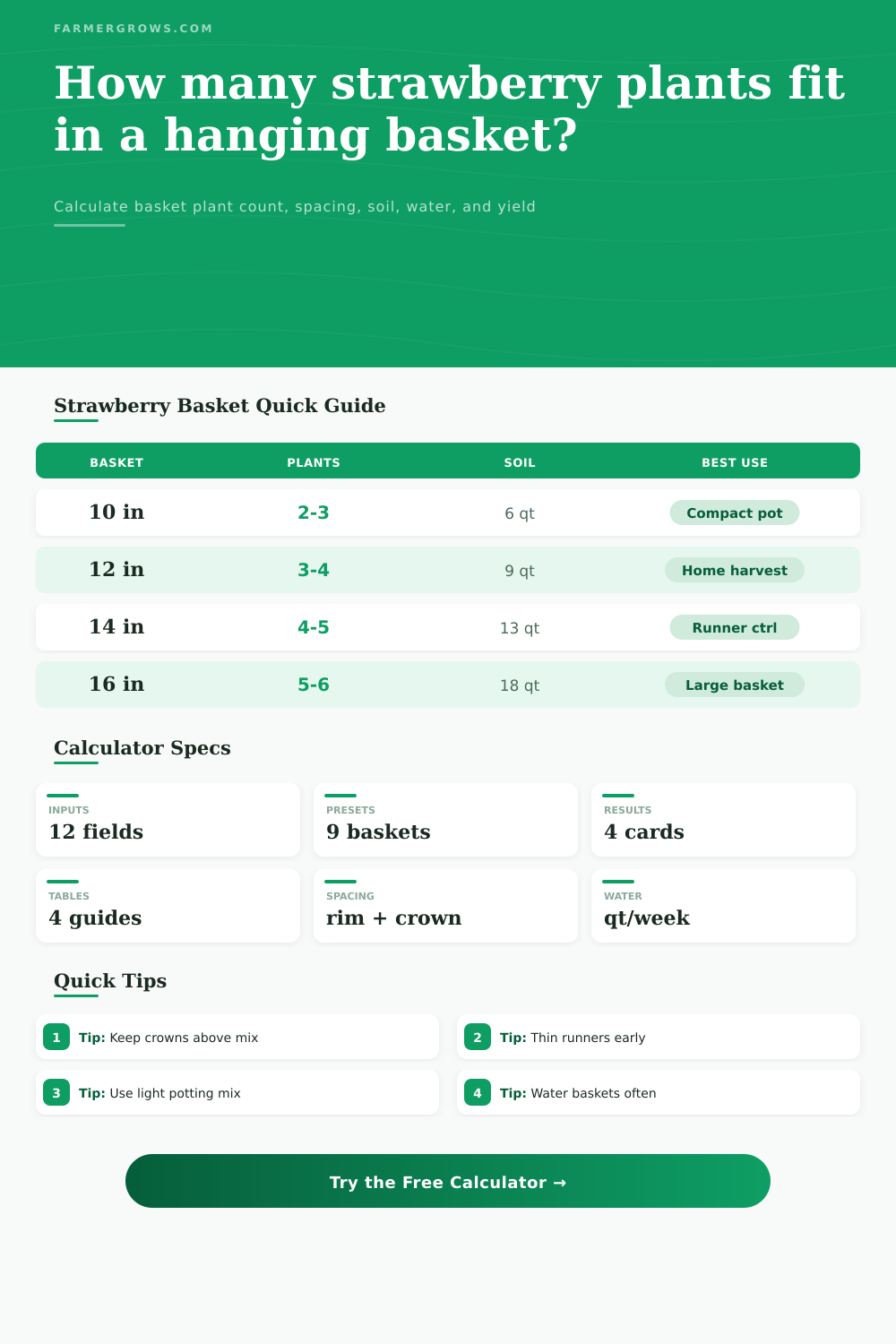
Strawberry Plants in a Hanging Basket Calculator
Estimate how many strawberry crowns fit in a hanging basket by basket diameter, usable rim, soil depth, variety vigor, side pockets, planting style, sunlight, wind exposure, watering interval, and expected yield.
Load a basket size and strawberry style, then tune the crown spacing, basket depth, side pockets, watering interval, and runner control for your actual hanger.
Best for beginners because crowns stay visible, rot risk is lower, and watering is easy to judge.
Adds plants through liner cuts, but each extra crown increases drying speed and feeding demand.
Works with runner-pruned everbearing or day-neutral plants when the goal is flowers and fruit over the rim.
Uses fewer crowns, deeper mix, stronger feeding, and regular runner removal for larger berries.
Strawberry Basket Estimate
Your basket estimate will appear here.
| Basket diameter | Top-only plants | Soil volume | Care note |
|---|---|---|---|
| 10 in / 25 cm | 2 to 3 compact crowns | 5 to 7 qt | Best with alpine or day-neutral plants and daily checks. |
| 12 in / 30 cm | 3 to 4 crowns | 8 to 10 qt | Most common home basket size with manageable drying. |
| 14 in / 36 cm | 4 to 5 crowns | 12 to 15 qt | Good balance for fruiting and trailing display. |
| 16 in / 41 cm | 5 to 6 crowns | 17 to 20 qt | Needs a strong hook, deeper mix, and steady feeding. |
| Type | Basket habit | Spacing factor | Yield tendency |
|---|---|---|---|
| Alpine | Small crowns, tidy foliage, many small berries | Can plant closest | Lower weight but long picking window |
| Day-neutral | Reliable for containers with repeated flowers | Standard basket spacing | Good steady harvest with feed |
| Everbearing | Two or more flushes, moderate runners | Slightly wider spacing | Good if runners are removed |
| June-bearing | Large crowns and heavier runner pressure | Widest spacing | Strong flush but less ideal for small baskets |
| Condition | Drying speed | What to do | Warning sign |
|---|---|---|---|
| Sheltered morning sun | Slowest | Check moisture daily, water when top inch dries. | Pale new growth can mean low feeding. |
| Average patio | Moderate | Expect daily water in warm fruiting weather. | Leaf edge curl means stress is starting. |
| Windy balcony | Fast | Use mulch, a water-retentive mix, and fewer crowns. | Small berries often mean uneven moisture. |
| Hot wall exposure | Fastest | Shade the basket during harsh afternoon heat. | Flowers aborting means heat or drought stress. |
| Step | Target | Why it matters | Common mistake |
|---|---|---|---|
| Crown height | Crown at soil surface | Buried crowns rot; exposed roots dry out. | Planting like a bedding flower plug. |
| Mix choice | Light potting mix plus compost | Hanging baskets need air and water retention. | Using heavy garden soil. |
| Runner control | Remove most runners in fruiting baskets | Energy goes into berries instead of new plants. | Letting runners crowd every pocket. |
| Hanger strength | Rate above wet basket weight | Wet mix, fruit, and irrigation add load quickly. | Judging weight only when dry. |
Plant fewer for fruit size. A crowded basket can look full fast, but lower crown count gives each plant more root volume and steadier moisture.
Side pockets are not free capacity. Each side opening adds foliage and water demand, so the calculator limits pocket plants when soil volume is tight.
Keep the crown visible. Set each strawberry so the crown sits right at the surface and water settles around the roots, not over the crown.
Use the wet weight card. A large basket can become heavy after watering, especially with coir liners and dense compost-rich mix.
This calculator is a planning estimate. Actual plant count depends on cultivar size, liner shape, nursery plug size, climate, and how consistently the basket is watered.
If you’re like me, you’ve had moments of being frustrated because you purchased more plants then will fit into your hanging basket. And what happens? You head off to the nursery feeling hopeful about getting many plant, only to find there is no room for another one in the basket. Or maybe you jam them together, thinking nature will take care of it. Most times this end up in a jumble and things don’t produce well, instead of fruit they make dust and cause stress.
The calculator on top does those math problems for you after you input size of your basket and which varieties you’d prefer. So no more guessing how much your basket can hold in terms of wet fruit and soil weight. Hanging baskets are not just small garden bed. They’re islands of wetness encircled by dry air where gravity fights you all the time.
How to Use the Calculator for Your Basket
What’s the volume of space those roots get to grow into? That’s what you’re computing when you enter dimensions (diameter and depth) into the calculator. Most patio-size baskets at home is a dozen inches across, which isn’t really big enough for six or even seven plants. Try three or four instead: that’s what the tool tells us is best for producing things.
That’s what people get wrong: they want density for visual impact. Because they want their containers to look full, that’s why. But containers cannot be overfull; the more you pack them, the less yield there will be per plant because the roots fights one another for every last drop of water. How much space do I need? It turns out this varies by type of variety.
Vigorous varieties such as June bearers spreads widely and send out many runners. This makes them not great for small baskets unless you cut them back hard. Day-neutral varieties tend to focus on fruiting instead of running around; they’re better suited to a confined space. Plant habit affect the spacing required; which is why you see the difference in the reference table.
Do you want ornamental foliage to flow? Plant the trailers close together. Want to actualy eat some strawberries? Give these girls their space. Most hanging baskets fail because of watering issues and drying out. That’s why the calculator considers sun exposure, an important factor in estimating how much water you need. Wind also affects how fast plants dry out. For example, a basket on a breezy balcony dries faster than one under a covered porch. The calculator factors this in as well.
The problem isn’t keeping the potting mix moist but rather when it becomes bone dry between waterings, stressing the roots. Moisture is best: neither sodden nor parched. Keeping things right will immediately improve flower retention and berry size.
Weight is another big consideration. That’s a light-weight basket when it’s dry, but with water and compost and any fruit in there, it becomes heavy. How will you know if your chain can hold? So the tool also estimates how much it weigh when wet, so that your chain doesn’t give way and spill mess on your patio. Always double-check the weight number against your hanger rating. Better to spend money getting a sturdier hook than repairing a torn-up plant (or fence post).
Also, there are runners to contend with. The long vines that the plant uses to clone itself; the ones you need to snip off as soon as they appear, or else it will steal their energy in a basket. Want a harvest? Snip ’em off. Want a lush green curtain? Let ’em have at it. The calculator adjusts your expected yield accordingly so you can figure out whether to make that trade-off.
Planting strawberries in hanging baskets is an exercise in restraint. Though they might appear chaotic when first set up, things will sort themselves out as time goes on. By understanding the limits of your water supply and soil volume, you can turn a potential disaster into a sweet summer treat. Remember to always keep the crowns exposed and don’t let them get dry. And don’t purchase too many plants for the basket. A tidy, healthy plant results, a plant that repays your patience with not only more leaves but better fruit.