Strawberry Growth Time Calculator
Estimate bloom, first ripe berries, peak picking weeks, and harvest length from strawberry variety, planting date, USDA zone, plant type, chilling, spacing, frost protection, and irrigation.
Use the estimate for garden planning, plug scheduling, and harvest expectations. Weather, crown size, soil temperature, and local disease pressure can move real dates, so the calculator gives a practical field window rather than a fixed promise.
Estimated Strawberry Growth Window
Dates combine variety timing, plant form, zone season pressure, chill status, frost protection, spacing stress, and irrigation consistency.
| Variety | Fruiting type | Good zone fit | Typical first ripe timing | Timing note |
|---|---|---|---|---|
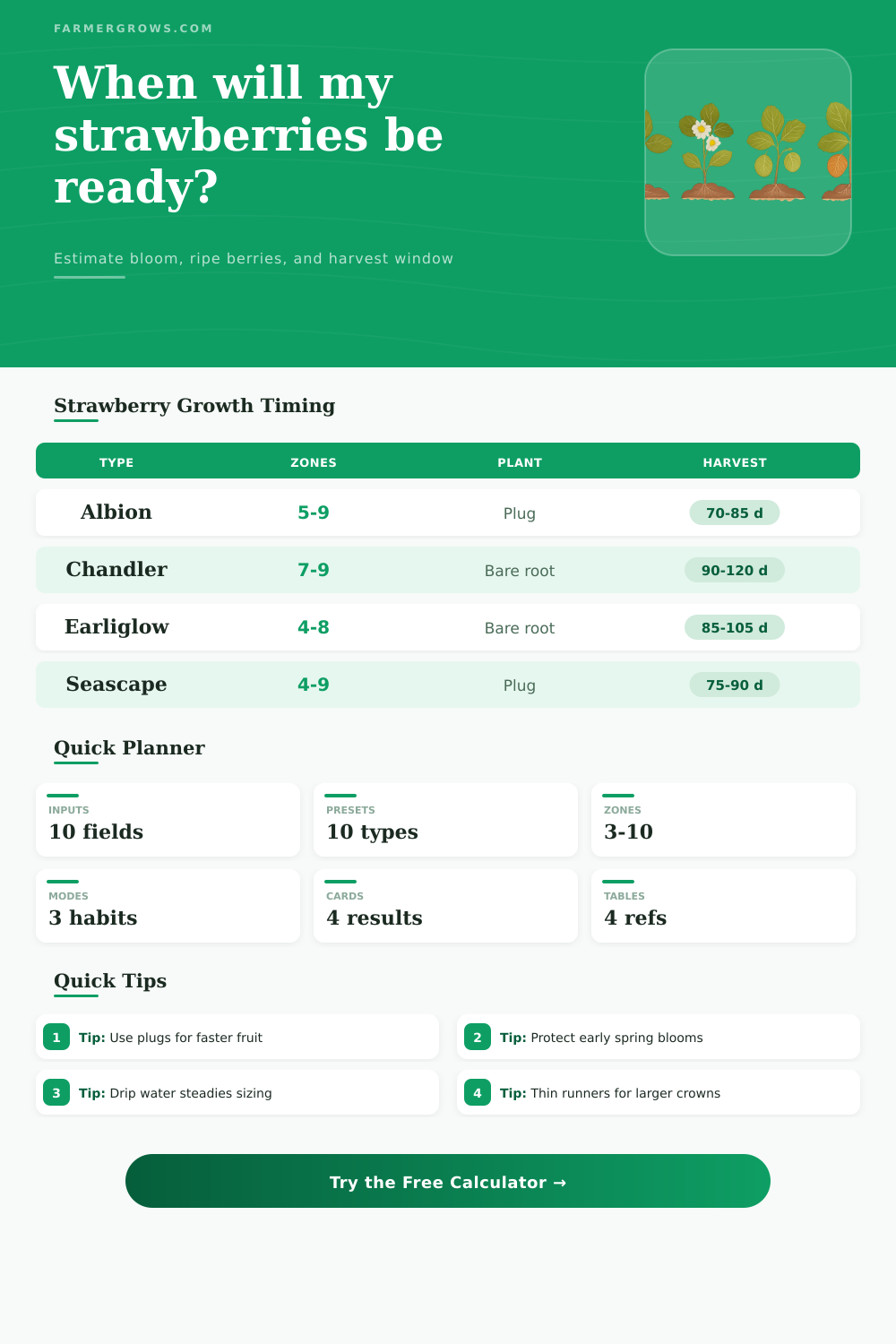
| Albion | Day-neutral | 5 to 9 | 70 to 85 days from plug | Long season; remove early runners for stronger crowns |
| Seascape | Day-neutral | 4 to 9 | 75 to 90 days from plug | Reliable for cool coastal or moderate inland beds |
| Monterey | Day-neutral | 5 to 9 | 70 to 90 days from plug | Vigorous, responds well to steady feeding and water |
| Chandler | June-bearing | 7 to 10 | 90 to 120 days after fall planting | Big spring crop when planted early enough for root growth |
| Earliglow | June-bearing | 4 to 8 | 85 to 105 days after spring growth starts | Early concentrated crop, often used in matted rows |
| Honeoye | June-bearing | 3 to 8 | 90 to 110 days after spring growth starts | Cold hardy, strong early-to-mid harvest |
| USDA zone | Spring planting window | Fall planting window | Usual first harvest | Timing caution |
|---|---|---|---|---|
| Zones 3 to 4 | April to May | Limited; protect heavily | June to July | Spring frost and short season matter most |
| Zone 5 | March to April | Late August to September | Late May to June | Mulch crowns before winter heaving |
| Zone 6 | March to April | September to early October | May to June | Row cover can pull bloom earlier |
| Zones 7 to 8 | February to March | September to November | April to May | Fall planting often outperforms spring bare roots |
| Zones 9 to 10 | January to February | October to December | February to April | Heat shortens late fruiting without shade and water |
| System | In-row spacing | Runner plan | Plants per 24 ft row | Harvest effect |
|---|---|---|---|---|
| Plasticulture plugs | 10 to 14 in | Remove most runners | 21 to 29 plants | Faster crown strength and larger early berries |
| Matted row June-bearing | 18 to 24 in | Root selected runners | 12 to 16 mothers | Slower first year, strong second-year bed |
| Containers or towers | 8 to 12 in | Clip runners | 24 to 36 plant sites | Quick warming, but water stress delays ripening |
| Wide crown bed | 16 to 20 in | Limit daughter plants | 14 to 18 plants | Better air flow and steadier berry size |
| Stage | Day-neutral timing | June-bearing timing | What speeds it up | What delays it |
|---|---|---|---|---|
| Root establishment | 10 to 21 days | 14 to 28 days | Warm soil, plug roots, drip water | Cold soil, dry crowns, transplant shock |
| First bloom | 30 to 55 days | 45 to 75 days | Cover, adequate chill, older crowns | Removing early flowers, weak crowns |
| Bloom to ripe fruit | 30 to 40 days | 28 to 38 days | Moderate temperatures and full sun | Cool cloudy weather or water stress |
| Main harvest | 6 to 12 weeks | 2 to 4 weeks | Consistent irrigation and runner control | Heat, crowding, poor pollination |
For faster first berries: Start with well-rooted plugs or potted crowns, keep soil evenly moist, and use row cover only while pollination and heat buildup stay manageable.
For a stronger long-term bed: Pinch the earliest flowers on weak spring bare roots and root only the best-positioned runners in matted rows.
This takes the guessing out of when to plant strawberries: there is a tool where you plug in your variables (spacing, variety, etc.) that will tell you when to expect your harvest dates and timing. The tool accounts for your zone, variety, and spacing choices. Change any one variable and the timing for the fruit change.
The variety (type) affect time to bloom. Moderate temps is ideal. Day-neutral varieties sets fruit continuously. Most June-bearing varieties does so during a narrow spring window.
How to Plan Your Strawberry Harvest
The date of planting also vary by plant form. A dormant bare-root crown will take weeks longer than a tray plug with its root system already made. The bare-root crown must re-establish it’s roots. Whether you are in cold or hot weather depend on your planting date and your USDA zone. For June-bearing varieties, chilling hours tells whether they’ve had sufficient winter rest.
How fast berries ripen and how long the picking window stay open depends on irrigation, frost protection and spacing. You can use these four particular dates to plan. The first bloom is when they show their first flower. The first ripe berries are the earliest pickable fruit. Peak harvest is when most of the berries are ripe. Season length tell you how long it produces. Knowing how many weeks it produce helps with yield estimates, timing the row-cover schedule, and planning succession planting.
Other factors also play a part. Real gardens add another variable that affects outcomes. Fruit may be spoiled fast by a heat wave. Even if you protect them, late frost will kill off some flowers. Too much rain during flower time means less successful pollination. Your local microclimate isn’t known by the calculator. Neither is the current state of your plants. Think of the dates as a range for planning purposes. Later berries mean colder soil longer than usual.
Tables gives you a variety of choices. They tell you what type fits your zone. They tell you how long it typically takes each one to bear fruit. All this help set reasonable expectations before using the calculator.
Another error is crowding plants. Growing things closer together might speed up the first bloom. But that means more competition for light and water. That tends to reduce berry size, and shorten the season. The calculator factors in spacing like this. Typically, wider spacing give better steady fruit size, and a longer picking window. With wider spacing, first berries may come a few days later.
Beyond those first few dates, bed management matter. Taking out the early crop of flowers on a weak plant promotes bigger roots (leading to bigger berries down the road). Keeping the runner growth at bay with day-neutrals mean keeping the crown vigorous. Providing consistent drip watering avoids wet-dry cycle size swings. These things matters much more than most gardeners might imagine.
The calculator forces you to look at the whole sequence. You’ll notice that buying your plants as bare-root instead of plugs affects the calendar. Switching to sensor-managed drip and adding low-tunnel protection each shift the calendar. Those adjustments shows up in the timeline. It’s simpler to align system and variety to your target harvest window.