Strawberries Per Plant Calculator
Estimate how many strawberries one plant can produce, how much that weighs, how a whole bed adds up, and how many plants you need for a fresh eating or preserving target.
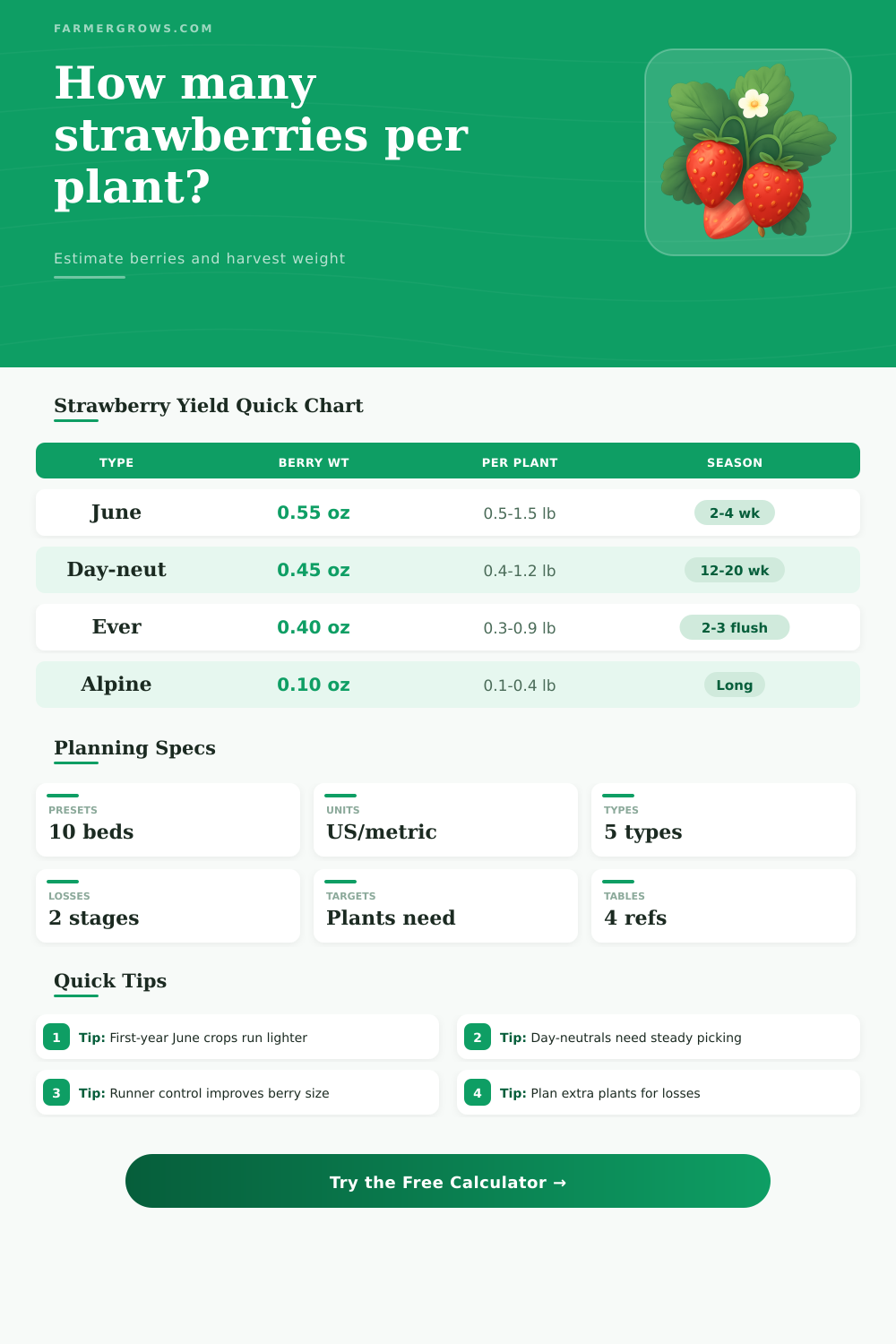
Strawberry yield changes with type, plant age, crown count, truss strength, fruit set, berry size, runner pressure, spacing, water, fertility, pests, and picking losses. This calculator models the crop from flower clusters to marketable berries.
Estimated Strawberry Harvest
Enter your crop details to estimate berries per plant and total harvest.
Calculation Breakdown
| Stage | Yield effect | Typical signs | Planning note |
|---|---|---|---|
| Establishing first year | 35% to 60% | Few crowns, runners forming | Often lighter unless flowers are kept for fruiting. |
| First fruiting year | 80% to 95% | Good leaves, modest crowns | Useful crop, but not always full potential. |
| Prime second or third year | 100% to 115% | Multiple crowns, strong bloom | Often the best field estimate for home beds. |
| Older thinning stand | 65% to 85% | Weeds, gaps, small berries | Renovation or replanting may beat extra fertilizer. |
| Managed greenhouse crop | 110% to 135% | Clean canopy, drip feed | Works best with day-neutral or protected systems. |
| System | Plant spacing | Row spacing | Approx plants per 100 sq ft |
|---|---|---|---|
| Matted-row June-bearing | 18 to 24 in | 36 to 48 in | 13 to 22 plants |
| Annual plasticulture | 12 to 15 in | 36 to 48 in | 20 to 33 plants |
| Raised bed double row | 10 to 14 in | 18 to 24 in | 36 to 80 plants |
| Containers or towers | 8 to 12 in | Varies | Use root volume too |
| Goal | June-bearing plants | Day-neutral plants | Kitchen use |
|---|---|---|---|
| 10 lb fresh snacks | 10 to 18 plants | 12 to 22 plants | Fresh bowls and desserts |
| 25 lb family patch | 25 to 45 plants | 28 to 55 plants | Fresh plus a few freezes |
| 50 lb preserving | 50 to 90 plants | 55 to 110 plants | Jam, freezing, sauces |
| 100 lb large crop | 90 to 180 plants | 110 to 220 plants | Sharing or small stand |
Separate berry count from berry weight. Small-fruited plants can set many berries while still producing fewer pounds than a lower-count large-berry planting.
Use marketable yield for planning. Slugs, birds, gray mold, soft berries, rain cracking, and missed pickings can remove a real share of the harvest.
Runner control changes yield. A managed matted row can be productive, but excessive runners compete with fruiting crowns and shrink berry size.
Peak weeks are not average weeks. A four-week June crop may deliver much of its harvest in the middle two weeks, so plan picking time accordingly.
Until strawberry harvest day, plant looks like…a strawberry plant, with green foliage (until it’s not!). Then after harvest, there is nothing but vine. But how many berries will there be? That’s impossible to guess without knowing how strawberries form. Most people counts their plants instead of their berries, which makes them think they have more or fewer then they actualy do. This method doesn’t work. Enter your growing conditions and variety into the calculator above, and let it do the math. And give you a reasonable goal for your own expected bounty.
Biology sets the potential. The first thing that change all results is the type of strawberry (and there are many). June-bearing varieties concentrate energy on a brief burst of fruit; great for jam-making, but not so great for constant nibbling, unless you time it just right to catch the moment. Day-neutral types spreads out production over several months. This sounds better until you consider that if crops is left unpicked, they go bad fast because they rot quickly in the field. And alpine types with lots of berries per plant may seem most prolific, but who needs a lot of teeny-tiny ones? To get a freezer bag full of strawberries, you’d have to have… Well, you get the picture. Knowing that will save you from mistake of sowing hundreds of little berries when what you realy wanted was weight for your next batch of baked goods.
How to Guess Your Strawberry Yield
The first step is to choose a variety. Next: Plant age determine yield. Roots are still taking shape in the first season, so expecting more than a few poor crops can lead to disappointment. Generally second- or third-year plants will be most productive; they has multiple trusses and perhaps even multiple crowns that produce maximum output. Beyond that, plants starts to thin, time for renovation to keep the stand dense. That’s explained well by table on the page. It shows how non-renovated stands declines in yield with each passing year. This is why it feels like you have a lighter patch now then you had two summers back.
Fertility is important, but so is spacing. Fruit size decreases before yield do. Crowded canes struggles for sunlight and nutrients, producing small berries that look nice but weigh half as much on the scale. Pull out extra runners to direct the plant’s energy back toward fruit production rather than growth. A lot of novice gardeners fail to make this balance because they prefer their beds to appear lusher. Think foliage equals support; fruit only up to a point, not more then that, please.
That leaves two last tests for a great crop: consistency of water, and also good pollen (pollination). If there’s a dry swing, the fruit shrivels up. If it gets too cool and wet, the bees don’t come out to visit the flowers. You end up with rotting or misshapen berries that fall off or just get soft. Because nothing makes it through the field unharmed, keep those kinds of losses in mind when doing your planning so you know what to expect and can ground expectations. Birds, pests and plain old picking mistakes always take their toll, so be sure to add some buffer to your target so you still hit your goal despite all the messiness of real life.
The patch works because you manage to plan around reality, not the brochure version; and it gets easier and less stress-inducing to garden this way: When you account for things like plant age or weather, you don’t expect perfection, so you don’t get disappointed when something doesn’t happen that “should of” happened. Numbers help you time your harvest; and how much you’ll plant, though it’s the fruit (or lack thereof) and foliage that really tell the tale week by week as the season unfolds. Manage for consistent results, not perfect ones, and the patch will reward you with reliable bounty from one year to the next, without shocking gaps in supply or deluges of excess produce.