Soil Temperature Calculator
Estimate seed-depth soil temperature from air highs and lows, depth, cover, moisture, sun, bed style, forecast days, and crop germination targets.
Use this as a planning estimate, then verify with a soil thermometer when planting timing matters. The model dampens air temperature swings by depth and adjusts for mulch, soil moisture, sun exposure, and raised or covered beds.
Soil Temperature Estimate
Your seed-depth estimate will appear here.
| Formula step | Expression | What it means | Planting use |
|---|---|---|---|
| Air average | (high + low) / 2 | Daily air temperature baseline | Sets the main temperature signal |
| Depth damping | 1 / (1 + depth / 3) | Deeper soil changes more slowly | Use seed depth, not surface temperature |
| Surface adjustment | sun + cover + moisture + bed | Local bed warming or cooling effects | Explains plastic, mulch, wet soil, and beds |
| Forecast lag | 1 - exp(days / lag) | How far soil moves toward equilibrium | Projects warming over the selected days |
| Readiness score | soil vs crop minimum and ideal range | Germination fit, not guaranteed emergence | Helps decide plant, wait, or protect |
| Crop | Minimum soil temp | Ideal soil temp | Readiness note |
|---|---|---|---|
| Spinach | 35°F / 2°C | 45 to 65°F / 7 to 18°C | Very cold tolerant but slower in cold soil |
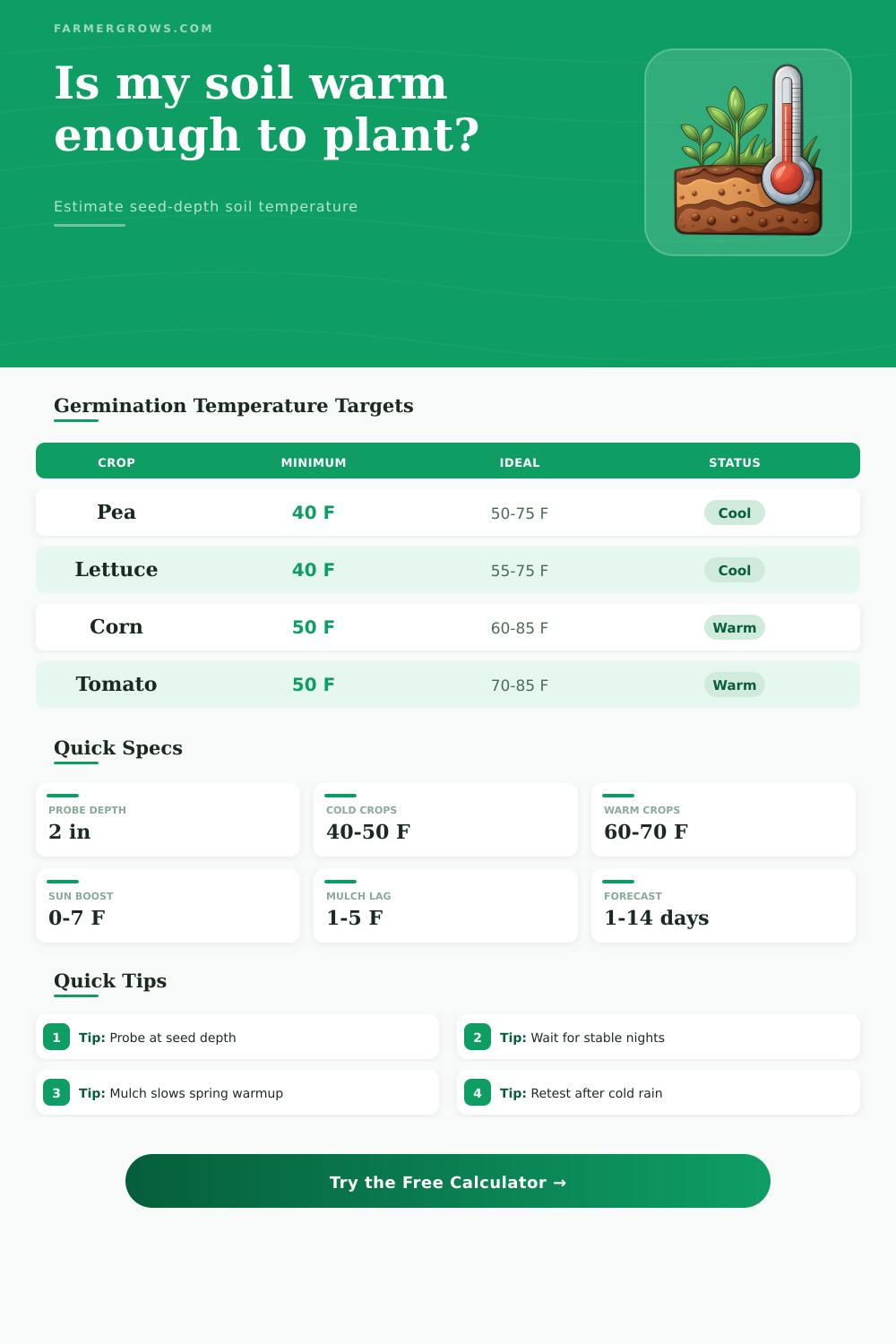
| Pea, lettuce, carrot, beet | 40°F / 4°C | 50 to 75°F / 10 to 24°C | Good cool-season planting window |
| Sweet corn and tomato | 50°F / 10°C | 60 to 85°F / 16 to 29°C | Wait for an upward trend if nights are cold |
| Bean, cucumber, squash | 60°F / 16°C | 70 to 95°F / 21 to 35°C | Cold wet soil can reduce emergence |
| Pepper, melon, okra | 65°F / 18°C | 75 to 95°F / 24 to 35°C | Use warm beds, covers, or transplants |
| Depth | Best use | Temperature behavior | Field note |
|---|---|---|---|
| 0.5 to 1 in | Small seeds and surface rows | Responds quickly to sunny days and cold nights | Check morning and afternoon if weather swings |
| 1 to 2 in | Most direct-seeded vegetables | Good planting-depth estimate for many crops | Use this for peas, beans, corn, and cucurbits |
| 3 to 4 in | Transplant root zone | Less daily swing, stronger lag after cold fronts | Useful for tomatoes and peppers |
| 6 to 8 in | Deep root and bed trend checks | Stable and slow to warm in spring | Good for comparing raised beds to field soil |
| Condition | Typical adjustment | Why it changes soil | How to use it |
|---|---|---|---|
| Bare sunny soil | Neutral to warm | Direct radiation reaches the soil surface | Good baseline for early planting checks |
| Straw or wood mulch | Cooler in spring | Insulates soil and shades the surface | Pull back mulch before warming seed rows |
| Black or clear plastic | Warmer | Traps heat and cuts evaporative cooling | Useful for warm-season crops |
| Wet soil | Cooler and slower | Water stores heat and evaporation removes heat | Wait after cold rain when seeding warm crops |
| Raised bed or mound | Warmer and faster | More exposed surface and better drainage | Often reaches planting readiness earlier |
Before direct seeding: Check soil temperature at the planned seed depth for two or three mornings. Stable morning readings matter more than one warm afternoon surface reading.
Before transplanting: Compare the root-zone estimate with the crop target and the coming night lows. A warm afternoon bed can still cool enough to stall roots.
Soil temperature is an critical factor in determining if a seed will grow or if it will rot in the soil. Many people understands that one of the factor to consider before planting a seed is soil temperature. However, there is a misconception of soil temperature and air temperature being the same.
Air temperature can change quick due to the inability of the air to hold much heat. Soil temperature, on the other hand, changes slowly because soil can hold heat for long period of time. Therefore, people must understand that the soil temperature at the depth where the seed is going to sit may be significantly lower then the air temperature.
Why Soil Temperature Is Important for Planting
One of the factors that can influence soil temperature is the depth at which the seed is planted. The depth of the planted seed will influence how quickly the soil change from one temperature to another. For instance, soil may feel warm to the touch at the top inch of the soil but may feel significantly cooler at a depth of two or four inch into the soil.
This is due to the slow movement of heat within the soil, the deeper the depth the slower the movement of heat. The calculator considers this factor because changing the depth at which the seed is planted will change the soil temperature that the seed will experience. Another factor that can change soil temperature is soil cover and moisture.
Using mulch such as straw will change the soil temperature in the spring time as it will keep the soil from feeling sunlight. Black plastic will change the soil temperature in that it will absorb the sunlight and raise the soil temperature. Moisture within the soil will also impact soil temperature.
Wet soil will remain colder then dry soil due to the evaporation of the water from the soil. Raised bed will reach the desired soil temperature faster than flat ground. Depending on the type of crop that is to be planted into the soil, each crop require a specific soil temperature to germinate the seed.
For instance, cool season crops such as peas and lettuce will germinate at soil temperatures of the low forties. For warm season crops such as beans and cucumbers, the soil temperature will not be below sixty degree for the crops to germinate well. The soil temperature calculator allows people to input the type of crop they plan to grow to determine the ideal soil temperature that the crop requires.
This allows them to determine if the soil temperature for there area is within the comfortable zone or too cold for the crop that they wish to grow. Another factor that people should consider prior to planting a seed is the weather forecast for the area. Soil temperature will slowly change to the air temperature over several days.
If the weather forecast for the area is five day, the soil temperature calculator will allow people to project the soil temperature within their ground over these five days. This will allow them to decide if they should plant their crops today or wait for several day until the soil temperature increases to an ideal number for the crop that they wish to grow. People often make mistake when planting seeds.
Many people only consider soil temperature once when making there planting decisions. People also dont consider the impact that rain could have on soil temperature. Soil temperature may drop if it is exposed to a period of cold rain.
Another factor that people should consider is there risk level. Some people may want to wait until the soil temperature reaches above the minimum requirement for the crop that they are planning to grow. Others may be willing to plant the seeds when the soil temperature reaches the minimum requirement for that particular crop.
People can set a risk level within the soil temperature calculator. Lastly, air temperature, depth, cover, moisture, and the five-day weather forecast influence soil temperature, which is a moving target. People should not solely rely on a calendar to determine when to plant their crops.
The soil temperature calculator allows them to observe the soil temperature and soil conditions in their own ground. By understanding the type of crop they plan to grow and the soil temperature in their ground, they can make certain that the seeds that they plant will not fail to grow.