
First thing one morning, EARLY, you go outside with your hot drink and there they lie: three tomato plants beheaded, their stems neatly severed at soil level, as if by a pair of shears. Mysterious. Frustrating. But predictable, too. Cutworms has done this, those tiny brown critters who hide all day in the ground and chew up your plant stems after dark.
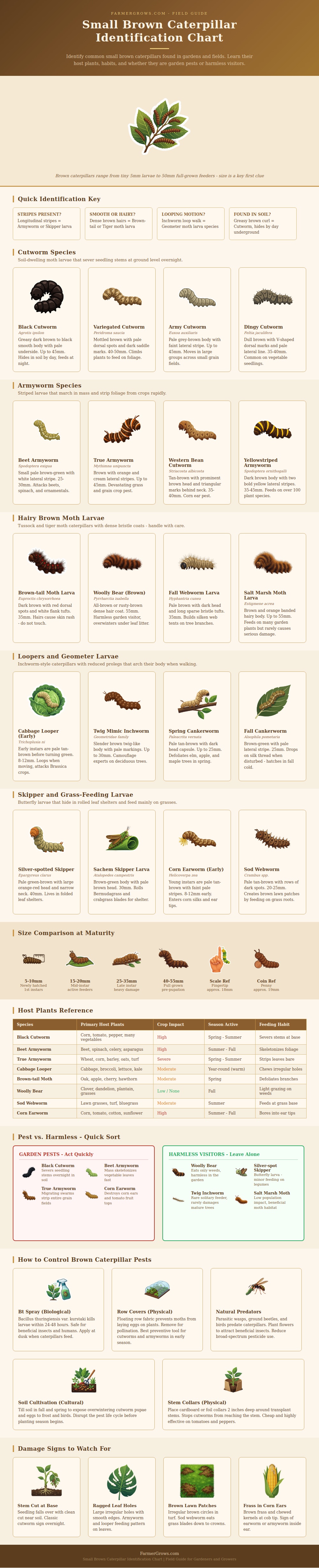
Knowing what pest is causing trouble helps you know whether to do battle, or just let the visitor come along for the ride. The chart explain the difference between helpful guest and harmful ones, so you don’t need to douse any nonthreatening caterpillars with pesticides. Movement and texture are key differences.
How to Identify Garden Worms
Are those striped worms on the stems of your spinach running lengthwise different than around their bodies? Insect: Probably a skipper larva or maybe even an armyworm. Movement: Fast, hungry. They’ll gobble up whole leaves of spinach or beets (or whatever) before you realize you’ve lost them. They’ll often strip foliage from crops like beets and spinach before you even notice them missing.
The evidence. Or does the thing loop upward, arching its back when it moves? Then it’s an inchworm, and likely a geometer moth larva. It can absorbs some chewing (holes in lettuce and cabbage leaves, for instance), but it typically won’t cause such devastation in vegetable bed or grain field as armyworms. Why? Because armyworm larvae can multiply at a speed that outpaces loopers’.
Typically, if I see a hairy caterpillar, my instinct is to back off. A lot of brown hair tends to indicate something potentially poisonous, like larval stage of the brown-tail moth. Its bristles may irritate skin if touched, not just yours, but also the creature’s. But not all hairy caterpillars are harmful.
Take the woolly bear. It has long tufts and thick bands of dark brown hair, which means it gorges itself on plants such as plantain and dandelions. Letting the bug live will help your ecosystem: It will leave the good guys, birds and other beneficial insects; in place. The how-to visual guide separate what’s a threat (ouch!) from what’s harmless (just keep grazing).
Control should match the level of threat: To prevent damage from cutworms, cardboard collars slipped onto transplants over their stems work as good barriers (preventing the worm’s access to stem, but no chemical is applied to soil). Once loopers or armyworms are present (as sometimes happens), biological controls such as Bt (*Bacillus thuringiensis*) also is a more targeted approach. They kill just the larval stage in about two days and are safe for bees and other pollinators. Another layer of protection against egg-laying moths, who deposit them on foliage, is to use row covers. This is often simpler than trying to treat once there’s an infestation underway.
And once we understand what we’re seeing, that makes all the difference in managing our gardens. We don’t see each little brown insect as automatic villain anymore. Instead, we recognize patterns of behavior. Some require an instant response like those that sever stems overnight. Others don’t do much harm but simply graze on weeds or loop along branches. Use the chart to learn their habits and host plants, and you’ll make smarter decisions about what’s worth intervening with.
Next time you have one of these things moving around out there, looping up on a stem, or down in the dirt… Take a minute to look closer. The little brown visitor may be helping clean things up behind the scenes, or it could of taking away your harvest.