Short Day Onion Growth Time Calculator
Estimate establishment, 10 to 12 hour bulbing, top-fall harvest, curing, and short storage windows for southern fall and winter short-day onions.
This calculator is for true short-day bulb onions grown in mild-winter southern gardens and farms. It is not tuned for Walla Walla, Spanish, overwintering long-day onions, winter scallions, or bunching onions harvested without mature bulbs.
Short-Day Onion Timeline Results
Your onion schedule will appear here.
| Short-day variety group | Best southern zones | Bulbing daylength | Best start | Storage habit |
|---|---|---|---|---|
| Texas Early Grano types | Zones 8 to 10 | About 10.5 to 11 hours | Fall transplants or early sets | Sweet, short storage |
| Yellow Granex or Vidalia types | Zones 8 to 10 coastal South | About 10 to 11 hours | Fall seed or winter transplants | Very sweet, brief storage |
| Texas 1015Y sweet types | Zones 8 to 9 | About 10.5 to 11.5 hours | October transplants in mild areas | Large sweet bulbs, moderate keeper |
| Red Creole storage types | Zones 8 to 10 | About 11 to 12 hours | Fall transplants for red bulbs | Firmer, better storage |
| White Bermuda types | Zones 9 to 10 | About 10 to 11 hours | Winter planting in warm soils | Mild white bulbs, short storage |
| Starting method | How the date is used | Typical growth effect | Best use |
|---|---|---|---|
| Field transplant date | Date is the day plants go into the bed | Fastest reliable bulb sizing | Southern market rows and home gardens |
| Seed tray date | Calculator adds transplant age before field growth | Good control over fall plant size | Starting seed before beds are ready |
| Direct seed in fall bed | Date is outdoor sowing date | Needs extra days before bulbing | Mild zones with long fall weather |
| Small onion sets | Date is set planting date | Quick start but can make smaller bulbs | Fast home-garden crops from small sets |
| Southern zone band | Common start window | Bulbing season | Harvest season | Field note |
|---|---|---|---|---|
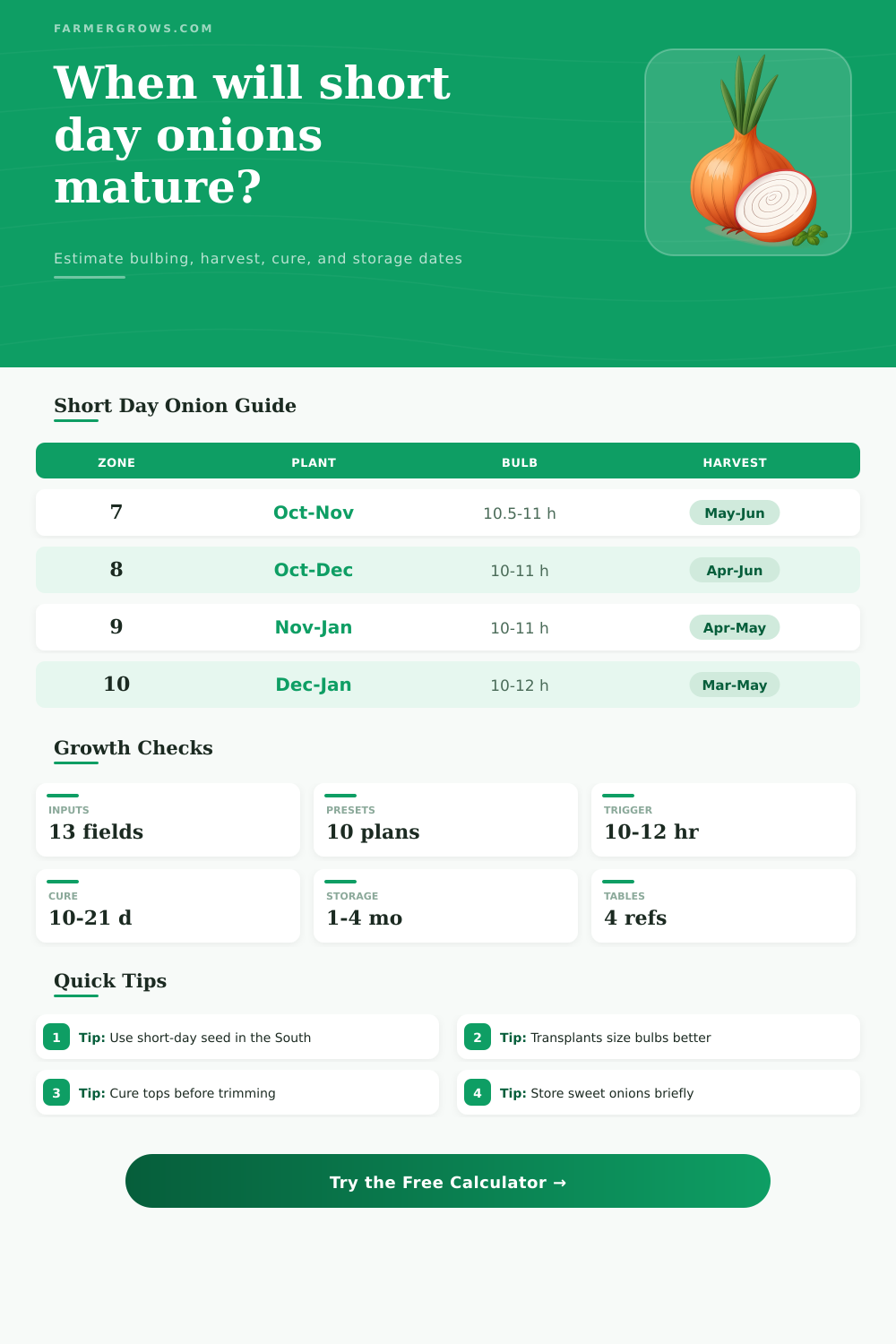
| Zone 7 | Late Sep to Nov | Spring as days pass 10.5 hours | May to June | Protect young plants through hard freezes. |
| Zone 8 | Oct to Dec | Late winter to spring | April to June | Strong short-day transplant zone. |
| Zone 9 | Nov to Jan | Late winter | April to May | Watch warm spells and keep steady moisture. |
| Zone 10 | Dec to Jan | Late winter to early spring | March to May | Use true short-day genetics, not long-day types. |
| Zone 11 | Winter only where cool enough | Short window | Early spring | Heat can shorten bulb fill and storage quality. |
| Stage | Signal to watch | Typical time | Short-day onion note |
|---|---|---|---|
| Bulb fill | Bulbs swell after trigger and leaves remain green | 35 to 65 days | Do not stress plants once bulbs start sizing. |
| Harvest | About half the tops fall and necks soften | Late spring in most southern beds | Lift before heavy rain if necks are mature. |
| Field dry-down | Skins begin drying, roots shrink | 1 to 3 dry days | Move to shade if sun is intense. |
| Curing | Necks dry, outer skins papery | 10 to 21 days | Use shade and airflow; avoid washing bulbs. |
| Storage | Trim dry tops and sort soft bulbs first | 1 to 4 months | Sweet short-day onions store less than pungent types. |
Variety tip: Choose true short-day onions for southern fall and winter planting. Long-day Spanish types and Walla Walla styles need different daylength timing and will not follow this schedule well.
Cure tip: Harvest when tops naturally fall, then cure in shade with airflow until necks are dry. Store short-day sweet onions separately and use soft bulbs first.
Onions won’t just sow themselves and then produce bulbs, no, no, they wait for just the right cue, which here in the South means a specific amount of daylight. Short day onions needs between 10-12 hours of daylight to know it’s time to fatten up. Plant too early and by the time they’re still mini-seedlings, the days aren’t short anymore. Then what happens? Little bulbs. Why? Because the plant didn’t have time to make itself a big leaf canopy first. It just went straight down and started making bulb.
Once you know which variety you want and input that along with where you live, this calculator do the work for you. This way, you don’t have to guess if it is actualy mid-November in your area or more like October. Here’s how: First off, realize that “daylight” controls final size; and “soil temperature” controls early growing.
How to Grow Better Onions
When you plug in when you think you’ll plant, think about: What does the ground feel like then? Is it still warm enough to promote fast root establishment? If so, the plant will prioritize producing leaves, and that’s great; those leaves becomes the factories driving bulb growth eventually. Transplants will give you a lead on leaf production versus direct seeding, too. Fastest of all (but usually yielding smaller bulbs) is sets, ones that were already pre-grown somewhere else. The calculator use your chosen starting method as input. It knows that for a transplanted specimen, some of the process was already completed by the time it reach your garden bed.
How do you choose the right onion? A big part of the answer is variety selection, which most home gardeners fail at by not taking into account what their own growing conditions are. For example, some onions lasts longer in storage and also has different sugar levels. Short day onions aren’t all alike! Some are highly wanted for being sweeter but wilt fast once harvested, such as Texas Early Grano, which contain lots of water. Others, like Red Creole, will keep longer due to tougher skin. That is explained easily in the reference table on the page so you know which seed type matches your goal. Want winter-long onions? Choose the ones with firmer flesh, even if they’re slightly less sweet. Choosing the wrong variety for your climate is another common mistake, so the crop never reaches maturity and then rots.
The variable here, Latitude, tells us precisely when those ten hours of daylight occur, much earlier in Florida than in Texas, for instance, so the bulbing window would of open sooner down South. The tool factors this in; you can type in your zone or latitude and it will plot the progression of daylength in comparison with the plant’s growing stages. You’ll get predictions of the time range in which the tops begin to fall (nature’s signal that the bulb has finished growing), and when swelling begins. It isn’t pretty when you overcook your onesies by not paying attention until they begin to separate or rot in the ground.
Whether your harvest will feed you now or for months to come depends on one last hurdle: cure. To get those papery outer skins that resist mold, short day onions (often high sugar, low pungency) require good circulation. They also want dry air. A good rule of thumb: higher humidity and moisture levels will mean a longer curing time. My calculator guess at how long it should take based off what moisture and humidity level you choose. If your spring has been wet, prolong the curing time in the shade, not in direct sun. Hurrying up the process can mean an invitation to rot in storage. It is a little thing but it is very important for preserving yield.
Precision and patience, those are the keys to it all. Remember, this is biology, governed by temperature and sunlight, and we’re up against biological clocks. If you miss the boat getting the planting date right then you’re fighting nature from the get-go. With the tool, you’ll be able to see that time line in your head, and adjust expectations to match even before purchasing seed. The tool makes abstract garden advice concrete (like: Mark these dates on your calendar).
The plant will signal the right time for harvest, which is satisfying. The tops flop over, the necks soften. Add the expected dates, and you have a visual clue plus an accurate prediction of when to harvest for better storage (fewer losses). Pay attention to detail, and your onions will pay you back in spades (as in steady layers of flavor). As always, timing’s all in this garden game.