
The fruit you eat must be sweet, freshly ripened, and that’s all about timing, not branding or pricing. When the fruit’s ripe, the eating experience are transformed. If eaten then, it will have superior flavor.
By following the season-by-season agricultural time clock with this year-round fruit chart, you’ll see exactly what type of fruit is at its biological peak at any given moment. You will also see which flavors is best that month. You will also learn why summer berries are tastier than winter crops and how to keep picked fruit around longer.
Why Eating Fruit in Season Is Better
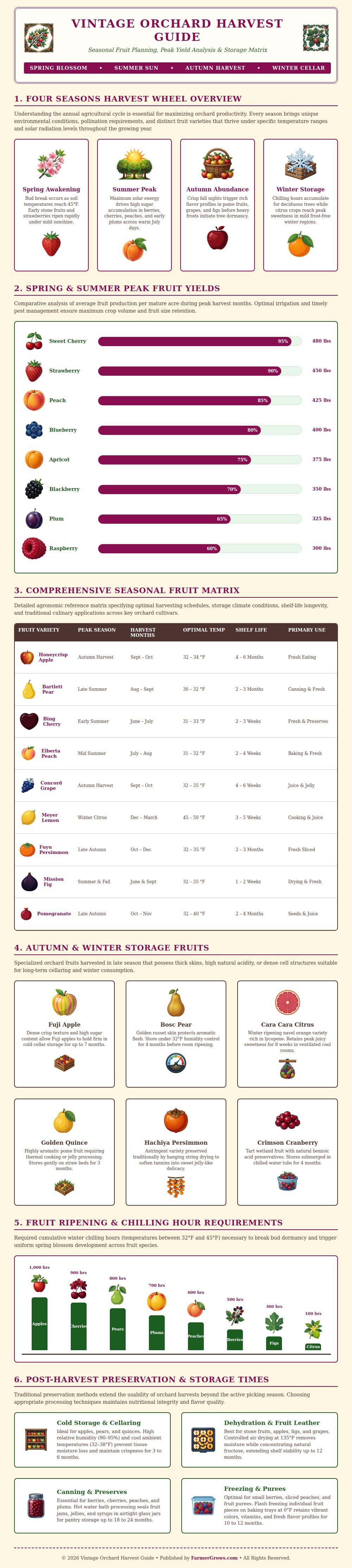
FIRST, in the spring, soil temperatures climb past forty-five degrees F, activating growth: it’s time for bud break all around the orchard. Strawberries and other early stone fruits (like apricots and cherries) will be set and ready to ripen fast on a little sunshine; their programming are tuned to complete development well before summer heat sets in.
This is the time of year you’re racing the clock, and if you miss it, the flavor is altered, the fruit softer… In ways that even storage can’t correct. That first burst is what the chart flags, showing how rapidly apricots and cherries has made their yield percentages. They don’t take no for an answer, and neither do they wait till it’s convenient.
In the summer peak, the sun is shining… So the fruit accumulates lots of sugar. Peaches and berries is at their sweetest. Some fruits, such as strawberries and sweet cherries, produce a lot of fruit per acre at this time. But more doesn’t always mean better. Choose your fruit for flavor, not just color… But when it’s truly ripe.
Because once off the tree, green fruit never will becomes sweet (even if it turns color), and you don’t want hard fruit. Fruit that gives a little when gently squeezed? That’s ripe enough to fall from the tree. The best way to choose; and why eating an apple can be a meal, or merely a snack.
As fall arrives, other fruits arrive too. Pome fruits like apples and pears has their own lush flavor profile when fall’s cooler nights begin. Their taste becomes more concentrated as they respond to changing weather.
Since these fruits are meant to last, think of Honeycrisp apple or Bosc pears; they will keep for months if stored in a cool and relatively humid place. The mistake most home gardeners make: They leave their fruit on the countertop (where it will not only shrink but also lose moisture to the dry air around it). However, if kept near but just above freezing, their respiration slow, which essentially puts the aging process on hold. A tiny tweak has a huge impact by lengthening your harvest time.
Winter offers many riches. There are juicy citrus crops grown in mild areas at their peak of sweetness. There is also fruits like persimmons and even quinces whose texture is unlike any other, which means they must be treated differntly.
The seasonal fruit chart breaks down the agricultural rhythm of the year, noting that chilling hours are just one part of the data for different trees. Apples, for instance, want about a thousand hours; citrus hardly any at all. Why care? Knowing how many chill hours your area has tells you which varieties will work where. If you try planting a variety with higher chilling requirements different than your area can provide, you’ll be disappointed. Those trees may bloom, but they won’t set fruit, or the unripe fruit will falls off early.
And then there’s preserving, which keeps the season going well past picking time. Canning, freezing, and drying all maintains vitamin content and colorful pigments for as long as a year. Drying also intensifies the naturally sugar to create a shelf-stable item suitable for long-term pantry storage.
All these methods of preservation retain the essence of taste… Because why would you want your most delicious jam to taste like winter when it was produced during the height of summer? Following the seasonal timing helps you catch that high point… And keep it.
Respecting the natural order: That’s what eating seasonally is all about. It makes you stop and listen to what the earth has to offer at the moment. You get to know when the first crunchy apple will come; when the final peach fall and how the first strawberry tastes. It turns cooking into a ritual rather than just something to do.
And one day, when that winter apple is so bright and crisp that it take you back to fall, you’ll know it would of been all worthwhile.